
Best cat window perches can turn an ordinary window into your cat’s favorite “TV channel”, but the wrong pick can slide, sag, or just get ignored. This guide focuses on what actually matters in 2026: mounting style, real-world stability, easy cleaning, and whether your cat will use it.
Window perches sit in a weird spot between furniture and safety gear. Your cat sees a sunny lookout, you see suction cups, brackets, and weight ratings that may or may not reflect real life. Sorting that out is the whole point here.
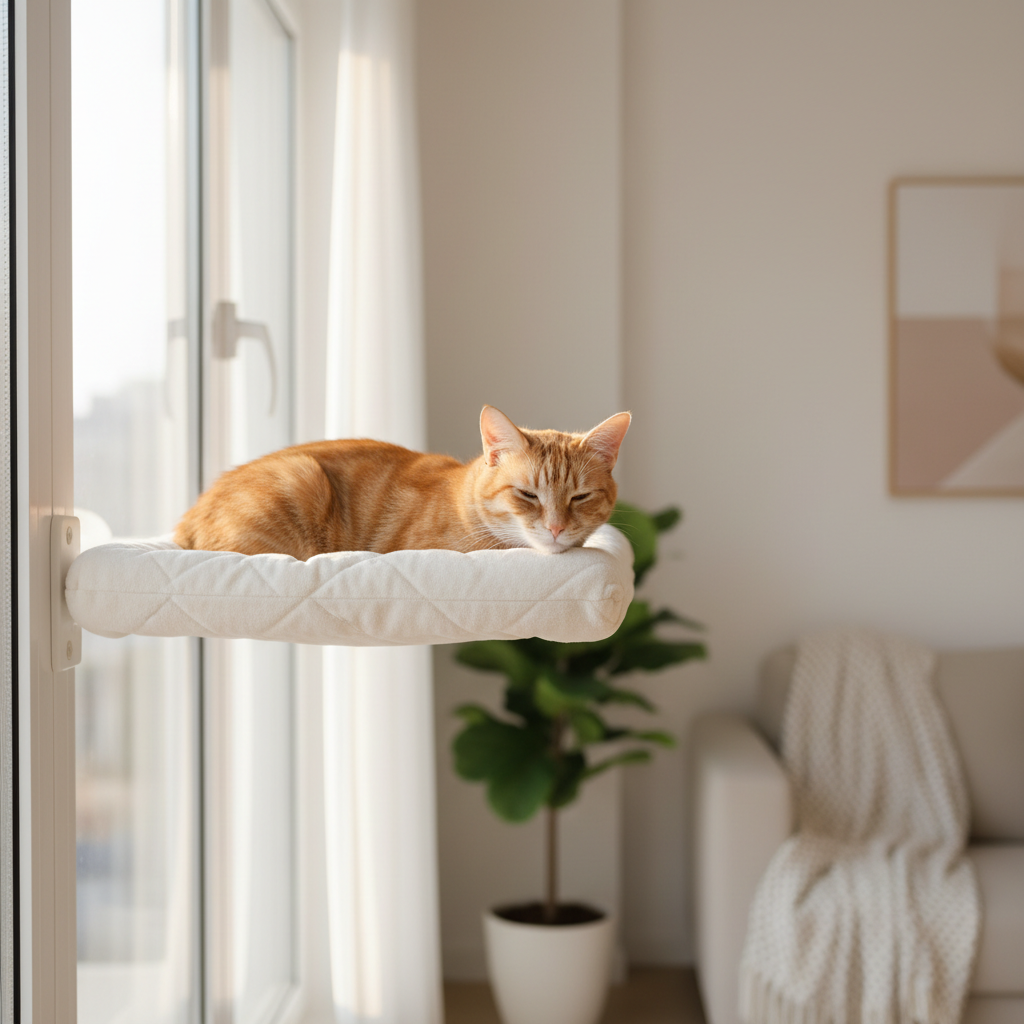
I’ll break down the main perch types, a quick self-check to match your cat and your windows, a comparison table, and a practical install routine that reduces “day two failure”, because that’s when many perches get returned.
What “best” really means for a cat window perch
In practice, the best perch is the one your cat trusts and you don’t worry about. That usually comes down to stability first, then comfort, then maintenance.
- Stable support: suction, brackets, or a hybrid that matches your window and your cat’s habits.
- Appropriate size: long enough for a full loaf, wide enough for turning around without stepping off.
- Materials you can live with: removable covers, surfaces that wipe clean, and fabric that doesn’t hold odor.
- Cat acceptance: some cats love open hammocks, others prefer a firmer shelf with bolsters.
Also, weight limits matter, but don’t treat the printed number like a guarantee. Manufacturing differences, window texture, temperature swings, and how clean the glass is all change performance.
Types of cat window perches (and who they’re for)
Most products fit into a few designs. Picking the right design is more important than chasing the newest listing.
Suction-cup hammock perches
These are popular for renters and for people who want a clean look. They work well when the window glass is smooth, you can clean it thoroughly, and your cat doesn’t “launch” onto the perch at full speed.
- Best for: small to medium cats, calm jumpers, smooth glass windows
- Watch-outs: cold weather can reduce suction performance in some cases, and textured glass can be a dealbreaker
Bracket-supported window perches
These perch styles use legs, brackets, or a frame that bears weight against the wall or window sill. They often feel more solid for heavier cats or cats who jump hard.
- Best for: larger cats, energetic cats, owners who prioritize stability
- Watch-outs: can block blinds, may need a specific sill depth
Radiator or sill-adjacent lounging beds
Not a true “window-mounted” perch, but a good fallback if you have difficult windows. Many cats still treat it like a lookout if it sits right under the glass.
- Best for: tricky window surfaces, older cats that prefer easy access
- Watch-outs: may not offer the same view angle, depends on room layout
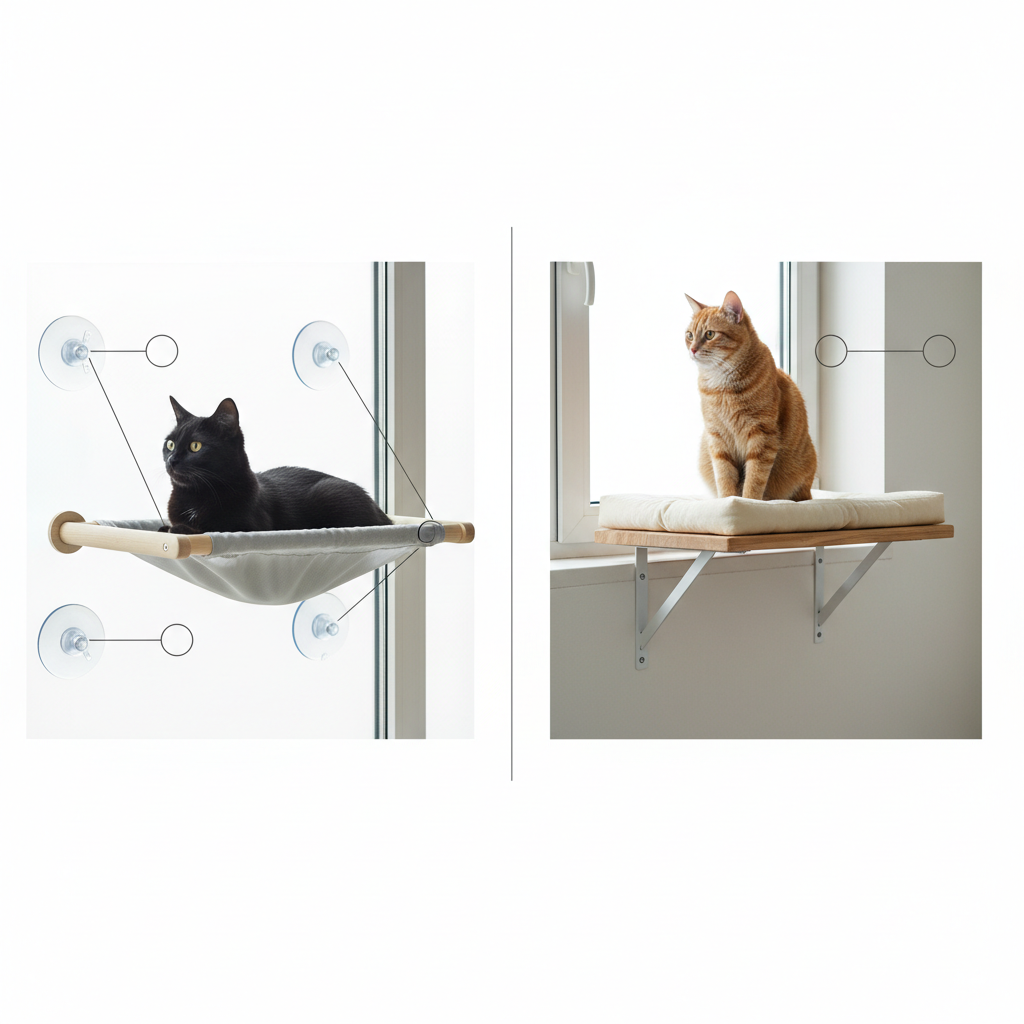
Quick checklist: choosing the right perch for your cat and your window
If you only do one thing before buying, do this quick match-up. It prevents the most common “it didn’t work for us” problems.
- Your cat’s body type: long cats often hate short platforms, even if they’re not heavy.
- Jump style: gentle step-up vs flying leap from the couch.
- Age and mobility: older cats usually do better with a step or a nearby chair.
- Window surface: smooth glass vs frosted/textured; textured surfaces often reduce suction reliability.
- Sill depth: bracket styles may need a stable ledge, measure before you order.
- Sun exposure: intense afternoon sun can heat surfaces, a breathable cover helps.
- Cleaning reality: if you won’t remove and wash it, pick wipeable materials.
According to the American Society for the Prevention of Cruelty to Animals (ASPCA), providing environmental enrichment helps support cats’ mental well-being, and a safe window lookout often functions as enrichment in many homes. The key word is safe.
Comparison table: common “best cat window perches” options in 2026
This table doesn’t rank specific brands, because availability and revisions change fast. Instead, it compares the designs you’ll see in most “best cat window perches” lists.
| Perch type | Mounting | Stability (typical) | Best for | Potential downsides |
|---|---|---|---|---|
| Suction hammock | Large suction cups on glass | Medium (depends on glass + install) | Renters, light/medium cats | Can slip if glass is dirty, textured, or suction is aging |
| Hybrid suction + cables | Suction + tension cables/anchors | Medium-high | More active cats, better sag control | More parts to adjust, cables can look busy |
| Bracket/sill-supported | Legs or brackets on sill/wall | High | Large cats, hard jumpers | Needs compatible sill depth, can interfere with blinds |
| Window-adjacent bed | Free-standing on sill/floor | High (if base is wide) | Older cats, tricky windows | Less “floating” view, uses more space |
How to install a window perch so it stays put
Most failures come from rushed prep. A little patience here saves you from the “thump” in the middle of the night and a cat that never trusts the perch again.
For suction-mounted perches
- Clean the glass with a residue-free cleaner, then wipe with a lint-free cloth. If you use oily cleaners, suction may underperform.
- Warm the cups with your hands if your room is cold, many cups seal better when pliable.
- Press and hold each cup firmly, then wait 10–20 minutes before loading any weight.
- Test gradually: press down with your hand first, then offer treats to encourage a gentle first step.
For bracket or sill-supported perches
- Measure sill depth and check that the legs sit flat, wobble is a red flag.
- Add a non-slip pad under any contact points if the perch doesn’t include one.
- Verify clearance for blinds and window locks, small interference can turn into daily annoyance.
If your cat is hesitant, place a familiar blanket on top for a few days. Many cats accept the “new thing” faster when it smells right.

Safety notes and common mistakes to avoid
A window perch is supposed to reduce stress, not create a hazard. If anything feels borderline, pick the more stable option or move to a sill-supported design.
- Ignoring window texture: frosted or textured glass often breaks suction reliability, even if cups feel strong at first.
- Over-trusting “max weight” labels: treat ratings as rough guidance, not a promise, especially for cats that jump hard.
- Placing it over hard-to-clean areas: litter tracking and hair build up quickly, plan for wipe-down access.
- Skipping re-checks: suction cups can slowly lose seal, a quick weekly push-test is simple insurance.
- Bad approach for timid cats: if your cat startles easily, avoid perches that sway or bounce.
For homes with kids, dogs, or frequent window opening, consider whether the perch will be bumped or whether cords create tangles. If you’re unsure about your setup, asking a veterinarian or a qualified cat behavior professional may help, especially when fear or avoidance shows up.
Conclusion: the best pick depends on stability, not hype
The best cat window perches in 2026 are usually the ones that match your window surface and your cat’s jump habits, then make cleaning easy. If your cat is larger or launches onto furniture, lean toward bracket or sill-supported designs. If you rent and have smooth glass, a quality suction perch can work well when installed carefully.
Action steps: measure your window area today, decide whether your cat is a “leaper” or a “stepper”, then choose a mounting style that fits that reality. Once it’s up, do a gradual first introduction, your cat’s confidence is part of the safety system.
FAQ
What is the safest type of cat window perch for a heavy cat?
Many households find bracket or sill-supported perches feel more secure for heavier cats, because weight isn’t relying only on suction. Still, stability depends on your sill depth and how level the support points sit.
Do suction cup cat window perches really work long term?
They can, especially on smooth, clean glass with good installation habits. Long term performance often drops when cups age, temperatures swing, or the window collects residue, so periodic checks matter.
Will a window perch damage my window?
Suction models typically don’t scratch glass if installed on clean surfaces, but grit trapped under cups can leave marks. Bracket styles can scuff paint or sills if they slide, a thin non-slip pad helps.
How do I get my cat to use a new window perch?
Start with a familiar blanket and a few treats, then let your cat explore without pressure. If the perch wobbles even slightly, fix that first, cats often reject unstable platforms.
Where should I place a perch for maximum cat interest?
A view with “movement” helps, like birds, trees, or sidewalk activity. Morning sun can be a bonus, but in hot regions you may want partial shade so the surface doesn’t heat up too much.
Are window perches good enrichment for indoor cats?
Often, yes. According to the American Veterinary Medical Association (AVMA), environmental enrichment supports animal welfare; a window view can be part of that when it’s safe and your cat enjoys it.
How often should I clean or re-check a window-mounted perch?
Wipe hair and dust weekly if you can, and do a quick firmness check at the same time. If you notice creeping or sag, reset it rather than hoping it holds.
If you’re trying to pick between a suction perch and a sturdier sill-supported option, or you want a shortlist based on your window type and cat size, a simple checklist-based recommendation can save time and help you avoid the common mismatch buys.