
How to teach a dog to fetch comes down to three skills that look like one game: the chase, the pick-up, and the return with a clean release. If any piece feels confusing to your dog, you get the classic problems, running off with the toy, dropping it early, or staring at you like you asked for taxes.
Fetch is worth teaching because it burns energy fast, builds engagement, and can become a practical cue for daily life, like calling your dog off a squirrel and back into a game. But it also tends to expose training gaps, especially impulse control and “bring it to me” mechanics.
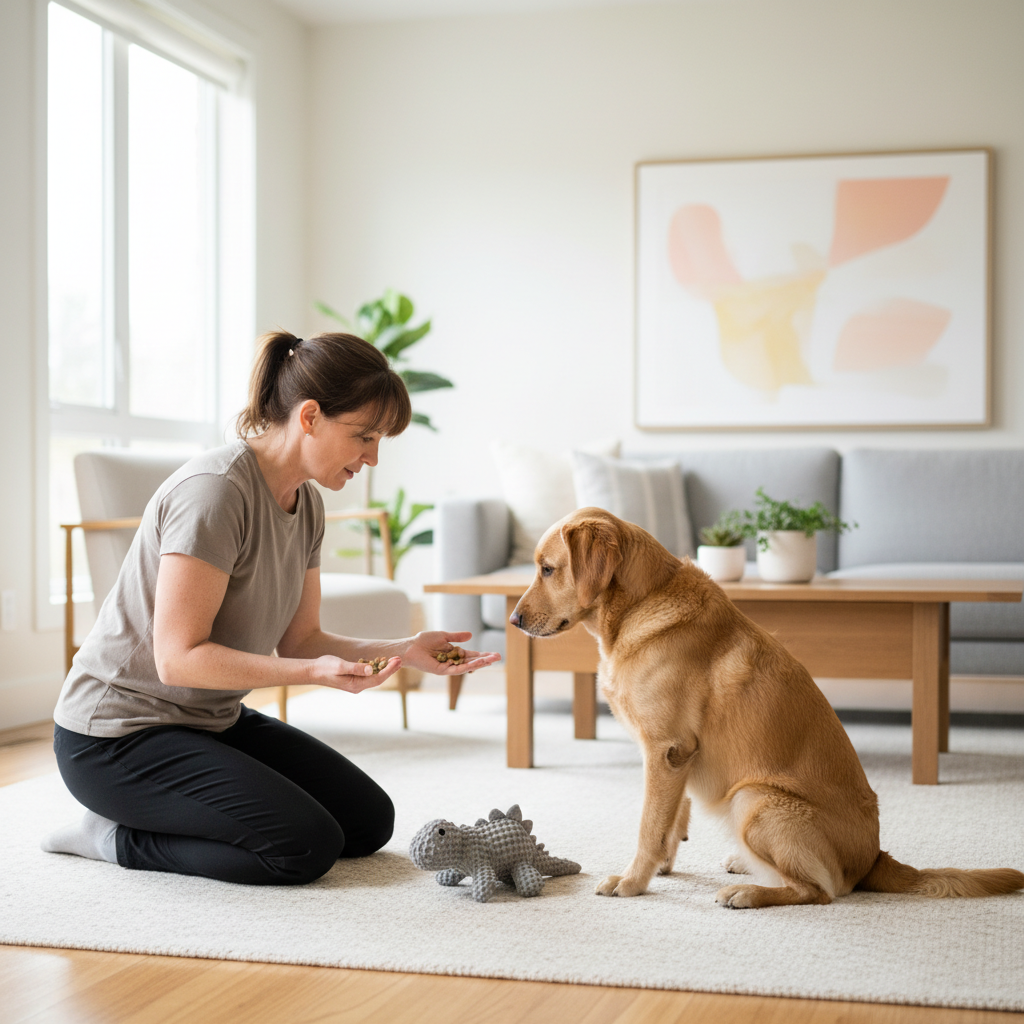
If you want “perfect” fetch, don’t start by throwing the ball farther. Start by making the rules easy, rewarding the right moments, and keeping repetition low enough that your dog still wants more.
What “perfect fetch” actually means (and what it doesn’t)
Most people picture a dog sprinting out, grabbing a ball, returning straight, then placing it gently in your hand. That’s a great end goal, but it’s really a chain of cues, and you can train each link.
- Go get it: dog runs toward the item with confidence
- Pick up and hold: dog grips without chewing or spitting
- Return to handler: dog comes back promptly, not doing victory laps
- Release on cue: dog drops to hand or to the floor when asked
What it doesn’t mean: endless throwing until your dog collapses. Over-arousal, sloppy reps, and sore joints are a real tradeoff, especially for young dogs, seniors, and high-drive athletes.
Why dogs “won’t fetch”: common causes you can fix
Before you add more excitement, it helps to diagnose what’s missing. Many dogs aren’t refusing, they’re simply doing the part that pays best.
- They like chase, not return, so running off with the toy is self-rewarding.
- They don’t understand the hold, so they drop it halfway back, or mouth it until it falls.
- They guard the toy, often because humans keep grabbing at it, creating pressure.
- They’re not toy-motivated, so the object isn’t valuable enough to work for.
- They get overstimulated, so they jump, bark, or can’t think after a few throws.
- Physical discomfort (mouth pain, joint issues) can make picking up or running unpleasant; if you suspect this, it’s smart to ask a veterinarian.
According to the American Veterinary Medical Association (AVMA), regular veterinary care supports early identification of health issues that can affect behavior and activity. If fetch suddenly falls apart in a dog who used to love it, health belongs on the checklist.
A quick self-check: which fetch problem are you dealing with?
Use this short list, it saves time because the “fix” depends on the pattern.
- Chases but won’t pick up: the object is uncomfortable or not rewarding enough.
- Picks up but won’t come back: return behavior has not been reinforced, and the keep-away game is paying better.
- Returns but won’t release: drop cue is unclear, or you have a history of snatching the toy.
- Drops early: dog doesn’t understand “hold,” or is unsure what to do near you.
- Fetch works indoors, fails outside: distractions overwhelm the behavior, you need easier reps and higher value rewards.
Step-by-step: how to teach a dog to fetch using a simple training chain
If you want consistency, teach fetch like a mini obedience routine. Keep sessions short, 3–8 minutes, and stop while the dog still wants more.
Step 1: Build value for the object
Pick one item to start, ideally soft, easy to grip, and not so exciting that your dog spins out. Reward any interest: sniff, touch, then mouth. If your dog likes food more than toys, that’s fine, you’ll use food to “pay” for toy interaction.
- Show toy, mark the moment your dog touches it, then treat.
- Progress to brief mouth-on-toy, then treat.
- Avoid tug for now if your dog becomes frantic or possessive.
Step 2: Teach “take it” and “hold” (yes, even for fetch)
“Hold” is the reason many dogs stop dropping early. Ask for a gentle grip for one second, then two, then three, paying calmly. If your dog chomps, go back to shorter duration and reward stillness.
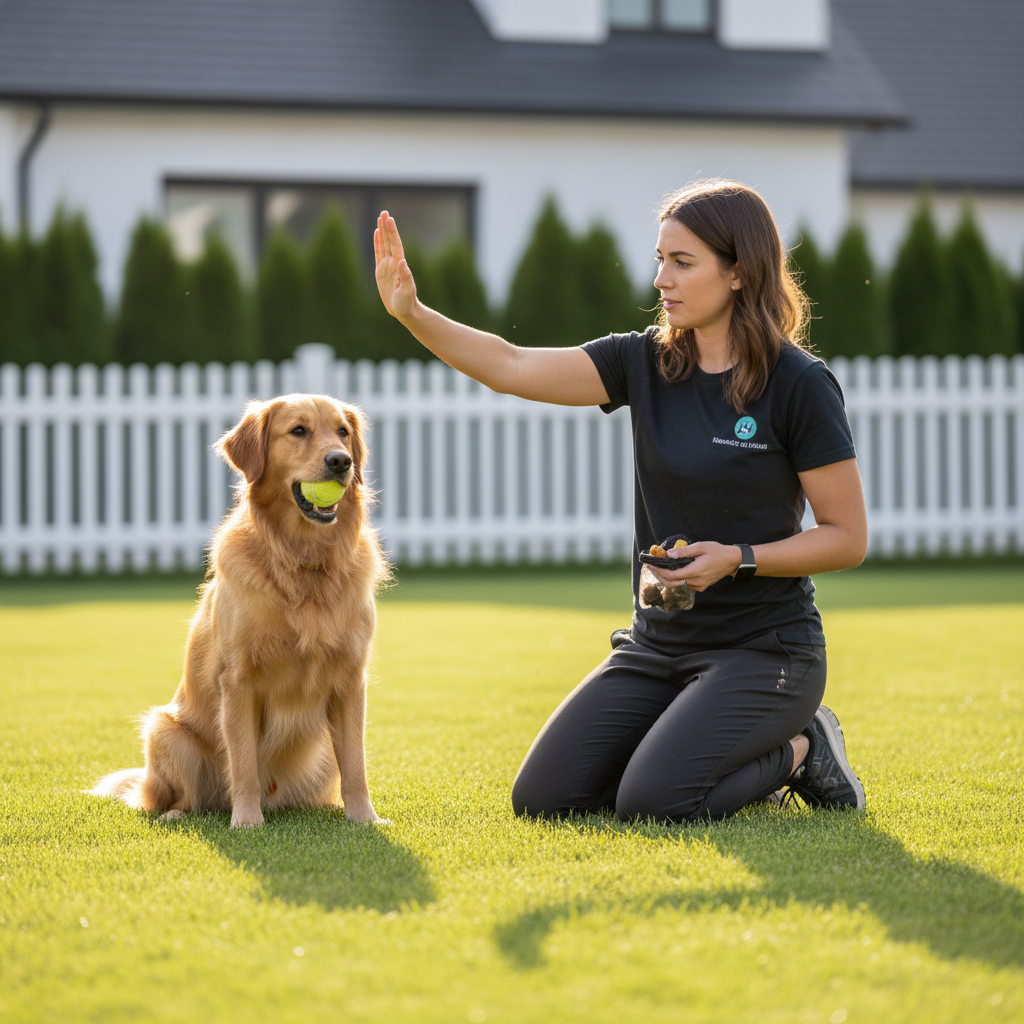
Key point: don’t keep repeating cues. One cue, then help the dog succeed by making the task easier.
Step 3: Teach “drop it” as a trade, not a wrestle
The cleanest drop comes from trust: giving you the item makes good things happen. Say your drop cue once, present a treat at the dog’s nose, then reward when the item falls. Over time, fade the visible treat.
- Drop cue → treat appears → item drops → treat delivered
- After several reps: drop cue → pause → treat appears only if needed
According to the American Kennel Club (AKC), positive reinforcement methods help teach behaviors by rewarding what you want to see more often. The “trade” approach fits that model and usually reduces keep-away behavior.
Step 4: Add the return without throwing (the part everyone skips)
Stand close, toss the toy just 2–4 feet, and the instant your dog picks it up, become interesting and move backward a step. Many dogs follow motion. When your dog comes toward you with the toy, mark and reward, then ask for the drop.
- Short toss
- Dog picks up
- You step back, encourage coming in
- Reward near you, then cue the release
If your dog blows past you, shorten distance more and reward for coming into a specific spot, like between your feet or to your left side.
Step 5: Put it together as a routine
Now your fetch looks like a predictable script: “get it” → return → drop → reset. The reset matters, it keeps your dog from grabbing the toy and re-starting the game on their terms.
- After the drop, pause for one second.
- Ask for a sit or brief calm stand.
- Then cue the next rep or end the session.
A practical table: match the fix to the symptom
When fetch feels messy, most people keep throwing. This table helps you choose the right lever instead.
| What you see | What it usually means | What to do next |
|---|---|---|
| Dog runs away with the toy | Return is not rewarded, keep-away is | Stop throwing far, reward coming toward you, use short tosses |
| Dog drops the toy halfway back | Hold is weak or dog is unsure near you | Train hold duration, reward delivery close to you |
| Dog won’t release | Drop cue unclear or grabbing history | Trade for treats, practice drop separately from fetch |
| Dog won’t pick up | Low toy value, discomfort, confusion | Build value with marking, try softer toy, consider vet if sudden |
| Dog gets too wild after 2–3 throws | Over-arousal | Short sessions, add calm resets, switch to sniff breaks |
Real-world practice plans (5 minutes a day)
Consistency beats marathon sessions. Here are simple setups that tend to work in American homes and yards.
Indoor hallway plan (best for beginners)
- Use a hallway or narrow space, it reduces zig-zagging.
- Do 5–8 short tosses max.
- End with an easy win: take it, hold 2 seconds, drop, reward.
Backyard long-line plan (best for “won’t come back” dogs)
Clip a long line for safety and guidance, not yanking. Toss short, then gently reel in slack if your dog tries to drift away, rewarding when they choose to come in.
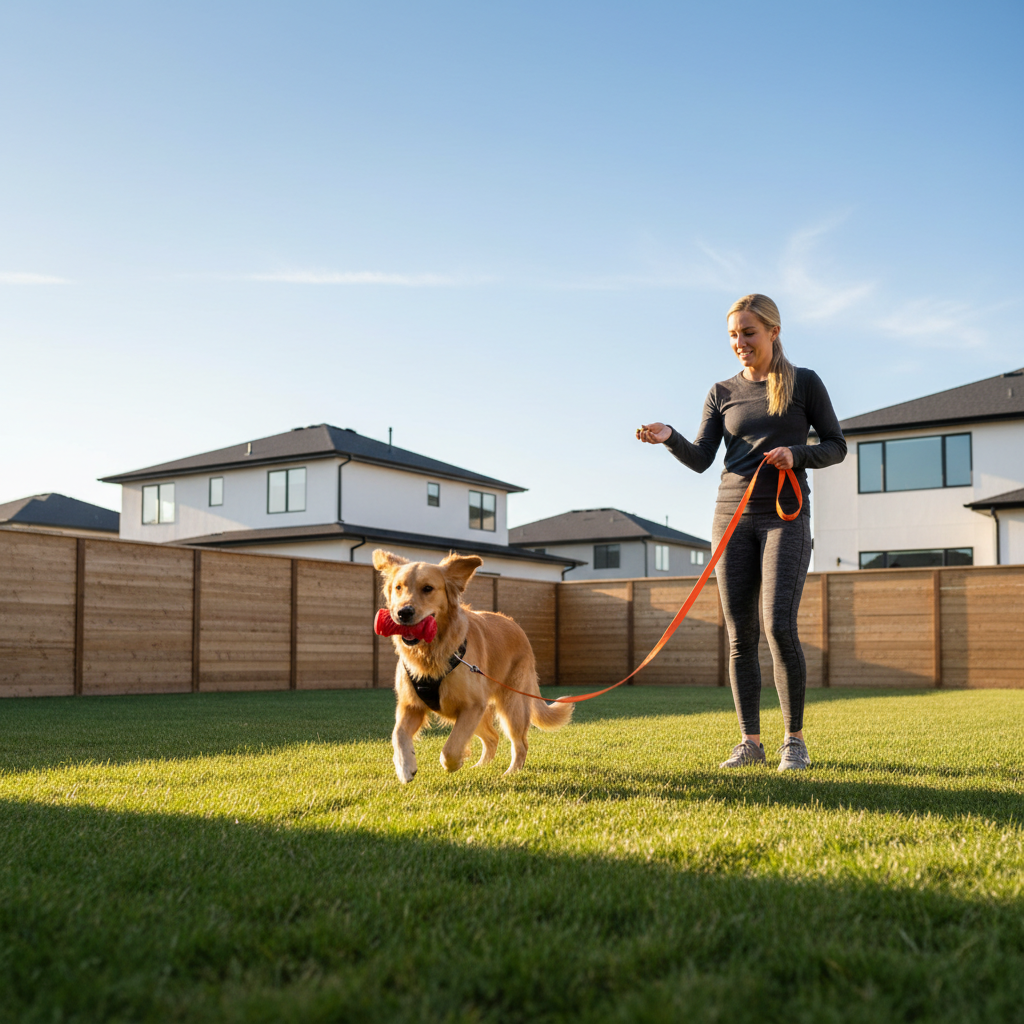
Outdoors distraction ladder (best for “works inside only”)
- Start in quiet yard
- Move to driveway or empty park corner
- Then practice near mild distractions, at a distance
If your dog fails, don’t “correct,” just lower difficulty. In training, failure usually means the environment got too hard too fast.
Mistakes that slow progress (even when you mean well)
- Repeating “fetch” over and over: your dog learns the cue is background noise.
- Chasing your dog for the toy: you accidentally train keep-away.
- Always ending when your dog messes up: many dogs start “messing up” to end the game.
- Throwing too far too soon: distance adds speed, speed adds chaos.
- Too many reps: arousal climbs, form falls apart, and joints take a beating.
Also, be cautious with repetitive jumping or hard stops, especially for puppies. According to the American College of Veterinary Surgeons (ACVS), orthopedic issues can affect mobility, and it’s reasonable to keep impact lower if you have a breed prone to joint problems or you notice stiffness.
When to get help from a professional trainer or vet
Most fetch issues are training gaps, but a few patterns suggest you should bring in support.
- Your dog growls, snaps, or freezes over toys, a qualified trainer can assess resource guarding safely.
- Your dog suddenly avoids picking up items, chews oddly, or seems painful, a vet check may be appropriate.
- You feel stuck after two weeks of short daily practice, a positive-reinforcement trainer can spot timing issues fast.
Look for a professional who explains what they’re doing and why, and who can adjust the plan to your dog’s motivation level, not just “make the dog do it.”
Conclusion: the cleanest fetch is a calm, repeatable habit
If you’ve been wondering how to teach a dog to fetch without turning it into a chaotic sprint-and-grab game, focus on the return and the release as much as the chase, and keep the throws short until the routine looks boring in the best way. Pick one small improvement for your next session, either a better hold, a faster return, or a cleaner drop, then quit early while your dog still wants another rep.
Key takeaways: reward the return, teach drop as a trade, lower distance to raise precision, and treat fetch like a skill chain rather than one trick.
Try a five-minute hallway session today, and if it feels smoother than your backyard fetch, you already learned something useful about your dog’s current training level.