
Best dog food for labradors comes down to three things most Lab owners juggle every day: appetite control, skin and coat support, and keeping joints comfortable as the years add up. If you’ve ever watched a Labrador inhale a bowl in 20 seconds and then beg like they missed breakfast, you already know why “just buy a good kibble” rarely feels simple.
Labradors tend to gain weight easily, and extra pounds can quietly snowball into mobility issues, lower stamina, and more vet conversations than anyone wants. The upside is you can often make a meaningful difference with a better match on calories, protein quality, and a few targeted nutrients.
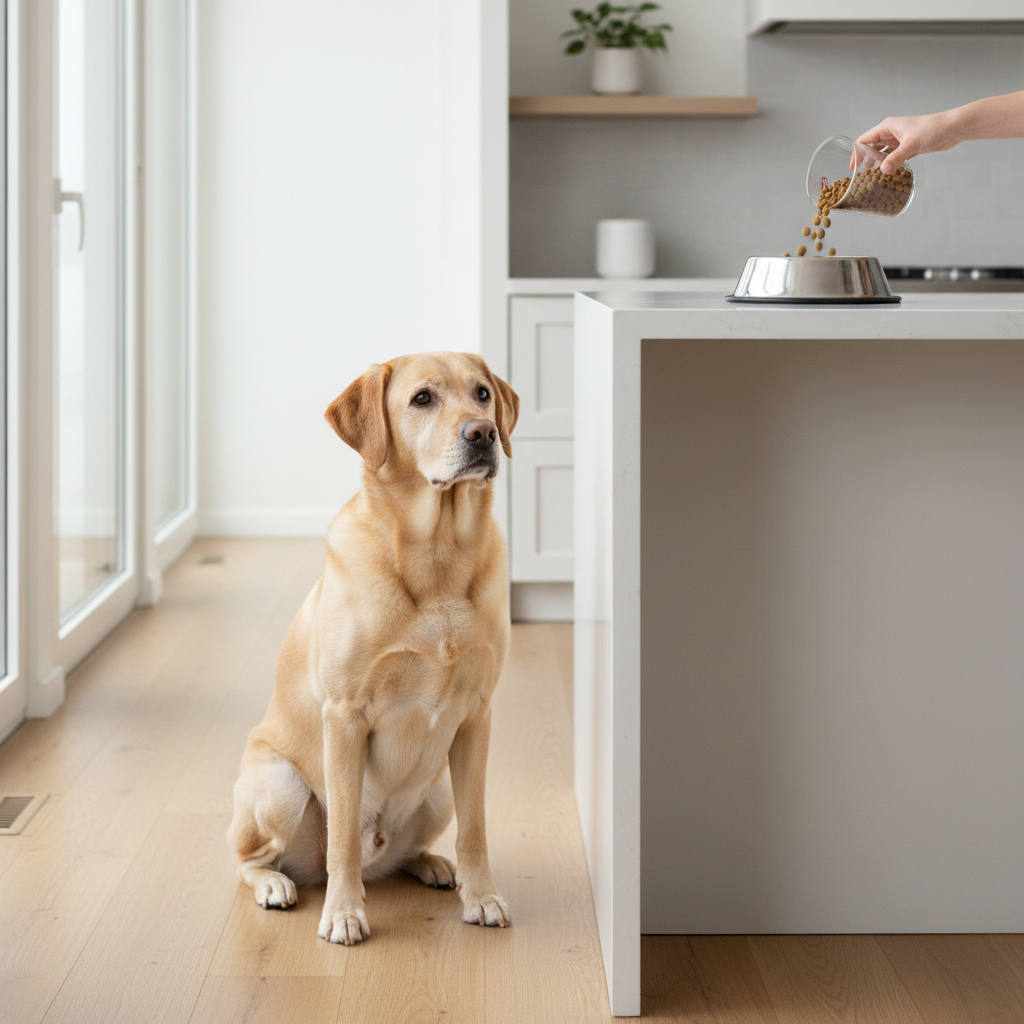
This guide keeps it practical, you’ll get a quick “what to buy for which Lab” table, a label-reading checklist, and a few realistic feeding tactics that help even if your dog acts hungry 24/7. I’ll also flag common traps like overdoing grain-free or chasing the highest protein number without looking at calories.
What makes Labradors different at the food bowl
Labradors are famously food-motivated, and many have a talent for finding snacks you didn’t know existed. But there are a few nutrition themes that come up again and again with this breed.
- Weight gain risk: Many Labs do better with moderate calories and clear portion control, even when activity seems “pretty normal.”
- Joint wear and tear: Their size and enthusiasm can be hard on hips and elbows over time, especially if weight creeps up.
- Skin and coat sensitivity: Some Labs get itchy, flaky, or have ear issues that may improve when you dial in the protein source and omega-3 fats.
- Fast eating: Rapid meals can mean poor satiety cues and, in some dogs, more digestive upset.
According to the American Kennel Club (AKC), Labradors are prone to obesity and joint concerns, so diet and body condition matter long before a problem feels obvious.
Quick picks by life stage and lifestyle (use this table first)
If you only want a starting point, use the matrix below, then confirm with the label checklist in the next section.
| Lab type | What to prioritize | What to avoid (often) | Good label signals |
|---|---|---|---|
| Puppy (8 weeks–12 months) | Large-breed puppy growth support, controlled calcium/phosphorus | Adult-only foods, “all life stages” that don’t specify large-breed growth | “Large Breed Puppy”, DHA source (fish oil), named meat protein |
| Young adult, very active | Higher protein quality, enough calories for training/work | Overfeeding “performance” formulas when activity is moderate | Animal protein first, fat level that matches workload |
| Adult, average activity | Calorie control, satiety fiber, steady energy | Free-feeding, very calorie-dense kibbles | Calorie info clearly listed, moderate fat, added omega-3s |
| Overweight or “always hungry” | Weight-management formula, higher fiber, measured meals | Too many treats, “grain-free” used as a weight-loss strategy | “Weight Management”, higher fiber %, lower kcal/cup |
| Senior (7+ years, varies) | Lean mass support, joint nutrients, easy digestion | Very high fat, excessive calories | Glucosamine/chondroitin listed, omega-3s, moderate calories |
| Food sensitivities (itch/ears/soft stool) | Limited ingredient or hydrolyzed protein (with vet guidance) | Frequent protein switching without a plan | Single main protein, simple recipe, clear allergen controls |
How to read a dog food label for a Lab (without overthinking it)
Marketing claims are loud, the label details are quieter. For Labradors, the “quiet details” tend to matter more.
Start with the calorie density
For many households, calories are the make-or-break factor in finding the best dog food for labradors. Two foods can look equally “premium,” but one might be dramatically more calorie-dense per cup.
- Look for kcal/cup (or kcal/kg) on the bag or brand site.
- If it’s missing, treat that as a yellow flag and contact the manufacturer.
Check the AAFCO statement, then the life stage
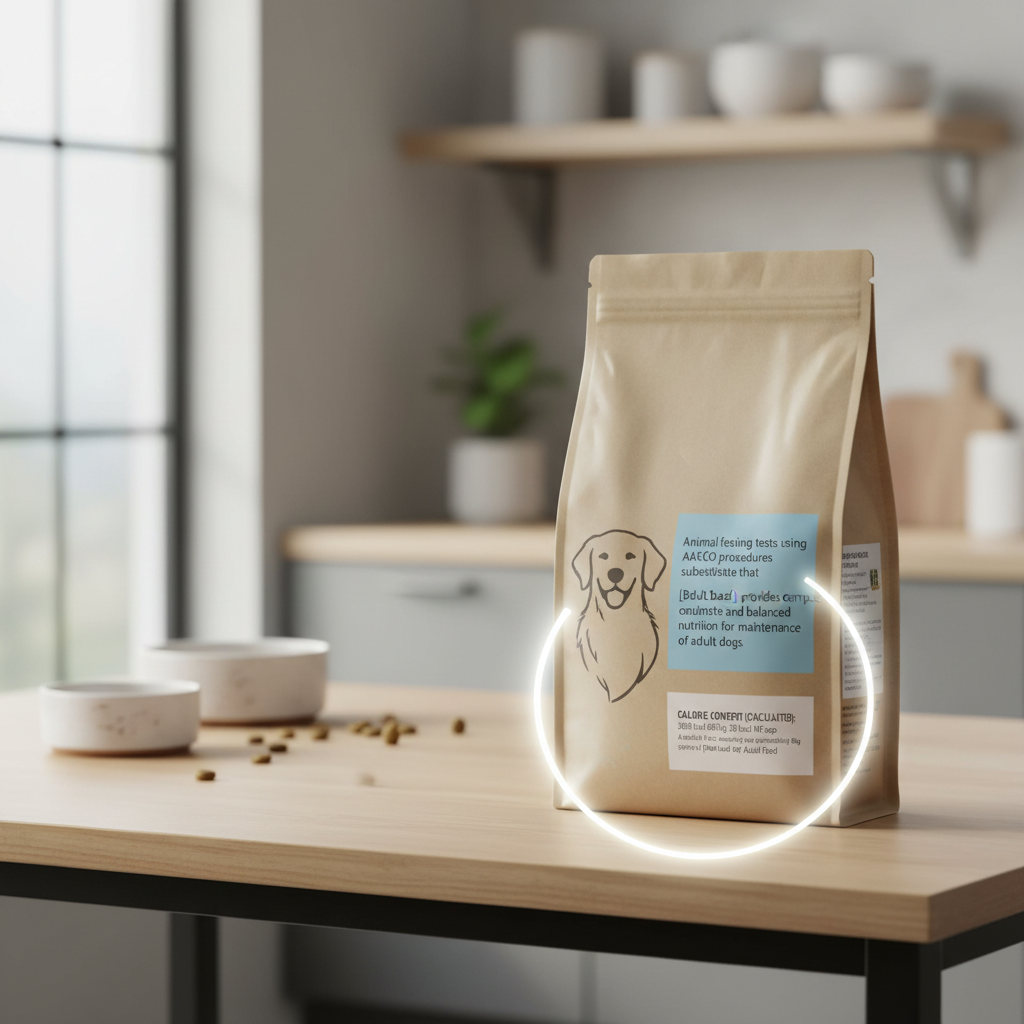
According to the Association of American Feed Control Officials (AAFCO), complete and balanced foods should meet nutrient profiles for a specific life stage or pass feeding trials. For Lab puppies, “large breed puppy” is not just a buzzword, it often signals more careful mineral targets.
Ingredient list: focus on the “main idea,” not perfection
Many Labs do well when the first few ingredients show a clear animal protein source (like chicken, salmon, lamb, beef) and a sensible carbohydrate and fiber base. If your Lab has itchiness or recurring ear issues, it can be worth simplifying the protein source rather than chasing exotic add-ons.
Targeted nutrients that often matter for Labs
- Omega-3s (EPA/DHA): often used to support skin, coat, and joint comfort.
- Fiber: can help satiety for the “I’m starving” personality type.
- Glucosamine/chondroitin: common in large-breed and senior formulas, evidence varies, but many owners and vets still consider it reasonable support.
- Quality protein: supports muscle, especially as activity changes with age.
According to the FDA, some grain-free diets have been investigated for a possible association with canine dilated cardiomyopathy (DCM). The science is still evolving, so if you’re considering grain-free, it’s smart to discuss it with your veterinarian, especially for long-term feeding.
A simple self-check: which food category fits your Lab right now?
If you’re stuck between “adult,” “large breed,” “light,” “sensitive,” and 12 other options, this quick checklist usually clears the fog.
- Your Lab’s ribs are hard to feel, waist is hard to see from above → consider weight management or a lower-calorie adult formula, plus stricter treat math.
- Your Lab is young and still growing, paws look huge, legs seem to grow overnight → choose large-breed puppy, not generic puppy.
- Your Lab has recurring soft stool or gassiness, especially after rich treats → try a gentle digestion formula, slow transitions, and fewer extras.
- Itchy skin, ear debris, paw licking that comes and goes → consider limited ingredient or a vet-guided elimination approach.
- Slowing down, stiffness after naps, reluctant to jump in the car → prioritize joint support, lean calories, and check weight first.
If more than one applies, weight control tends to be the lever with the biggest payoff for most Labs, then digestion, then “nice-to-have” features.
Practical feeding plan: make the food work (not just buy it)
Even the best dog food for labradors can flop if portions drift or treats quietly double daily calories. Here’s a plan that stays realistic.
Step 1: Pick a target body condition, not a target weight
Ask your vet to score body condition (BCS) and give a reasonable goal range. It’s more useful than guessing what a Lab “should” weigh, because frames vary a lot.
Step 2: Measure for two weeks, then adjust
- Use a kitchen scale if you can, cups are easy to misjudge.
- Feed for the target weight/condition, not the current weight, when weight loss is the goal.
- Recheck every 10–14 days, small changes beat dramatic cuts.
Step 3: Make treats count, or replace them
- Cap treats around a small slice of daily intake, your vet can suggest a safe percentage for your dog.
- Use part of the measured kibble as training rewards.
- Try lower-calorie options like crunchy veggies if your dog tolerates them, and confirm safety with your veterinarian.
Step 4: Slow down the fast eater
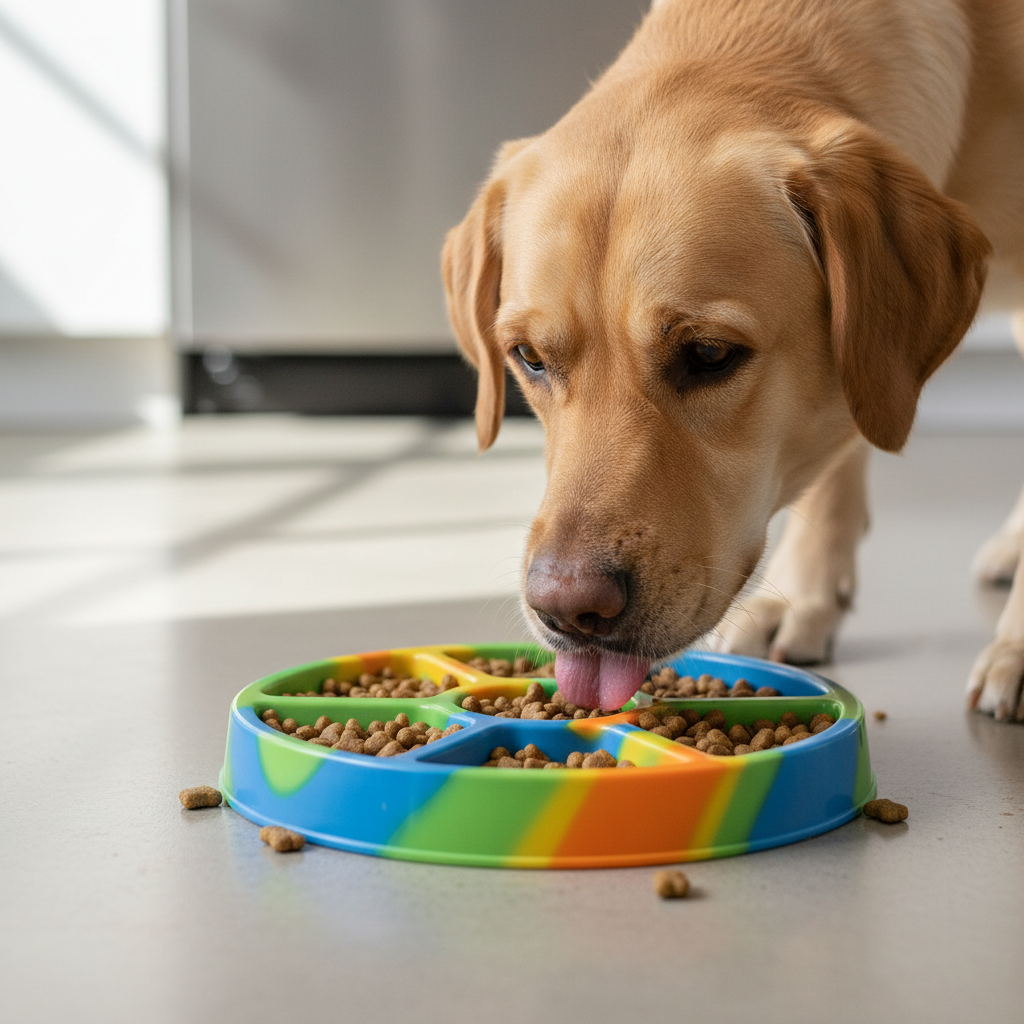
Many Labs act hungrier when they eat faster. A slow feeder bowl, treat-dispensing ball, or scattering kibble in a snuffle mat can stretch mealtime without adding calories.
Step 5: Transition slowly, especially for sensitive stomachs
A gradual change over about a week often reduces digestive drama. If stool gets persistently watery, or your dog seems unwell, stop and contact your vet.
Common mistakes Lab owners make when choosing food
- Buying “high protein” to fix weight: protein matters, but calories drive weight change. Some high-protein foods are also high-calorie.
- Assuming grain-free equals healthier: sometimes it helps a specific dog, often it’s unnecessary, and it may complicate the DCM conversation.
- Switching foods too fast: frequent changes can create loose stool that looks like a “food problem,” when it’s really a transition problem.
- Ignoring liquid calories: table scraps, peanut butter, chews, and toppers can quietly overwhelm a carefully chosen diet.
- Chasing boutique ingredients over consistency: many Labs do best on a steady, complete diet with boring reliability.
When to ask your vet (or a veterinary nutritionist) for help
If your Lab has ongoing itching, chronic ear infections, repeated vomiting/diarrhea, unexplained weight change, or signs of pain, it’s time to get a professional opinion rather than endlessly rotating bags. Prescription diets and elimination trials can be annoying, but they’re often the fastest way to stop guessing.
According to the American Veterinary Medical Association (AVMA), nutrition choices should consider the individual dog’s health status, especially when medical conditions are in play. If your Lab takes medications or has diagnoses like pancreatitis, kidney disease, or heart disease, diet changes should be guided by your veterinarian.
Key takeaways (what to do today)
- Start with calories per cup, then match life stage, then add “extras” like joint support.
- If weight is creeping up, a weight-management formula plus measured portions usually beats ingredient tinkering.
- For puppies, choose large-breed puppy formulas to support controlled growth.
- If you suspect sensitivities, simplify the protein source and consider vet-guided steps before going extreme.
Conclusion: picking the right food without getting stuck
The best dog food for labradors in 2026 is rarely the fanciest bag, it’s the one your Lab digests well, supports a lean body condition, and fits your routine so you can feed it consistently. If you do one thing this week, measure portions for 14 days and watch body condition and stool quality, that feedback usually tells you more than any front-of-bag claim.
If you’re shopping next, use the table to narrow choices, confirm the AAFCO statement and calories, then commit to a slow transition and a treat plan you can actually maintain.
FAQ
- What is the best dog food for labradors that gain weight easily?
Many Labs do well with a weight-management or “light” formula that clearly lists lower kcal per cup and includes more fiber for fullness. Pair it with measured meals and treat control, because even a great formula can’t offset frequent extras. - Should Labradors eat grain-free dog food?
Some dogs need specific ingredient adjustments, but grain-free is not automatically better. Because the grain-free and DCM discussion remains unresolved, it’s worth asking your vet what makes sense for your dog’s history and risk factors. - How do I choose food for a Labrador puppy?
Look for large-breed puppy labeling and a complete-and-balanced AAFCO statement for growth. Controlled minerals matter for big puppies, and random adult foods can be a poor fit during this phase. - Is salmon-based food good for Labs with itchy skin?
It can be, mainly because fish-based diets often provide omega-3s and use a different protein source than chicken. Still, itchiness can have multiple causes, so persistent issues should be evaluated by a veterinarian. - How much should I feed my Labrador each day?
It depends on calorie density, age, and activity, so start with the bag guide, then adjust based on body condition over 2–4 weeks. If weight changes faster than expected, your vet can help set a safer target. - Do Labs need joint supplements in their food?
Not always, but joint-support formulas can be a reasonable choice for seniors or dogs with stiffness, especially if weight is controlled. For significant limping or pain, supplements shouldn’t replace a veterinary exam. - Why does my Labrador act hungry all the time?
Some Labs are simply very food-motivated, and fast eating can make it worse. Slower feeding tools, higher-fiber diets, and treat budgeting help, but sudden appetite changes should be discussed with your vet.
If you’re trying to narrow down options fast, bring your current bag’s calories-per-cup info, your Lab’s age and approximate ideal body condition, and any symptoms like itchiness or soft stool, then you can compare a short list of foods without falling into endless switching.