
Best automatic cat feeders solve a very specific problem: you want consistent meals when you’re at work, traveling, or just tired of the 5 a.m. wake-up call, but you don’t want to gamble with portion size, jams, or a feeder your cat learns to bully.
The tricky part is that “automatic cat feeder” covers a lot of different designs, and what works for a chill grazer can be a disaster for a food-motivated cat who treats plastic lids like a puzzle toy. Add in kibble size, multi-cat dynamics, and power outages, and it gets complicated fast.
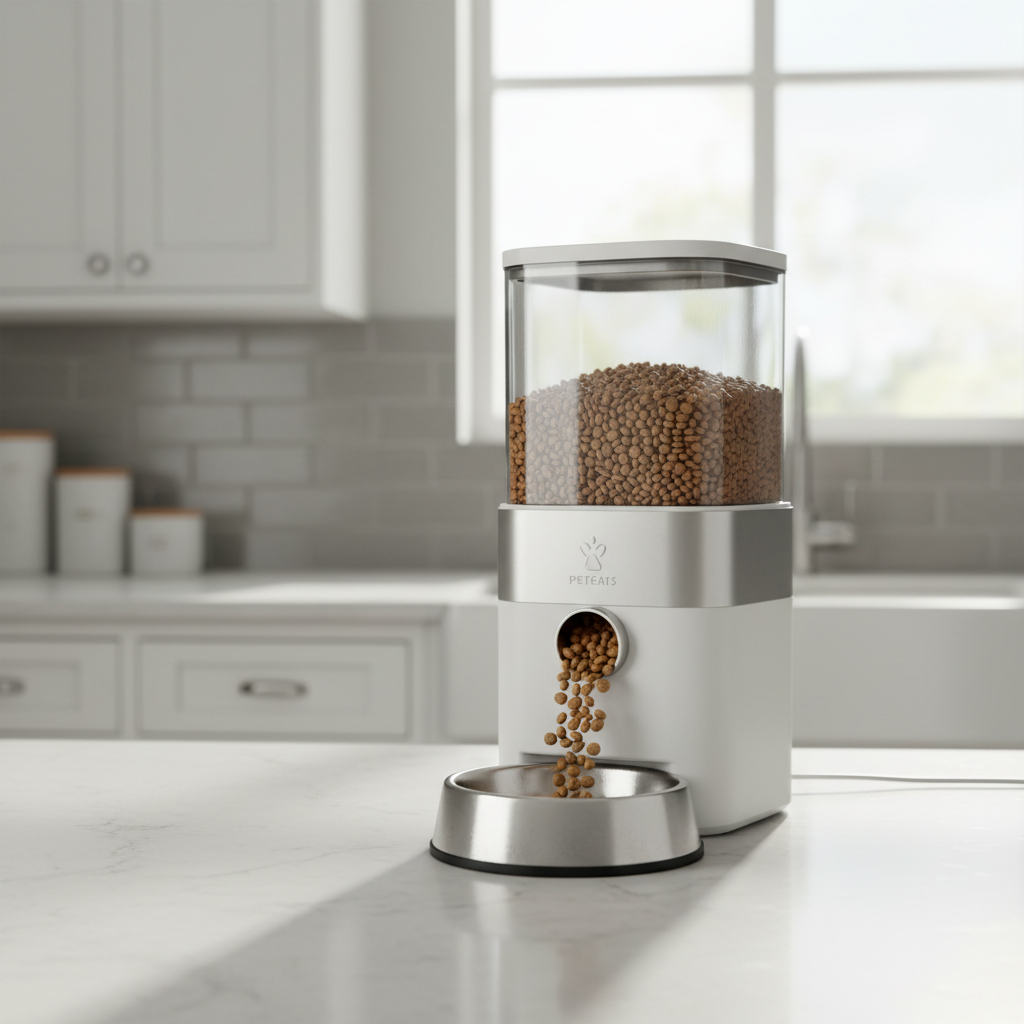
This guide is built to help you choose confidently, even if you never memorize specs. You’ll get a practical comparison table, a quick self-check, and setup tips that usually prevent the common “it worked for a week and then…” issues.
Quick take: what makes an automatic feeder “best” in 2026
Most people shopping for the best automatic cat feeders are really buying three things: reliable portioning, predictable scheduling, and fewer feeding-related behavior problems. Extra features are nice, but they don’t save you if the basics fail.
- Reliability: stable motor/auger, minimal jamming, sturdy lid, and consistent dispensing.
- Portion control: small-enough increments to avoid creeping weight gain.
- Power plan: wall power plus battery backup, and sane behavior after an outage.
- Food fit: handles your kibble size/shape, or supports wet food safely if needed.
- Cleanability: fewer crevices, removable bowl, and parts that don’t retain odors.
Key point: if your cat has medical needs (diabetes, urinary issues, kidney disease), use a feeder only as part of a plan your veterinarian supports, because timing and diet details matter.
Types of automatic cat feeders (and who they work for)
There are four common styles, and each tends to fail in a different way. Picking the right type often matters more than picking the fanciest model.
Gravity feeders (not timed)
These aren’t truly automatic, they just refill the bowl. Fine for cats who self-regulate, not great for portion control or weight management.
Timed dry-food feeders (auger or rotating dispenser)
Best fit for most households using kibble, especially if you need multiple meals per day. Watch for jam risk with irregular kibble shapes.
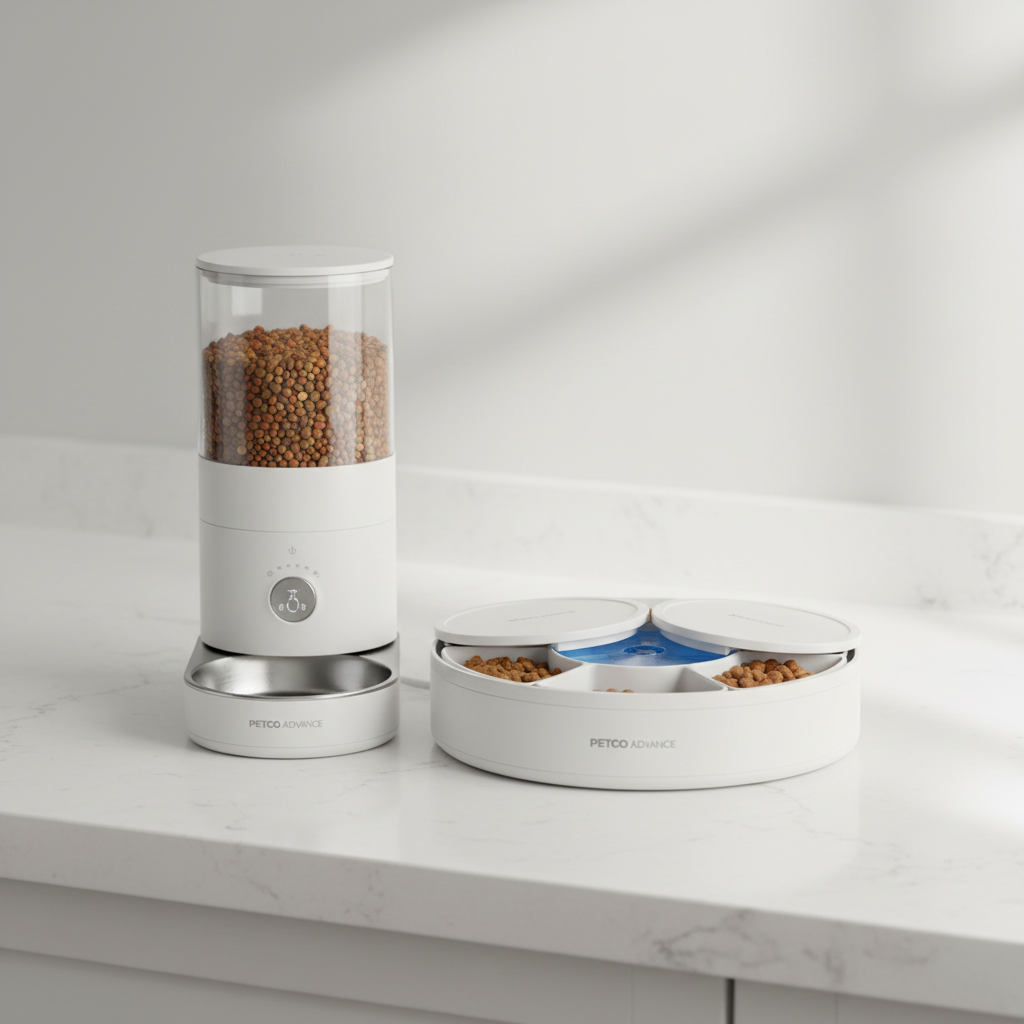
Wet-food automatic feeders (ice packs/covered trays)
Useful if your cat won’t eat dry food, but food safety becomes the main concern. In warmer rooms, wet food can spoil quickly, so many people limit the “out time” and keep schedules conservative.
Microchip/RFID feeders (access control)
Technically not automatic feeding schedules, but essential for multi-cat homes where one cat steals meals. They shine for prescription diets and slow eaters.
Feature checklist that actually changes day-to-day results
Marketing pages love to talk about apps and cameras. Those can help, but they’re not what keeps your cat reliably fed.
- Portion granularity: smaller steps help you dial in calories without guessing.
- Anti-jam design: wider chute, strong motor, and a hopper shape that doesn’t “bridge” kibble.
- Secure lid: twist-lock or latch that withstands pawing and body-slamming.
- Dual power: plug-in plus batteries so meals still dispense during brief outages.
- Low-food alerts (local or app): helpful, but verify with real-life tests.
- Dish material: stainless steel often cleans easier and holds less odor than some plastics.
- Multi-meal schedule: more slots per day helps split calories, which can reduce begging.
According to the FDA, pet food handling and storage should minimize contamination risk, and leaving perishable food out too long can raise safety concerns. If you use a wet-food feeder, treat time and temperature as real constraints, not a suggestion.
Comparison table: which feeder style matches your situation
This isn’t a brand ranking. It’s a decision shortcut so you don’t buy the wrong category and then try to “make it work.”
| Household need | Best feeder type | Why it helps | Main watch-outs |
|---|---|---|---|
| Portion control for weight management | Timed dry-food feeder | Repeatable meal sizes and schedules | Calibration, kibble jams |
| Cat eats only wet food | Wet-food tray feeder | Pre-portioned meals, covered compartments | Food spoilage risk, cleaning |
| One cat steals another’s food | Microchip/RFID access feeder | Controls who can eat the meal | Training period, tag sensitivity |
| Short weekend trips | Timed dry-food feeder + backup plan | Maintains routine when you’re away | Needs testing, not a set-and-forget |
| Cat grazes and self-regulates | Gravity feeder (sometimes) | Simple, low maintenance | Overeating can sneak up |
Self-test: choose the right setup in 2 minutes
If you only do one thing before buying, do this. It prevents most “wrong model” purchases.
- How many cats? One cat is easy; multiple cats often need access control or separate feeding stations.
- Dry, wet, or mixed? If wet food is non-negotiable, prioritize safe timing and cleaning over app features.
- How food-motivated is your cat? If your cat raids cabinets, assume they will try to defeat the feeder lid.
- How consistent is your power? If outages happen, battery backup moves from “nice” to “required.”
- Portion precision matters? For weight loss or medical diets, you want smaller portion steps and reliable repeatability.
- Travel frequency? For longer trips, a feeder is not a substitute for a pet sitter in many cases.
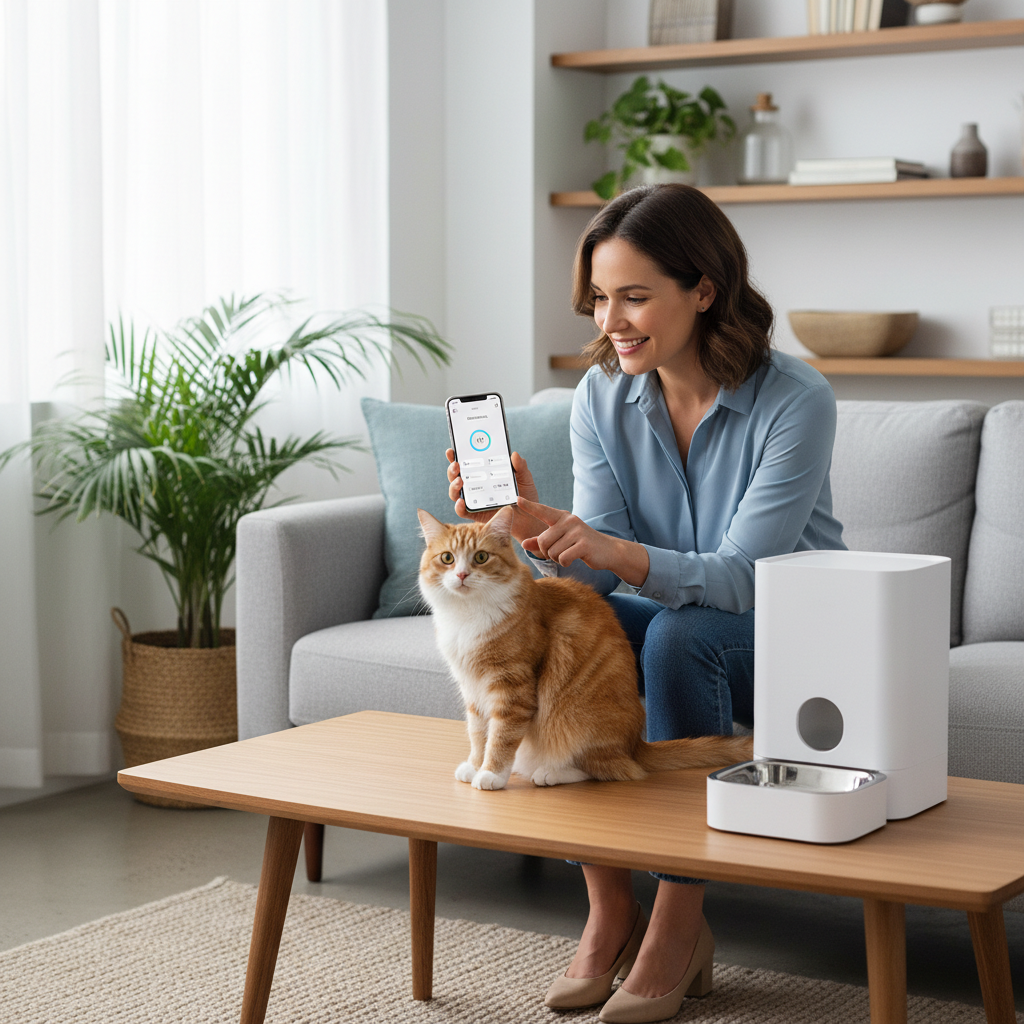
If two or more of your answers raise red flags (multi-cat stealing, wet food needs, frequent outages), shop for the feeder type that addresses those first, then compare models within that type.
Practical setup steps that prevent the usual failures
A lot of people blame the feeder when the real issue is setup. These steps take a little time, but they save you from missed meals and stress.
1) Calibrate portions with a kitchen scale
Don’t trust “cups” on the box. Dispensed volume changes with kibble size and shape. Weigh one serving, then repeat a few times to see consistency. If your cat is on a veterinary diet, confirm targets with your clinic.
2) Test for jams using your exact kibble
Run at least 10-15 cycles before relying on it. Large, irregular, or dusty kibble can jam more easily. If it jams in testing, it will jam when you’re not home.
3) Place it where your cat can’t easily tip it
Corner placement helps. Some households add a non-slip mat or a heavy base. The goal is boring stability, not aesthetics.
4) Ease your cat into it
Feed one meal per day via the feeder for a few days, then increase. Cats that get startled by motor noise often adapt if the first experiences are low-pressure.
5) Build a simple backup plan
- Fresh batteries installed (even if it’s plugged in)
- A neighbor contact for longer trips
- A camera is optional, but it helps you verify dispensing and eating
Safety notes and common mistakes (worth reading)
Automatic feeding is convenient, but it’s not risk-free. Most issues come from a few predictable mistakes.
- Leaving wet food out too long: in many homes, room temperature varies a lot, so be conservative and discard uneaten wet food promptly.
- Assuming the app equals reliability: Wi-Fi drops happen; a feeder should keep schedules locally even without internet.
- Overfeeding via “snacks”: small extra portions add up quickly, especially for indoor cats.
- Not cleaning often enough: oils from kibble can go rancid and affect appetite; trays and bowls should be cleaned regularly.
- Using one feeder for multiple cats: if one cat guards the bowl, the other may eat less, even if food dispenses correctly.
According to the American Veterinary Medical Association (AVMA), pet care decisions should consider the animal’s health status and behavior, so if your cat has anxiety, resource guarding, or diet restrictions, it’s reasonable to ask your veterinarian for feeding-setup guidance.
Conclusion: how to pick the right feeder this year
The best automatic cat feeders in 2026 are the ones that match your feeding reality: dry vs wet, single vs multi-cat, stable power vs frequent outages, and how determined your cat is when food is involved. Get the type right, prioritize reliability and portion control, then choose convenience features you’ll actually use.
If you want a simple next step, do this today: write down your cat’s daily food amount, decide how many meals you want to split it into, then pick a feeder type that can deliver that schedule consistently. Once you narrow the category, shopping gets much easier.