
Best pet playpens for puppies usually come down to one thing: can the pen keep your puppy safely contained without turning your home into a chew-and-escape obstacle course.
If you have a young pup, you already know the pain points, potty accidents at the edge of the rug, chewing at the wrong moment, and the “I looked away for 30 seconds” chaos. A good playpen won’t fix training by itself, but it can buy you consistency, and consistency is what makes housetraining and calm behavior actually stick.
This guide focuses on what matters in real homes, apartment vs. house, tile vs. carpet, calm pup vs. climber, and how to choose between wire, plastic, mesh, and convertible pen systems. You’ll also get a quick comparison table, setup tips, and the common mistakes that make people think pens “don’t work.”
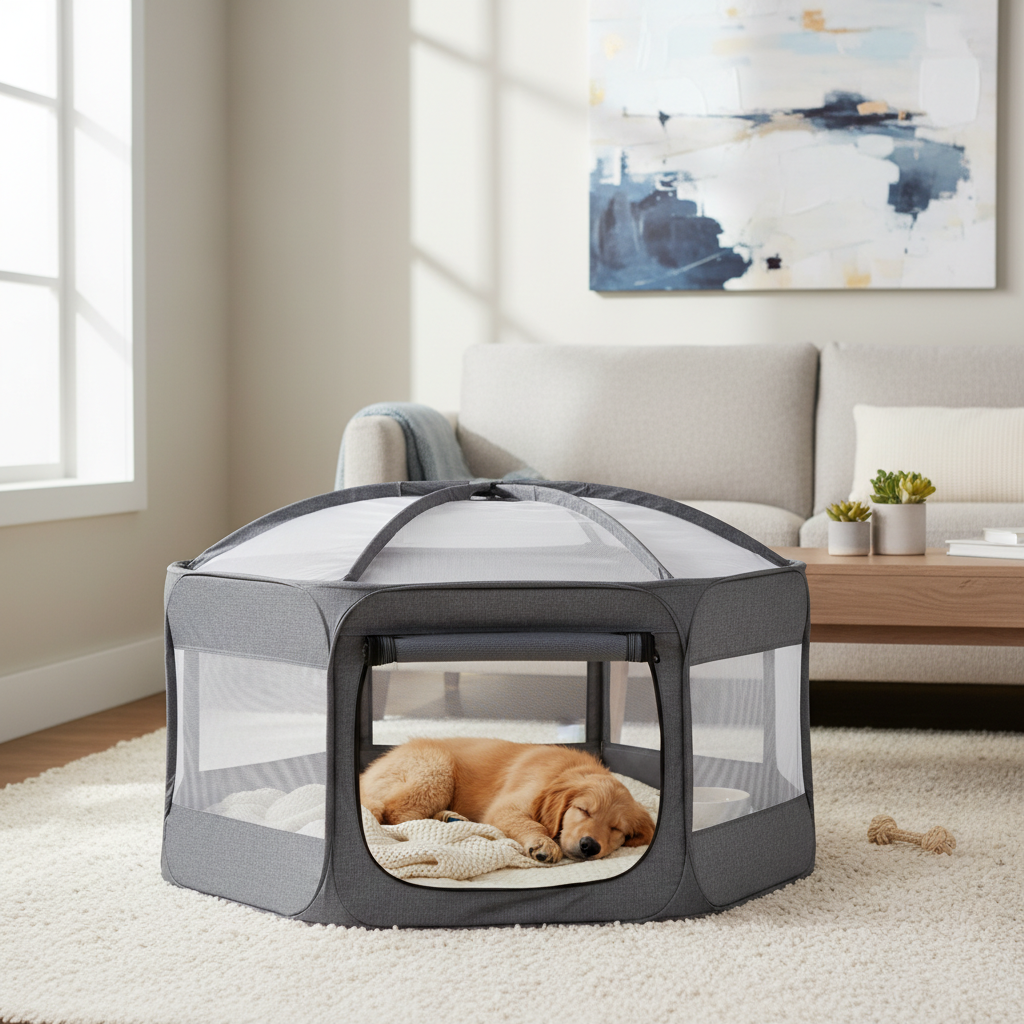
What “best” really means for a puppy playpen
When people search for the best pet playpens for puppies, they often expect a single winner. In practice, “best” depends on your puppy’s size, behavior, and your floor plan. A pen that’s perfect for a mellow 10-week-old might be a joke for a 6-month-old jumper.
- Containment: height, panel rigidity, door latches, and whether your pup can climb the bars.
- Safety: no pinch points, stable base, no sharp edges, and appropriate spacing so paws don’t get stuck.
- Cleanability: removable trays or washable surfaces matter more than most listings admit.
- Flexibility: can it expand, attach to a crate, or change shape for your room?
- Real-life fit: works with your flooring, your furniture, and how you actually move around the house.
According to the American Kennel Club (AKC), confinement tools like crates and pens can support housetraining and management when used appropriately, meaning comfort, supervision, and positive association matter as much as the hardware.
Quick comparison: common playpen types (with who they fit)
Most “2026” product lists recycle the same models, so it’s more helpful to compare categories. Use this table to narrow the field, then shop within the type that matches your puppy.
| Playpen type | Best for | Pros | Trade-offs |
|---|---|---|---|
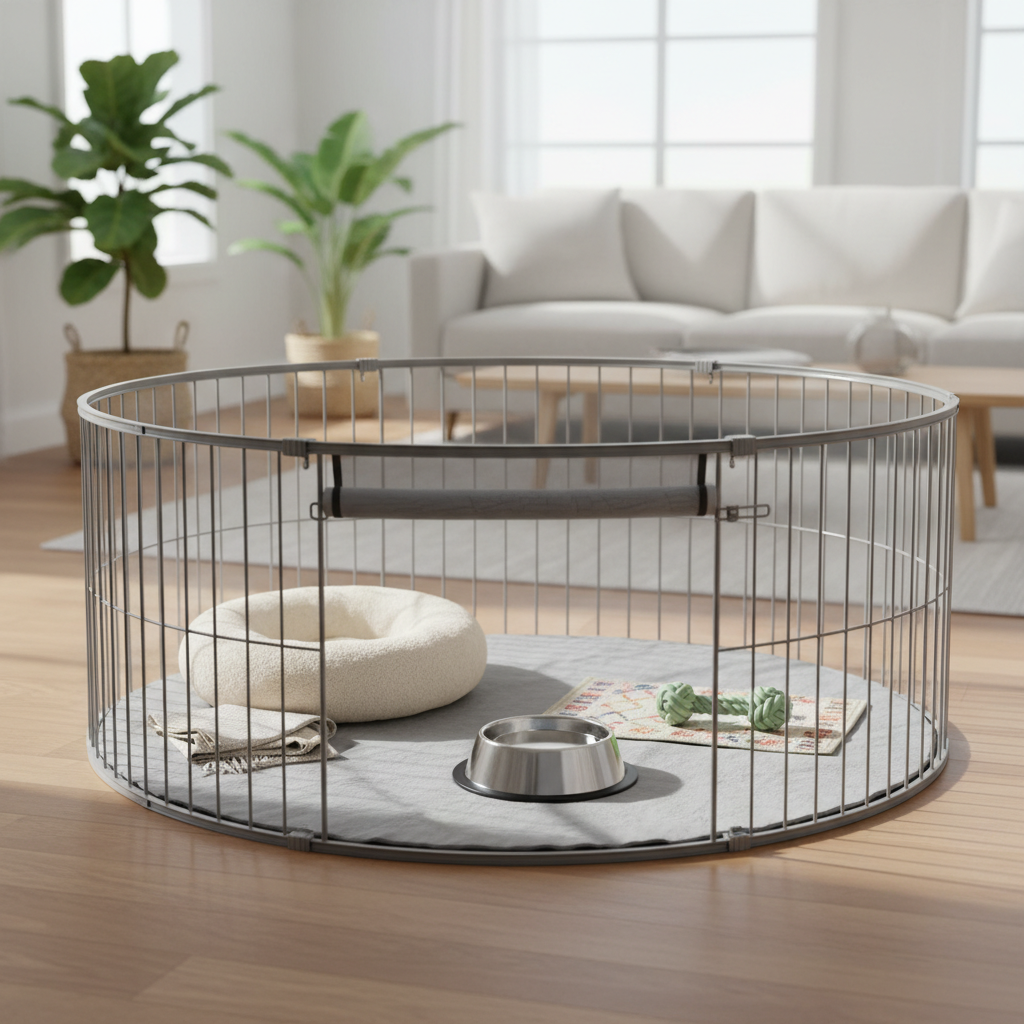
| Wire metal pen (foldable panels) | Most medium to large pups; long-term use | Sturdy, expandable, good airflow, often has door | Can slide on hard floors without a mat; some pups climb |
| Plastic panel pen | Small pups, lighter chewers, indoor use | Gentler edges, easy wipe-down, looks “home-friendly” | Some flex; determined pups may push panels |
| Soft-sided mesh pen | Travel, calm pups, supervised hangouts | Lightweight, portable, comfy vibe | Not great for chewing or scratching; zippers can fail |
| Convertible crate + pen system | Owners who want one setup to scale | Efficient footprint, integrates crate training | Costs more; setup options can overwhelm at first |
How to choose the right size and height (the part most people underestimate)
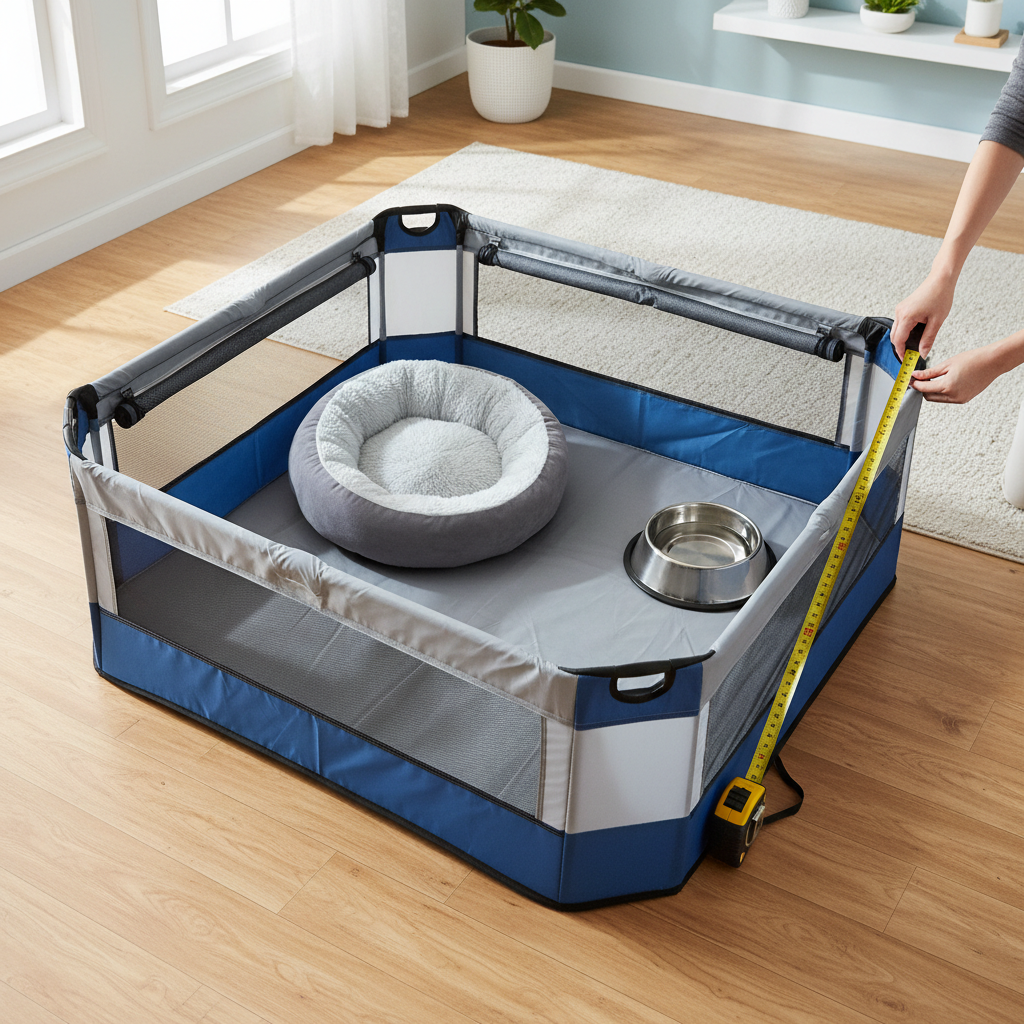
Size is where “best pet playpens for puppies” searches go sideways, because people buy for today, not for the next growth spurt. If your pup is a breed that grows fast, a pen that looks roomy now can become cramped in weeks.
A practical sizing baseline
- Minimum floor space: enough room for a bed, water, and a clear potty pad zone if you use pads.
- Height: plan for the puppy you’ll have in 2–3 months, not the one you brought home last weekend.
- Panel spacing: small breeds need tighter spacing so heads don’t slip through.
Also, watch behavior early. If your puppy already tests boundaries, paws at panels, or tries to hop, choose a taller, heavier pen now. Upgrading later often costs more than doing it once.
Key features that matter in day-to-day use
Listings love buzzwords, but daily life comes down to a few details. If you’re comparing the best pet playpens for puppies, put these on your non-negotiable list.
- Stable connectors: weak clips or wobbly hinges turn into gaps once a puppy leans or jumps.
- Door design: a door that swings smoothly and latches cleanly reduces the “escape during entry” problem.
- Floor protection: rubber feet, included mat, or compatibility with a tray can prevent sliding and scratches.
- Chew resistance: metal holds up better than mesh or softer plastics for many pups.
- Reconfiguration: panels that let you do rectangle, L-shape, or fence-style are surprisingly useful.
If your puppy tends to mouth everything, skip cute fabric pens for primary containment. They can work for supervised play, but many households end up replacing them quickly.
Fast self-check: which playpen style fits your puppy and home?
Try this quick checklist before you shop. You’ll usually land on a clear direction within a minute.
- My puppy is a climber or jumper → prioritize taller wire pens, consider a top cover if needed.
- My puppy chews baseboards and corners → pick sturdier materials, avoid exposed foam mats unless you can supervise.
- I have hardwood or tile → choose non-slip feet, plan for a mat or tray to reduce sliding and noise.
- I’m in an apartment → quieter connectors, smaller footprint, and easy fold-flat storage matter more.
- I travel or visit family often → soft-sided pen as a secondary option, not always as the main pen.
- I’m pad-training → larger footprint helps separate sleep and potty zones, reducing confusion.
According to the American Veterinary Medical Association (AVMA), early training and safe management are important parts of responsible pet care, and for many owners, management tools help prevent unsafe situations when supervision isn’t possible.
Setup that actually works: making the pen calm, not frustrating
Even the best hardware fails if the pen feels like punishment. A puppy who panics, barks, or tries to climb out often needs a better introduction and a more realistic schedule, not a different brand.
A simple, workable setup routine
- Start with short reps: 1–3 minutes while you stay nearby, then gradually extend.
- Put a “default” bed inside: something washable, low profile, and not tempting to shred.
- Offer a legal chew: a puppy-safe chew can redirect mouthy energy, though you may want to check with a vet if you’re unsure what’s appropriate for your pup’s age.
- Place the pen where life happens: many puppies settle faster when they can see you, rather than being isolated.
- Keep water practical: tip-resistant bowl or clip-on option if your puppy flips bowls for fun.
If accidents happen inside the pen, don’t assume the pen “caused it.” More often, the space is too large for that stage, the potty schedule needs tightening, or the pup has stress signals you’re missing.
Common mistakes buyers make (and how to avoid wasting money)
Here’s the stuff that makes people return pens, leave bad reviews, and swear nothing works. Most of these are fixable.
- Buying too small: cramped pens lead to restlessness, barking, and more mess, then owners blame the product.
- Skipping floor grip: a pen that slides becomes a game, and your puppy learns pushing equals freedom.
- Using it only when annoyed: if the pen shows up only after chaos, your pup connects it with isolation.
- No plan for enrichment: puppies need legal outlets, otherwise they invent their own.
- Assuming a pen replaces training: it’s management plus training, not a substitute.
One more thing people don’t love hearing, if your puppy is rehearsing escape attempts every day, the behavior strengthens. Tighten management early, then fade it out later when reliability improves.
So, what are the best pet playpens for puppies in 2026? A practical conclusion
The best pet playpens for puppies in 2026 are usually sturdy wire pens for most households, plastic panel pens for smaller pups and gentler indoor use, and soft-sided pens mainly as a travel or supervised option. If you want one system that grows with your routine, crate-plus-pen setups can feel expensive upfront but often simplify training.
Key takeaway: pick based on your puppy’s behavior first, then your space, then convenience features. That order prevents most regrets.
- If your pup climbs or chews hard, go sturdier and taller, plan for floor grip.
- If your goal is easier housetraining, keep the pen sized for success and tighten your schedule.
- If you need portability, treat a fabric pen as a second tool, not always the main one.
If you want a quick next step, measure the footprint you can realistically spare, then decide whether your puppy needs “chew-proof” or “light and movable.” That single decision narrows the market fast.
When to ask a pro (vet or trainer) instead of buying another pen
If your puppy shows extreme panic, persistent self-injury attempts, or nonstop distress vocalizing in confinement, it may be more than “normal whining.” In many cases a qualified trainer can help you build a calmer confinement plan, and a veterinarian can rule out pain or health issues that affect behavior.
Also consider professional guidance if your puppy escapes repeatedly despite appropriate height and setup, or if you see signs of separation-related distress that don’t improve with gradual training.
FAQ
What size playpen should I get for a puppy that’s still growing?
Aim for enough room to turn, stretch, and rest comfortably, plus space for water. If you’re using pads, you usually want a bit more room so sleep and potty areas stay separate, otherwise many pups get confused.
Are wire playpens safe for puppies?
Many are safe when panel spacing fits your puppy’s size and the pen sits stable on the floor. Check for sharp edges, secure latches, and avoid setups where a pup can get a paw caught while climbing.
How do I stop my puppy from moving the pen across the floor?
Non-slip feet help, but most homes still benefit from a mat or rug under the pen. If your puppy pushes as a game, anchoring one side to a heavy piece of furniture can help, as long as it doesn’t create pinch points.
Can a playpen replace crate training?
Sometimes it can cover the management role, but it doesn’t teach the same “small safe den” skill. Many owners use both, pen for awake play and crate for naps, though your routine and puppy temperament can shift that.
Is a soft-sided playpen okay for a teething puppy?
It can be okay under supervision, but teething often brings chewing and scratching that fabric pens don’t tolerate well. If your pup targets seams or zippers, a sturdier pen usually saves frustration.
Should I put puppy pads inside the playpen?
It depends on your training plan. Pads can be convenient, but some puppies generalize “soft surface equals potty,” especially if pads slide or get shredded, so consider a holder or a more structured potty routine.
Why does my puppy bark in the playpen even after exercise?
Often it’s not energy, it’s frustration or FOMO. Shorter practice sessions, better chew enrichment, and placing the pen where your puppy can see you can help, and if distress seems intense, a trainer may be worth it.
If you’re trying to shortlist the best pet playpens for puppies without overthinking it, it can help to share your puppy’s breed, current weight, flooring type, and whether you’re seeing climbing or chewing, then choose a pen category that matches those realities instead of chasing whatever is trending this year.