
Cat tunnel toy with crinkle sound can look like an instant win, but plenty of cats ignore a new tunnel, spook at the noise, or tear it up fast, so the real question is how to pick one your cat will actually use and how to introduce it the right way.
It’s worth getting right because tunnels do more than “entertain.” They support daily movement, stalking practice, and confidence building, especially for indoor cats who don’t get many chances to sprint, hide, and reset.
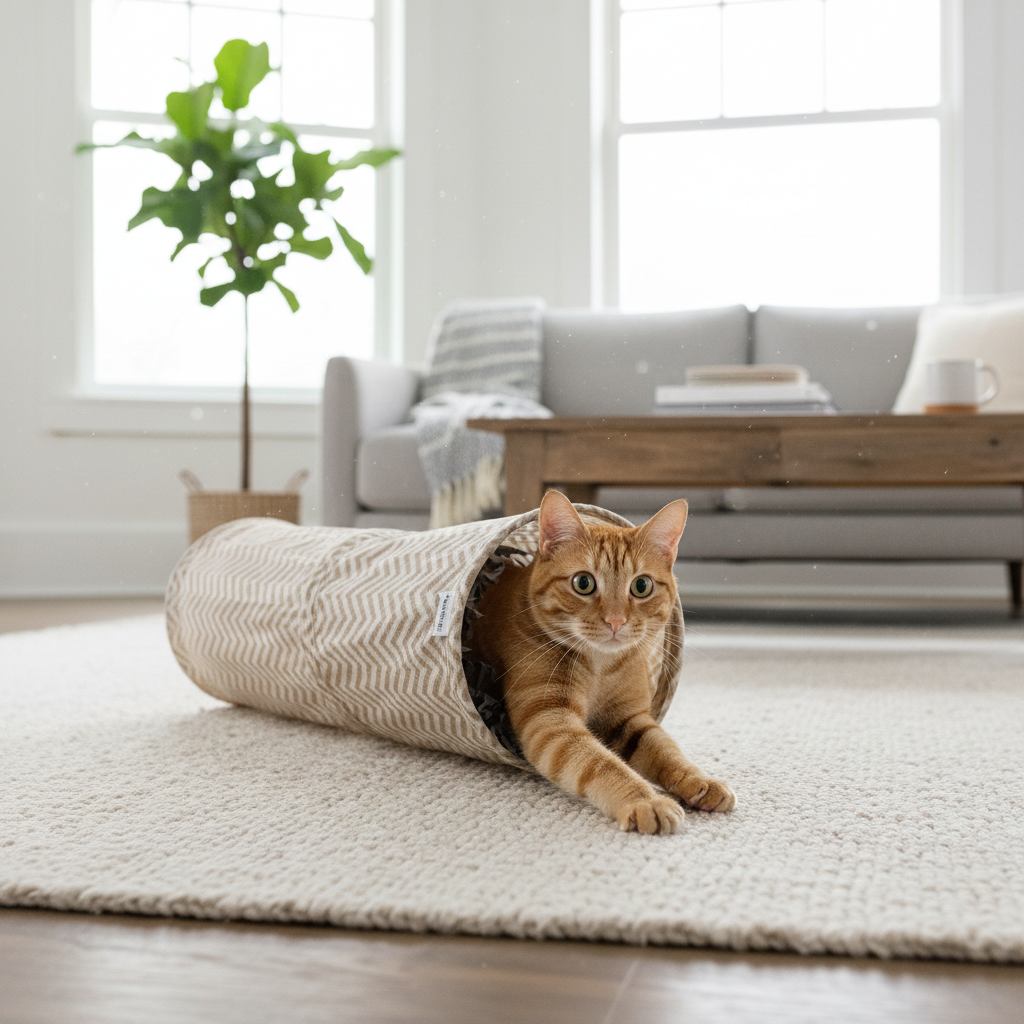
Also, not all “crinkle” tunnels feel or sound the same, and that detail matters more than people expect. This guide breaks down why cats react differently, what to look for before buying, and how to set it up so it becomes part of your cat’s routine rather than another closet item.
Why cats love (or avoid) crinkle tunnels
The same tunnel can be a favorite hideout for one cat and a stress trigger for another. In real homes, it usually comes down to a mix of sound sensitivity, confidence, and how the tunnel is introduced.
- The sound can mimic prey movement: Many crinkle liners resemble the rustle of leaves or small animals, which can switch a cat into hunt mode.
- It creates a “safe corridor”: Cats often prefer moving along edges and through covered paths rather than crossing open rooms.
- Noise sensitivity is real: Some cats startle at sudden crackle sounds, especially if the tunnel pops open loudly or sits on a hard floor.
- Negative first impressions stick: If a tunnel slides, collapses, or surprises a cat once, they may avoid it for weeks.
- Multi-cat dynamics: In shared homes, a tunnel can become a resource to guard, which changes how timid cats use it.
According to the American Veterinary Medical Association (AVMA), providing enrichment that supports natural behaviors is a meaningful part of overall feline wellbeing, and tunnels can be one of those simple, repeatable options when they fit the cat’s comfort level.
Quick self-check: is a crinkle tunnel a good fit for your cat?
If you’re on the fence, this short checklist is usually enough to predict whether a cat tunnel toy with crinkle sound will land well, or needs a gentler approach.
- Your cat startles easily (vacuum, bags, sudden noises) → consider a softer crinkle or fabric-only tunnel first.
- Your cat already loves boxes → tunnels often become an immediate hit.
- Your cat plays at dawn/dusk → tunnels pair well with wand toys during those peak times.
- Your cat is a “watch first, try later” type → plan a slow introduction, leave it out for several days.
- You have a kitten or young adult → durability matters more than marketing photos.
- You have a senior cat → prioritize easy entry, stable base, and a roomy diameter.
If your cat shows signs of anxiety around new objects, it may help to ask your veterinarian or a qualified behavior professional for guidance, especially if fear reactions show up in other parts of daily life.
What to look for when buying a crinkle sound tunnel
Online listings tend to focus on “fun” and “cute,” but a better tunnel choice is mostly about materials, size, and how it behaves on your floor.
Use this buying checklist (the practical version)
- Diameter and length: Bigger cats need room to turn without scraping whiskers; many adult cats do better with wider tunnels than the smallest budget models.
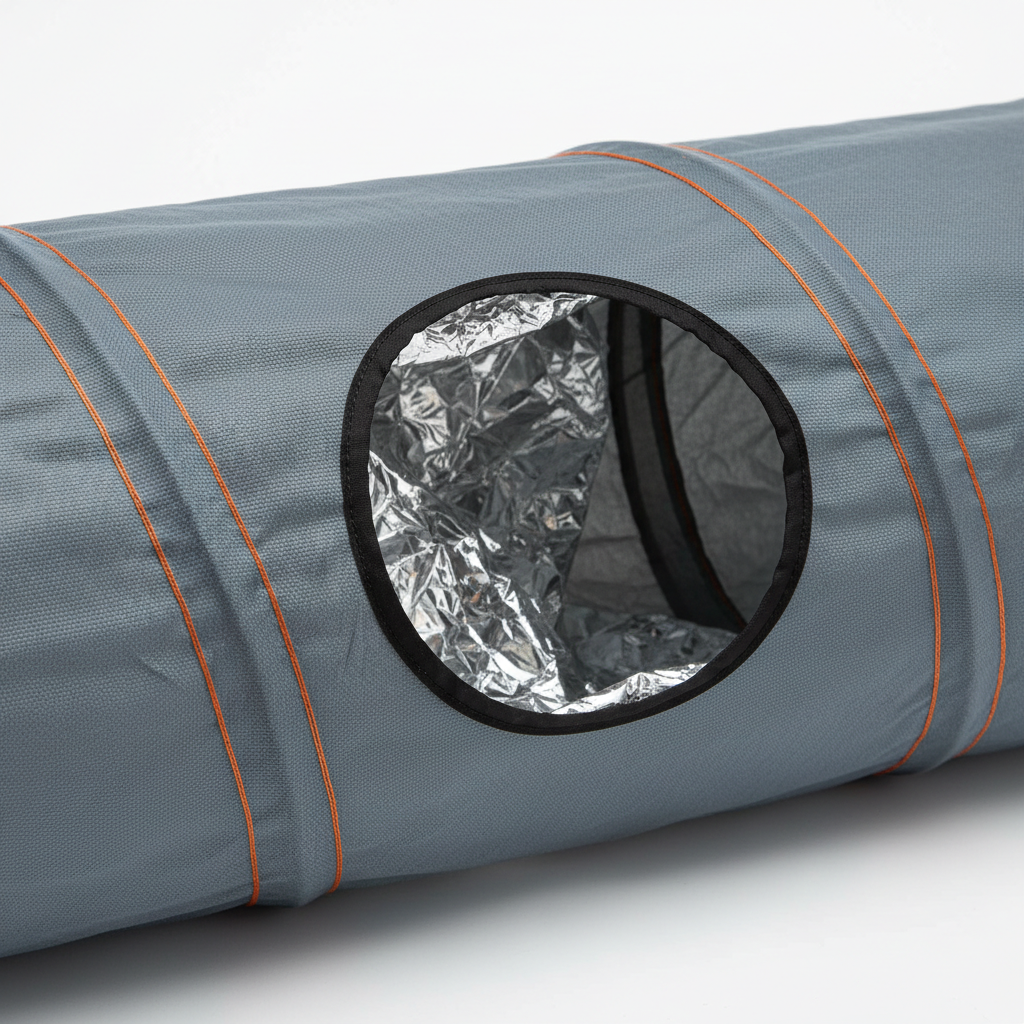
- Crinkle layer placement: Full-wall crinkle can be exciting but loud; partial crinkle panels often feel less intense.
- Stability: Look for a tunnel that won’t roll or slide easily, especially on hardwood or tile.
- Seams and stitching: Reinforced edges and tighter stitching hold up better if your cat bunny-kicks or chews.
- Ventilation and visibility: Peek holes reduce “trap” feelings, which matters for cautious cats.
- Easy cleaning: Spot-clean friendly fabric or wipeable surfaces make long-term use more realistic.
Comparison table: common tunnel types
| Type | Best for | Potential downside | What to watch |
|---|---|---|---|
| Single straight crinkle tunnel | Simple chasing, small spaces | Gets “old” fast for some cats | Sliding on smooth floors |
| S-shaped or curved tunnel | Ambush play, multi-cat homes | Harder to store | Stable frame that keeps shape |
| 3-way junction tunnel | High-energy cats, interactive play | Can trigger guarding | Enough exits for timid cats |
| Crinkle + hanging toy tunnel | Solo batting, kittens | Some toys detach or tangle | Secure attachments, no long strings |
How to introduce a tunnel so your cat actually uses it
This is where most people accidentally “waste” a good toy. The goal is to make the tunnel feel like the cat’s choice, not a surprise obstacle dropped into their route.
- Start quiet: Place it open and still, ideally on carpet or a rug so it doesn’t skid and the crinkle sound stays softer.
- Make it familiar: Rub a small blanket your cat already likes near the entrance, or place the tunnel next to a favored nap spot.
- Use a treat trail: A few treats leading to the entrance and one just inside works better than tossing a treat deep into the tunnel.
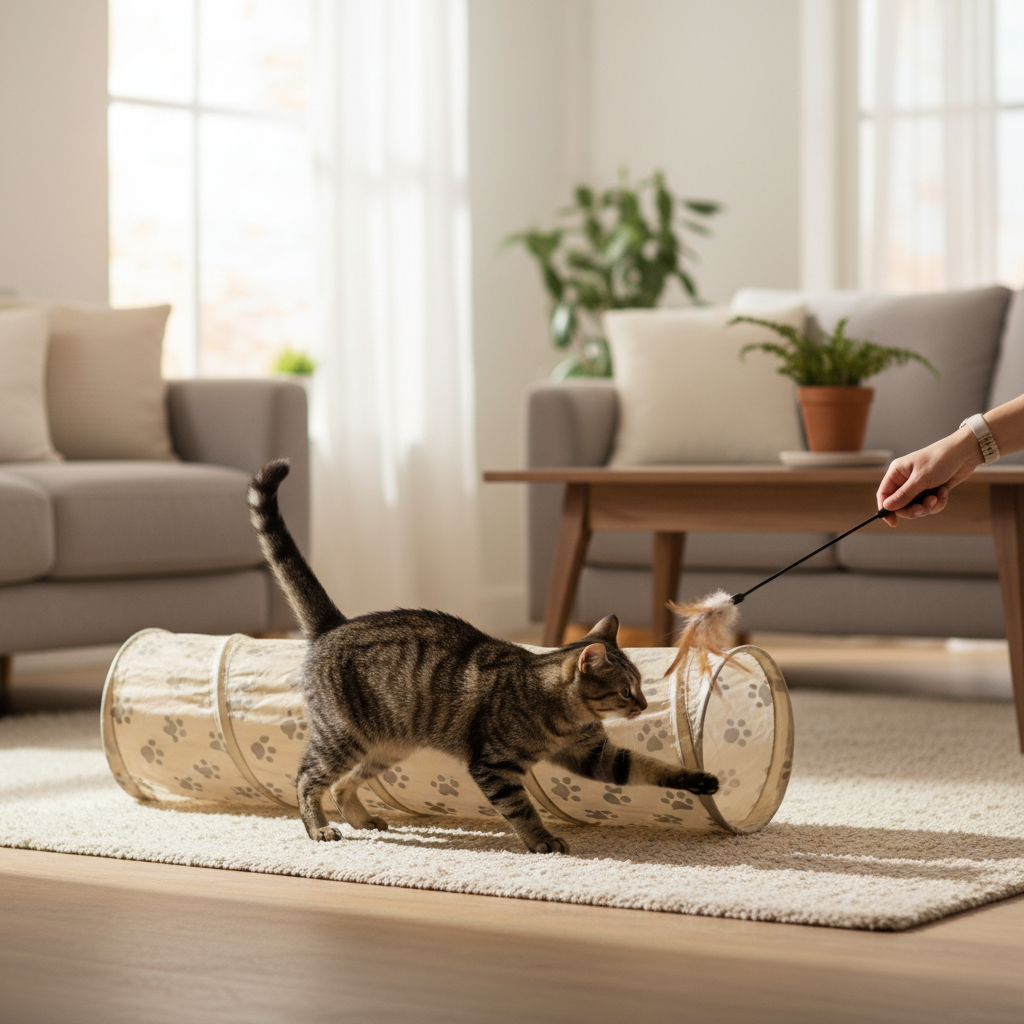
- Pair with a wand toy: Drag the lure past the opening, let your cat chase “around” it before you ask them to go through it.
- Keep sessions short: Two minutes of success beats ten minutes of pressure.
If your cat flinches at the crinkle, don’t “prove” it’s safe by shaking it. Leave it in place and let curiosity do the heavy lifting.
Real-life play setups that keep the tunnel interesting
A tunnel becomes a routine tool when you change the context slightly. You don’t need a bigger apartment, just small adjustments that create new angles and exits.
Easy setups you can rotate weekly
- Corner ambush: Place the tunnel along a wall and aim one opening toward a doorway, then run a wand toy past that doorway.
- Two-zone run: Put the tunnel between a cat tree and a scratcher, so moving between “stations” feels like a mini course.
- Box + tunnel combo: Set a cardboard box at one exit, so your cat can dash and “hide-switch.”
- Under-table hideaway: A tunnel under a dining table can feel safer for shy cats because it’s visually sheltered.
Key takeaways to keep in mind
- Movement matters more than “newness”, a tunnel stays fun when it supports stalking and surprise.
- Let the cat win, end play with a catch or a treat near the tunnel so it feels rewarding.
- Rotation beats replacement, folding it away for a few days often brings interest back.
Safety and durability: what responsible owners check
Most tunnel issues are minor, but it’s smart to treat any toy like something your cat will eventually stress-test with teeth, claws, and speed.
- Loose strings, ribbons, or dangling parts: Trim or remove if they start to fray, and supervise if your cat likes chewing.
- Collapsed frames: If the tunnel loses its shape easily, it can startle your cat and reduce use.
- Non-slip setup: On smooth floors, put the tunnel on a rug or add a mat underneath.
- Cleaning: Wipe off drool and hair buildup, and avoid harsh cleaners with strong fumes.
- Multi-cat safety: More exits reduces conflict, and placing tunnels in more than one room can lower tension.
According to the ASPCA, cats can be sensitive to changes in their environment, so when a toy seems to trigger stress or conflict, it may be better to pause, adjust placement, and reintroduce slowly.
When it’s time to upgrade or get professional input
A cat tunnel toy with crinkle sound is still “just a toy,” so if your cat shows ongoing fear, aggression, or sudden behavior changes around play, it’s not something to shrug off.
- Talk to a veterinarian if you notice pain signs, reduced mobility, or avoidance that looks physical rather than preference.
- Consider a behavior consult if tunnel play triggers stalking of other pets, repeated ambush fights, or anxiety you can’t settle with simple changes.
- Upgrade the tunnel if the current one slides, collapses, or frays, since those issues often cause the “my cat won’t use it” problem.
In many households, the fix is not “more toys,” it’s a calmer setup, a better size, and a play routine that fits the cat in front of you.
Conclusion: make the tunnel work for your cat, not the other way around
If you want the tunnel to earn its space, focus on fit and introduction. Choose a stable, roomy option, keep the first week low-pressure, and use short interactive sessions to teach your cat that the crinkle sound predicts something good.
Your next step can be simple: place the tunnel on a rug tonight, add a small treat trail, and run a wand toy past the entrance for two minutes, then stop while your cat still wants more.
FAQ
Why is my cat scared of a crinkle tunnel?
Some cats are noise-sensitive or get startled by the first pop-open crackle. Leave the tunnel out without moving it, soften the sound by placing it on carpet, and reintroduce with treats near the entrance.
How do I get my cat to go through the tunnel instead of just sitting next to it?
Guide play around the entrance first, then reward any step inside. Tossing a treat too deep can backfire if your cat feels “trapped,” so start with small wins.
Is a cat tunnel toy with crinkle sound safe for kittens?
Usually yes with supervision, but check for fraying fabric, loose attachments, and long strings. If your kitten chews, pick a simpler tunnel and remove dangling toys that start to shed threads.
What size tunnel should I buy for a large cat?
Look for a wider diameter so your cat can turn and exit without brushing sides constantly. If your cat hesitates at the entrance, size is often the quiet reason.
How do I clean a crinkle tunnel?
Most tunnels handle spot cleaning with a damp cloth and mild soap, then air drying. Avoid strong-scent cleaners since some cats may avoid the toy afterward.
My cat destroyed the tunnel fast, what should I change?
That usually points to thin fabric or weak seams, not “bad behavior.” Choose reinforced stitching, thicker materials, and consider redirecting bunny-kicking to a kicker toy so the tunnel lasts longer.
Can tunnels cause fights in multi-cat homes?
They can if a cat guards the tunnel or uses it to ambush. Provide multiple exits, add a second tunnel in another area, and avoid placing it in a narrow hallway where one cat can block access.
If you’re trying to choose a tunnel that fits your space and your cat’s personality, it can help to start with a simple checklist of size, stability, and noise level, then build a small play routine around it so the tunnel becomes part of daily enrichment instead of a one-week novelty.