
Senior dog joint oil supplement liquid products are popular for one simple reason: many older dogs resist pills, and owners want something that feels easy to mix into food while still supporting mobility.
If your dog is slowing down, hesitating on stairs, or taking longer to get comfortable, you’re not alone, but it’s also easy to waste money on the wrong formula or the wrong expectations. Joint support can be helpful, yet it rarely works like a painkiller, and results often depend on consistency, weight management, and what’s actually causing the stiffness.
This guide breaks down what “absorbable” really means for liquid oils, what ingredients tend to matter, how to choose a product that fits your dog’s reality, and how to know when it’s time to talk to your veterinarian instead of experimenting at home.

Why senior dogs get stiff, and what oils can (and can’t) do
When people search for a senior dog joint oil supplement liquid, they’re usually trying to solve one of three things: age-related osteoarthritis, inflammation after activity, or “my dog just seems uncomfortable lately.” Those can look similar from across the room, but the best next step changes depending on the cause.
According to the American Veterinary Medical Association (AVMA), arthritis and joint disease are common issues in dogs, especially as they age, and management often involves multiple strategies rather than a single product.
- Osteoarthritis: cartilage wear and joint changes over time, often needs long-term support and vet guidance.
- Soft tissue strain: a tweak from play or slipping, may improve with rest and time, supplements are supportive at best.
- Other causes: hip dysplasia, spine issues, tick-borne disease, endocrine problems, even nail pain, these need diagnosis.
Oils mainly support joints by providing fatty acids that may help modulate inflammation. That is very different from rebuilding cartilage overnight. If your expectation is “one pump and my dog runs again,” you’ll be disappointed. If your expectation is “my dog gets up a bit easier over a few weeks,” that’s closer to how many owners evaluate success.
What “liquid absorb” really means (and what to ignore)
“Absorb” language can be slippery. Liquids can be easier to swallow and can spread through food, but absorption still depends on digestion, the specific nutrient form, and whether the dog actually eats the full dose.
Here’s a more realistic way to interpret common claims:
- Liquid format often helps compliance for picky dogs, which indirectly improves consistency.
- Oil-based nutrients like omega-3s are naturally suited to an oil carrier, that’s a practical advantage.
- “Fast-absorbing” marketing is rarely something you can verify at home, treat it as a slogan unless backed by transparent testing.
What matters more than “absorbs fast” is: does the product disclose active amounts, does it fit your dog’s size, does it avoid unnecessary fillers, and can you give it daily without a fight.
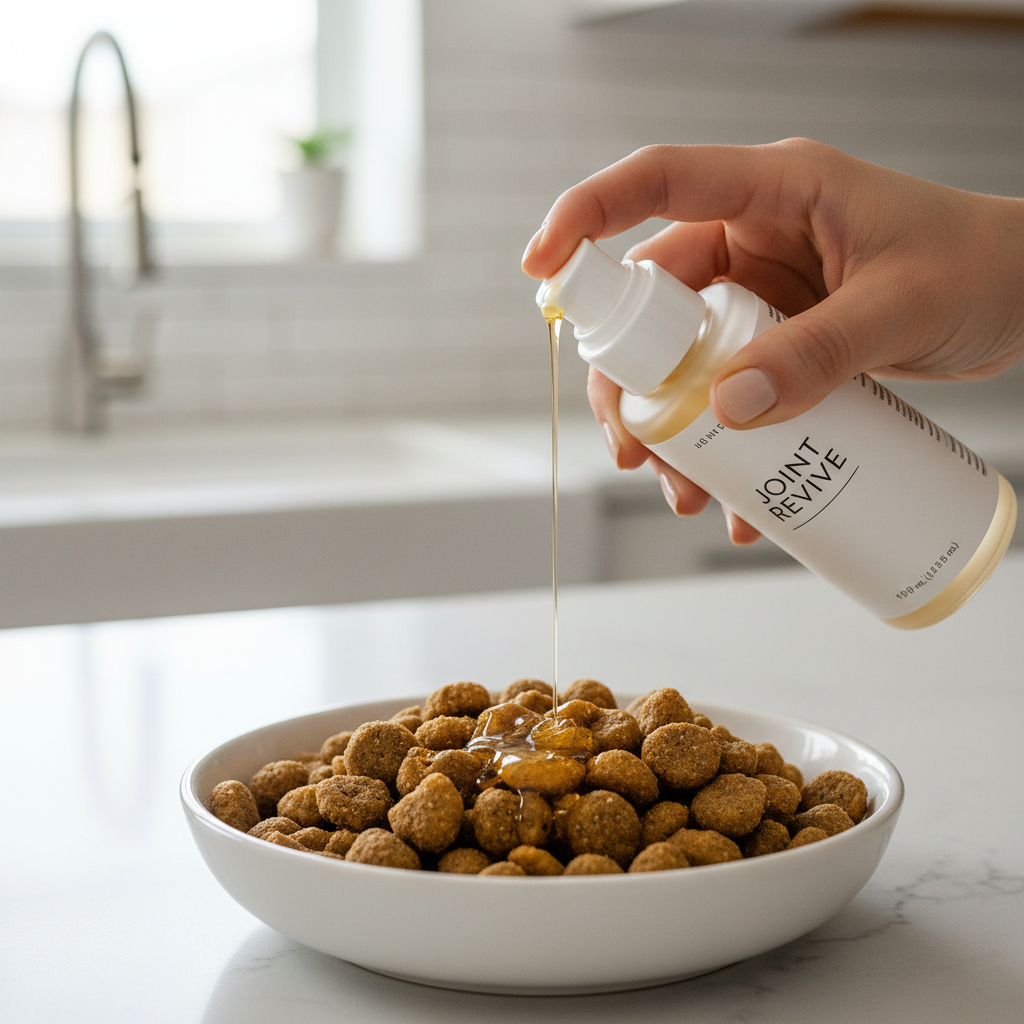
Ingredients that usually matter in a joint oil supplement
Most “joint oils” lean on omega-3 fatty acids, sometimes paired with added joint nutrients. The trick is recognizing what belongs in an oil, what belongs in a chew, and what is mostly label decoration.
Omega-3s (EPA/DHA): the core of most joint oils
Fish oil commonly supplies EPA and DHA, which are associated with inflammatory pathway support. According to the American Kennel Club (AKC), omega-3 fatty acids may help dogs with joint issues and can be part of an overall plan.
- Look for clear labeling of EPA and DHA amounts, not just “fish oil 1,000 mg.”
- Consider smell and freshness, rancid oils can cause GI upset and make dogs refuse food.
- Quality signals vary by brand, but transparency helps, batch testing, sourcing, or oxidation controls are worth noticing.
Added joint actives: sometimes helpful, sometimes mismatched
Some liquids add glucosamine, chondroitin, MSM, or turmeric. These can be reasonable, but liquids often struggle with stable dosing and palatability.
- Glucosamine/chondroitin: often used for cartilage support, benefits can be subtle and slow.
- MSM: used for comfort and inflammation support, evidence varies by context.
- Turmeric/curcumin: can be hard to formulate well, and GI sensitivity is not rare.
If the label lists a “proprietary blend” with no per-serving actives, you’re basically guessing. For senior dogs, guessing gets expensive fast.
Quick self-check: is a liquid joint oil a good fit for your dog?
Before you buy, do this quick reality check. It saves time and helps you pick a format you’ll actually use for more than a week.
- Your dog refuses pills/chews but reliably eats meals, liquid is often easier.
- Your dog has a sensitive stomach, start low, oily supplements can loosen stools in some dogs.
- Your dog is overweight, joint stress increases, weight plan matters as much as any supplement.
- Your dog takes medications, ask your vet about interactions and bleeding risk concerns with higher omega-3 intake.
- Your dog has sudden severe pain, a supplement should not be your first move.
One more honest check: can you measure the dose accurately every day? A squeeze bottle with vague “drops” can be a compliance trap, pumps or marked droppers are typically easier.
How to choose a product: a practical comparison table
Not every senior dog joint oil supplement liquid is built the same. Use this table like a shopping filter, not a promise that one row guarantees results.
| What to look at | Better sign | Why it matters | Watch-outs |
|---|---|---|---|
| Active amounts | EPA/DHA listed per serving | Lets you compare potency | “Fish oil mg” without EPA/DHA can mislead |
| Delivery | Pump or marked dropper | Consistent daily dosing | Unmarked droppers lead to under/over dosing |
| Palatability | Mild smell, dog eats full meal | Compliance drives outcomes | Strong fish odor can reduce appetite |
| Freshness cues | Opaque bottle, lot/batch info | Oils oxidize over time | Clear bottles stored in heat/light degrade faster |
| Extra ingredients | Simple, purposeful formula | Less GI drama for seniors | Many botanicals increase sensitivity risk |
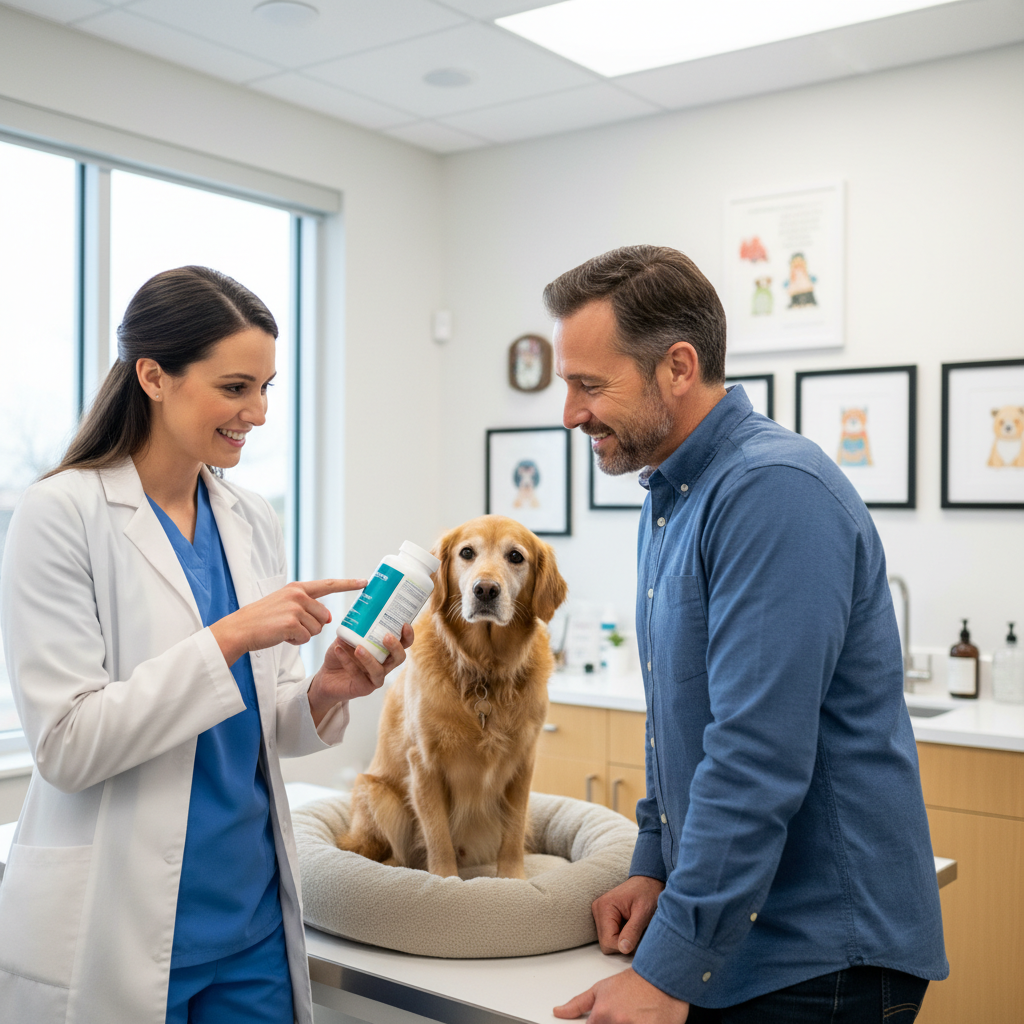
How to start and monitor results (without overthinking it)
Most owners quit too early or change three variables at once, then nobody knows what helped. Keep it boring, boring works.
Step-by-step starting routine
- Start with food: mix into a meal your dog reliably finishes.
- Go low for 3–5 days: especially for small breeds or sensitive stomachs, then move toward the label dose.
- Pick 2 mobility markers: for example, “gets up after naps” and “stairs hesitation.” Track those only.
- Give it time: many joint-support routines are judged over weeks, not days.
What “working” often looks like
- Less warm-up time after resting
- Smoother walking early in the day
- More willingness to do normal routines
If you see vomiting, persistent diarrhea, a big appetite change, or your dog seems more painful, pause and check in with a veterinarian. Seniors have less buffer for “wait and see.”
Common mistakes that make joint oils look ineffective
Sometimes the supplement is fine, but the plan has gaps. These are the patterns that show up a lot.
- Using it like a rescue product: joint oils usually are not immediate relief, acute pain needs medical assessment.
- Inconsistent dosing: half-doses, skipped days, or “only on big walk days” often blurs results.
- Ignoring body weight: even small weight changes can affect joint load, especially in large breeds.
- Expecting one supplement to replace everything: flooring traction, nail trims, gentle strengthening, and vet pain plans can matter.
- Stacking too many supplements: GI upset rises, and you can’t tell what helps.
Key takeaways: pick a transparent formula, dose consistently, track simple mobility markers, and don’t delay vet care when signs feel “off.”
When to involve your vet (so you don’t miss something serious)
Supplements are reasonable for mild, stable stiffness, but they are not a diagnostic tool. According to the U.S. Food and Drug Administration (FDA), pet supplements are not approved like drugs, and quality can vary, so professional guidance matters when your dog’s health picture is complicated.
- Sudden lameness, crying out, or refusal to bear weight
- Weakness in back legs, knuckling, or wobbling
- Major behavior change, appetite drop, or hiding
- History of pancreatitis, bleeding disorders, or complex medication regimens
If your vet diagnoses osteoarthritis, ask about a full plan, weight goals, physical therapy options, home traction changes, and whether omega-3 dosing makes sense for your dog’s size and diet.
Conclusion: a smart way to use liquid joint oils for senior dogs
A senior dog joint oil supplement liquid can be a genuinely practical tool, especially for dogs that won’t touch chews, but the “win” usually comes from steady dosing and realistic goals, not hype about instant absorption.
If you want one simple next step, choose a product that clearly lists EPA and DHA, start with a low dose mixed into food, then track two mobility markers for a few weeks. If symptoms are sudden, severe, or getting worse, skip the experiment and schedule a veterinary exam.
FAQ
How long does a liquid joint oil take to show results in senior dogs?
Many owners judge changes over a few weeks because fatty-acid support is gradual. If your dog seems worse quickly, treat that as a sign to pause and ask your vet, not as “normal adjustment.”
Is fish oil the same as a senior dog joint oil supplement liquid?
Often, yes in practice, many joint oils are fish oil formulas marketed for mobility. The difference comes down to how clearly EPA/DHA are listed, freshness controls, and whether extra joint ingredients are added.
Can I combine a liquid joint oil with glucosamine chews?
Sometimes it’s reasonable, but stacking products can increase stomach upset and make dosing messy. If you combine, do it intentionally and confirm totals with a veterinarian, especially for small dogs.
What side effects should I watch for with liquid joint oils?
Loose stools, fishy breath, and reduced appetite can happen, particularly if you start at full dose. More concerning signs like repeated vomiting or lethargy warrant stopping and getting medical advice.
Does “fast-absorbing” liquid mean it works better than capsules?
Not automatically. Liquids can be easier to give, which improves consistency, but “fast absorption” is hard to verify outside testing. Compare actives and dosing accuracy, not just claims.
Should I give joint oil with food or on an empty stomach?
With food is usually easier on the stomach and improves compliance. If your dog has digestive issues, a vet can advise on timing and dose adjustments.
My senior dog has arthritis, is a supplement enough?
In many cases it’s only one part of management. Arthritis often responds best to a broader plan, weight control, controlled exercise, home traction, and sometimes prescription options under veterinary supervision.
If you’re trying to find a senior dog joint oil supplement liquid that your dog will actually eat, it can help to share your dog’s weight, diet type, and current meds with a clinic or qualified pet nutrition professional, you’ll usually get a more realistic dose target and fewer trial-and-error purchases.