
Pet hair remover for car seats and mats works best when you treat it as a two-part problem: hair trapped in upholstery fibers, and hair woven into floor mat texture. If you’ve tried vacuuming and it still looks fuzzy, you’re not alone, most car interiors “hold” hair because of static, fabric weave, and the way hair hooks into carpet loops.
The good news is you usually don’t need a detail shop visit for everyday mess. With the right tool combo and a simple order of operations, you can get seats and mats clean in 15–30 minutes, and keep it that way with smaller weekly resets.
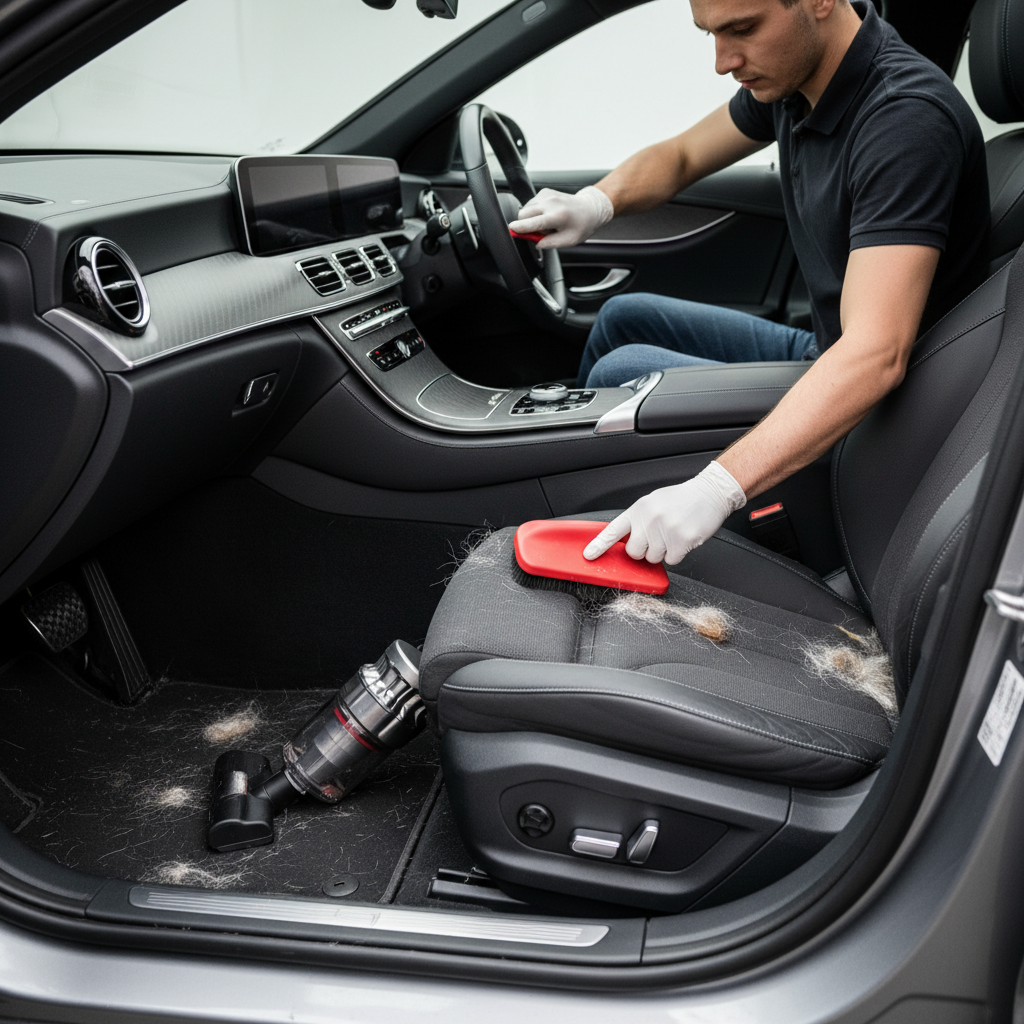
What this guide covers: why pet hair clings so aggressively, how to pick a remover that matches your interior, and a practical routine for seats and floor mats that doesn’t turn into a whole Saturday project.
Why pet hair sticks to car seats and floor mats
Hair doesn’t just “sit” on surfaces, it wedges in. Once you see the mechanics, you stop wasting time with the wrong tools.
- Upholstery weave: cloth seats and trunk liners have tiny loops that grab hair, especially shorter, stiffer fur.
- Static electricity: dry air, synthetic fabrics, and plastic trim make hair cling and reattach after you lift it.
- Moisture + oils: skin oils and small spills make hair tacky, then it mats down with pressure.
- Floor mat texture: rubber grooves and carpeted mats both trap hair, just in different ways.
According to the American Kennel Club (AKC), shedding varies widely by breed and coat type, so your cleanup strategy may need to match your pet, not just your car.
Quick self-check: what kind of mess are you dealing with?
Before you buy another gadget, figure out what you’re really fighting. This takes one minute and saves a lot of frustration.
- Hair type: short “needle” fur (often harder) vs long wispy hair (often easier to ball up).
- Surface: cloth seats, leather/vinyl, carpeted mats, all-weather rubber mats.
- Severity: light sprinkle after one ride, or packed-in hair from weeks of daily trips.
- Constraints: do you need a silent tool, do you share the car, do you have allergies?
If hair is embedded deep in cloth or carpet and your vacuum head “skates” over it, you’ll want friction-based tools (rubber, pumice-style stone, or a brush) before vacuuming again.
Choose the right pet hair remover: what actually works (and where)
Most people do better with a small kit than with one miracle tool. Here’s a practical comparison you can use while shopping.
Tool comparison table
| Tool type | Best for | Works great when… | Watch out for |
|---|---|---|---|
| Rubber brush / rubber squeegee | Cloth seats, carpeted mats, trunk carpet | You use short strokes to “roll” hair into piles | Can be slow on very large areas |
| Lint roller (adhesive) | Spot clean seats, headliner edges | Hair is on top, not embedded | Refills add up, struggles on deep carpet |
| Reusable lint brush (fabric nap) | Cloth seats, seat backs | Hair is medium-light and dry | Less effective on heavy embedded fur |
| Pet hair “stone” / pumice-style block | Carpeted mats, cargo area carpet | Hair is packed in and you need aggressive friction | Can fuzz delicate carpet if you press too hard |
| Vacuum with brush roll or pet tool | Finishing pass everywhere | You loosen hair first, then extract | Vacuum alone often leaves a shadow layer |
| Compressed air / blower | Seat rails, seams, tight corners | You blow hair out, then catch it with vacuum | Blows hair everywhere if you don’t control it |
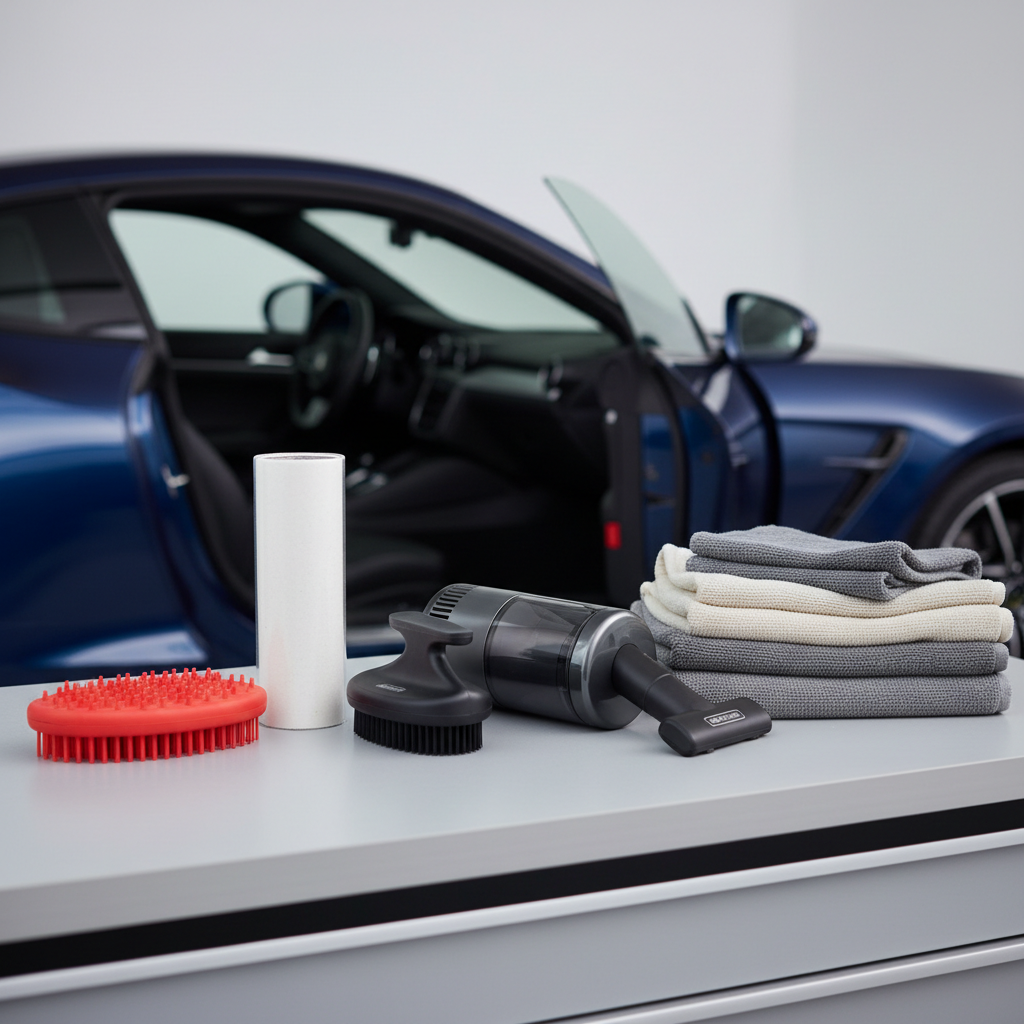
Key takeaway: for most cars, a rubber brush plus a decent vacuum beats vacuum-only every time, especially on cloth seats and carpeted mats.
Step-by-step: clean car seats without spreading hair around
This is the order that tends to feel “too simple,” but it’s the difference between quick progress and chasing hair from one panel to another.
- 1) Dry loosen first: use a rubber brush (or reusable lint brush) with short, firm strokes. Work in one direction until hair balls up.
- 2) Pull hair into a “collection zone”: choose a corner of the seat or the footwell edge so you’re not redistributing hair.
- 3) Vacuum second: use a crevice tool for seams, then a brush attachment for the open areas.
- 4) Spot-finish: lint roller for the last visible strands on fabric, or a slightly damp microfiber for leather/vinyl.
If you’re dealing with leather or vinyl seats, go lighter on friction tools. You’re mostly removing hair from seams and edges, and a vacuum plus microfiber wipe often does the job.
Step-by-step: get pet hair out of floor mats (carpet and all-weather)
Floor mats are usually where hair “hides,” and it’s also where you can be a bit more aggressive.
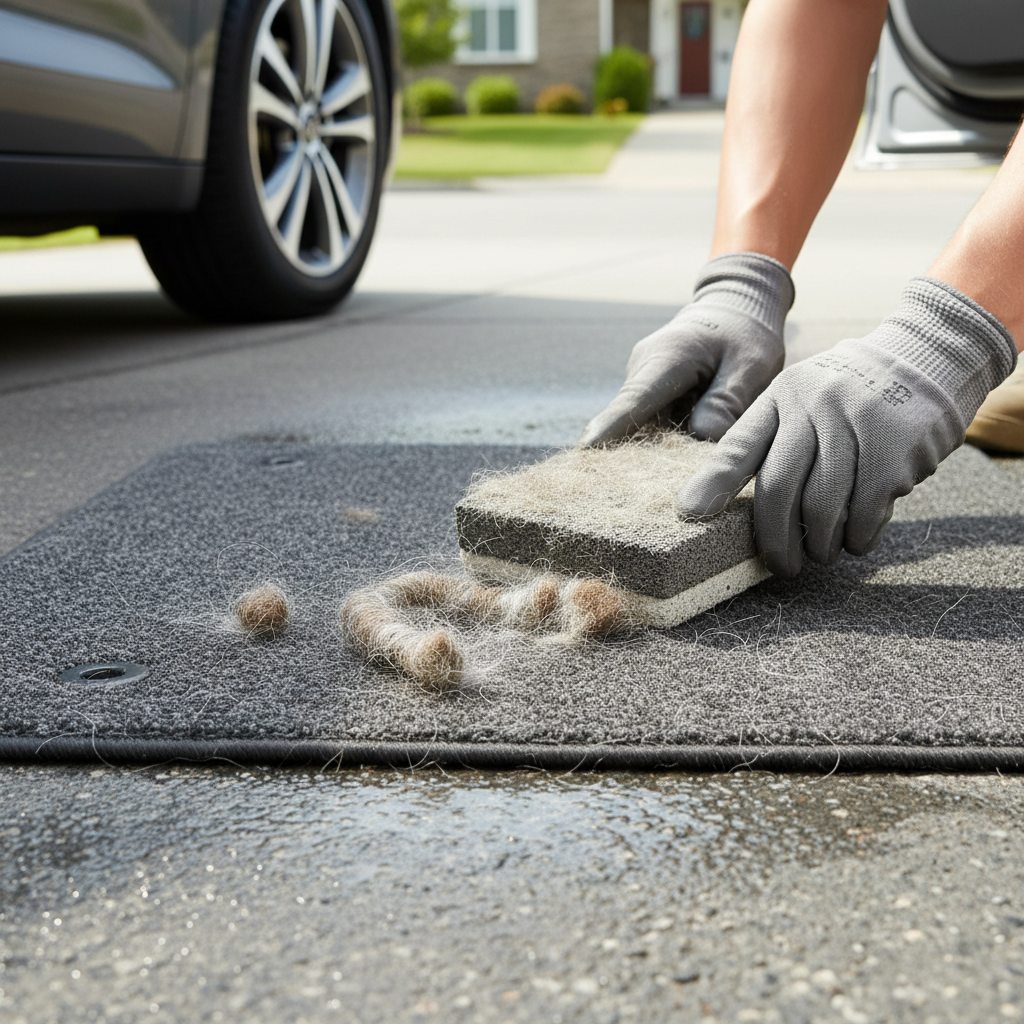
For carpeted floor mats
- Shake outside first: it sounds obvious, but it removes grit that otherwise grinds into fibers.
- Use a pet hair stone or rubber brush: short strokes, moderate pressure, stop once you see fibers lifting.
- Vacuum with a firm pass: slow down, overlapping lines helps more than extra suction.
For all-weather rubber mats
- Dry brush grooves: a rubber squeegee or stiff interior brush pulls hair out of channels.
- Rinse if needed: a gentle stream of water can flush hair from deep grooves.
- Dry fully: before reinstalling, to reduce odor and humidity buildup.
According to the U.S. Environmental Protection Agency (EPA), regular cleaning can help reduce dust and particles indoors; in a car, consistent cleanup often matters more than occasional deep cleans, especially if passengers are sensitive.
Prevention: keep hair from building up between cleanings
A pet hair remover for car seats and mats becomes way more effective when you reduce how much hair lands there in the first place. This part is unglamorous, but it’s where time savings show up.
- Use a washable seat cover or hammock: it catches most hair before it hits seat fabric, and you can shake it out.
- Brush your pet before rides: even 60 seconds can cut down loose hair, coat type matters a lot here.
- Keep a mini tool in the car: a compact rubber brush or reusable lint brush prevents “set-in” hair.
- Mind static: in dry climates, a slightly damp microfiber wipe after vacuuming can reduce re-cling.
If your dog rides in the same spot every time, focus your quick weekly clean there instead of trying to restore the whole interior on a schedule you won’t follow.
Common mistakes that make cleanup slower
- Vacuuming first: suction lifts the loose stuff, but the embedded layer stays and looks like “nothing changed.”
- Overusing sticky rollers on carpet: you burn through sheets and still miss what’s woven in.
- Scrubbing delicate carpet too hard: aggressive friction can fuzz fibers, then hair sticks even more.
- Ignoring seams and rails: hair collects where the seat meets trim, then falls back out later.
Also, avoid using harsh chemicals on seats unless you know the material and product compatibility. If you’re unsure, the safer move is mild soap and water on mats, and manufacturer-approved cleaners for upholstery.
When it’s worth getting professional help
Most pet hair can be handled at home, but a few situations justify a pro detail, or at least pro-grade tools.
- Heavy embedded hair + odors: this can point to moisture and grime in the fabric, not just hair.
- Allergy concerns: if someone reacts strongly, a detailer with extraction equipment may help; consider asking a medical professional for personalized guidance.
- Stained upholstery: hair removal often exposes stains you didn’t notice, cleaning those safely can be material-specific.
If you do hire a detailer, ask what they use for pet hair on upholstery and whether they’ll protect fabric after cleaning, not every shop approaches pet hair the same way.
Conclusion: a simple routine beats “perfect” tools
The fastest path is consistent: loosen hair with rubber friction, vacuum to extract, then do small touch-ups so it never becomes a deep-clean emergency. Pick one or two tools that match your seats and mats, and keep them where you’ll actually use them.
If you want a quick starting point, build a basic kit: rubber brush + crevice tool vacuum + reusable lint brush, then add a pet hair stone only if your carpeted mats keep defeating you.
FAQ
What works best as a pet hair remover for car seats and mats if I only buy one thing?
A rubber brush (or rubber squeegee style tool) is usually the most versatile single option because it loosens embedded hair on cloth and carpet, then you vacuum the piles.
Why does pet hair stay after I vacuum multiple times?
In many cases the hair is hooked into the fabric weave, so suction alone can’t break the grip. Loosening with friction first changes the result immediately.
Are pet hair stones safe for car carpet?
They can be, but they’re more aggressive than rubber. Use light pressure, stop if you see fuzzing, and avoid delicate or already-worn carpeting.
How do I remove pet hair from all-weather rubber mats?
Dry brushing the grooves pulls hair out better than vacuuming. If hair is stuck, a rinse can help, just dry the mat fully before putting it back.
Can I use fabric softener or dryer sheets to reduce static in my car?
Some people try it, but residues can attract dust or affect materials. A safer approach is a slightly damp microfiber wipe and regular maintenance, and consult a pro if you’re unsure about interior finishes.
What’s the quickest maintenance routine between deeper cleans?
Hit the main pet seat area with a rubber brush for 2–3 minutes, vacuum seams, and do a fast pass on the mats. Small resets prevent the “packed-in” layer.
Does coat type change the best method?
Yes, short stiff fur often embeds deeper, so friction tools matter more. Longer hair tends to form clumps that lift easier with brushing and vacuuming.
If you’re trying to keep a shared family car presentable, or you’re tired of buying tools that don’t match your interior, a simple checklist and a small, purpose-built kit can make the whole process feel less endless without turning it into a detailing hobby.