
puppy potty pad holder tray plastic setups solve one main problem: pads slide, puppies dig, and you end up cleaning the floor instead of training the habit.
If you’ve tried “just put a pad down,” you already know how unpredictable that goes, especially with energetic pups or multi-pet homes. A leakproof tray holder adds structure, keeps the pad in place, and usually makes cleanup feel less like a daily project.
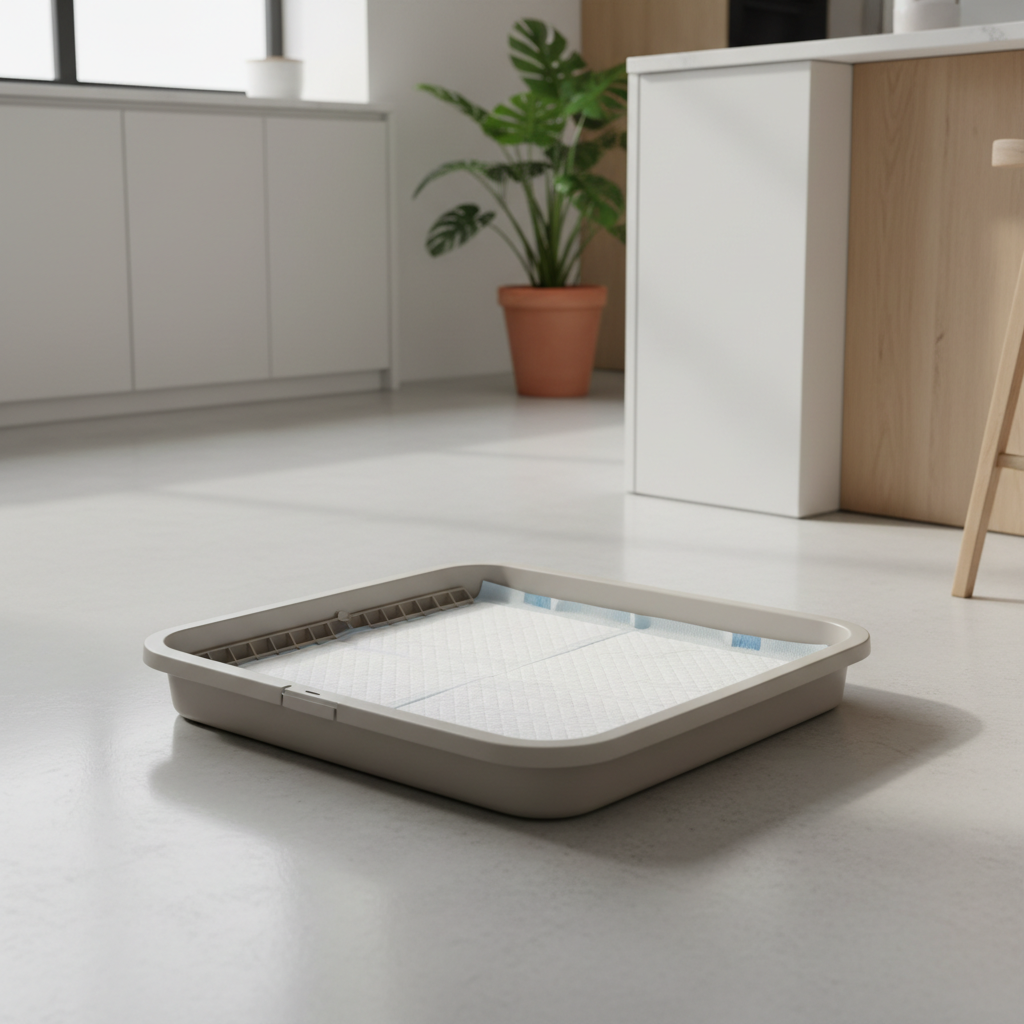
This guide breaks down what to look for in a plastic tray, how to match it to your pad size and dog behavior, and how to use it day-to-day so it actually helps training rather than becoming one more thing to manage.
Why pads leak or fail (and how a tray changes the game)
Most “pad problems” aren’t really pad problems, they’re placement and containment problems. A tray holder works because it adds a boundary and a lip, and that changes the mess pattern.
- Sliding on hard floors: pads drift on tile/wood, then urine hits the exposed edge.
- Edge overflow: even if the pad absorbs, a big pee can pool and run off the side.
- Shredding and digging: some puppies treat pads like toys, then you’re chasing fluff around.
- Misses from “half-on” behavior: pups step on the pad but aim off the edge, a raised rim helps catch that.
According to the American Veterinary Society of Animal Behavior (AVSAB), consistent management and clear reinforcement are key parts of building reliable house-training habits. A stable tray is “management” that removes a lot of accidental failure.
What “leakproof plastic tray” really means
Leakproof sounds simple, but in real homes it comes down to a few design choices. When you shop for a puppy potty pad holder tray plastic model, check these details instead of relying on the label.
Key design features to prioritize
- Raised perimeter rim: helps prevent runoff when the pad saturates or your pup hits the edge.
- Pad locking mechanism: clips, a snap frame, or a grid that keeps corners from popping up.
- Non-slip base: rubber feet or textured underside matters more than most people expect.
- One-piece basin: fewer seams usually means fewer places for liquid to sneak out.
- Smooth, cleanable surface: you want quick wipes, not grooves that hold odor.
Plastic types vary. Many trays use PP (polypropylene) or ABS. Both can be durable; what you care about is rigidity, how the rim holds up over time, and whether the tray warps after repeated cleaning.
Quick self-check: which tray style fits your puppy?
Before buying anything, get honest about your puppy’s behavior. The “right” holder often depends less on breed and more on habits.
- If your pup tears pads, look for a grid cover or locking frame that blocks access to corners.
- If your pup misses the edge, prioritize a higher rim and a tray that sits flat.
- If you have multiple pets, choose a stiffer tray that won’t flex and spill when stepped on.
- If your pup pees a lot at once, go bigger and pair with higher-absorbency pads so liquid doesn’t pool.
- If you’re in an apartment and care about odor, pick a tray with easy sanitizing and keep backups ready.
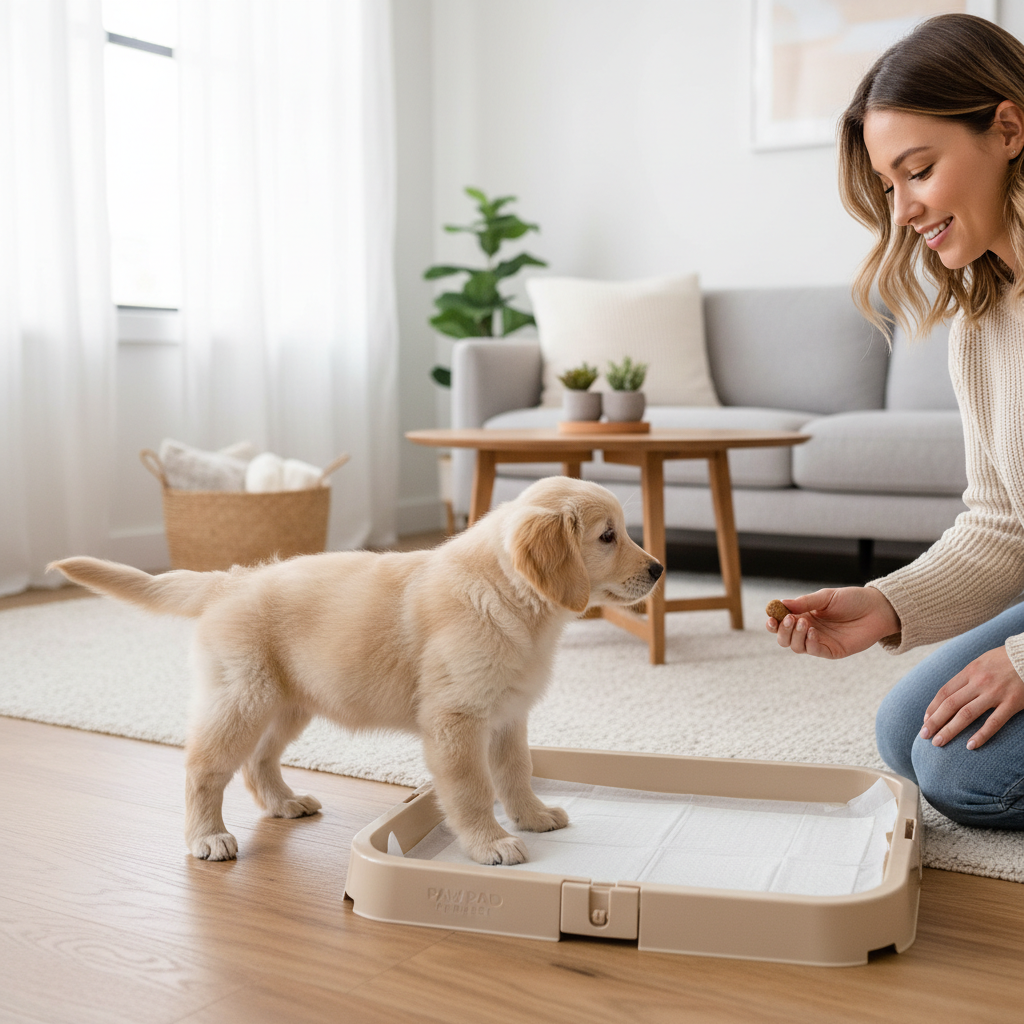
A small but telling sign: if your puppy consistently targets one corner, you’ll want a holder that keeps the pad perfectly flat so that “favorite spot” doesn’t turn into an exposed edge.
Size and fit: avoid the #1 tray-and-pad mismatch
Many people buy a tray first, then discover their pads bunch up or leave gaps. Aim for a tray designed for your pad size, not “close enough.” A sloppy fit often leads to leaks even when the tray itself is fine.
Practical sizing rules
- Match the pad’s full footprint: the absorbent area plus any border still needs to sit inside the rim.
- Leave minimal slack: extra pad material tends to fold and wick moisture.
- Consider step-in height: tiny puppies and seniors may hesitate if the rim feels like a hurdle.
Comparison table: common tray styles
| Tray style | Best for | Pros | Trade-offs |
|---|---|---|---|
| Open tray with raised rim | Most puppies, basic indoor use | Fast cleanup, simple, typically affordable | Pad corners may lift without clips |
| Tray with clip-on frame | Pups that drag pads | Pad stays flatter, fewer edge leaks | Takes longer to change pads |
| Tray with grid cover | Pups that shred or chew pads | Limits chewing, keeps paws drier | Needs frequent rinsing, grid can trap residue |
How to use a tray holder for faster potty training
A tray doesn’t “train” on its own, but it removes variables. The goal is to make the right choice easy and the wrong choice boring.
- Place it where you can supervise: early on, convenience beats hiding it in a far corner.
- Use a consistent cue: same phrase, same spot, same routine.
- Reward immediately: treat or praise right after your puppy finishes on the pad, not minutes later.
- Gradually move the station: if your end goal is outdoors, shift the tray closer to the door over days.
- Keep one lightly used pad (not gross): a familiar scent can help the puppy recognize the station.
According to the ASPCA, consistent timing, supervision, and positive reinforcement are central to house-training success. The tray is a tool that supports consistency by reducing mess and confusion.
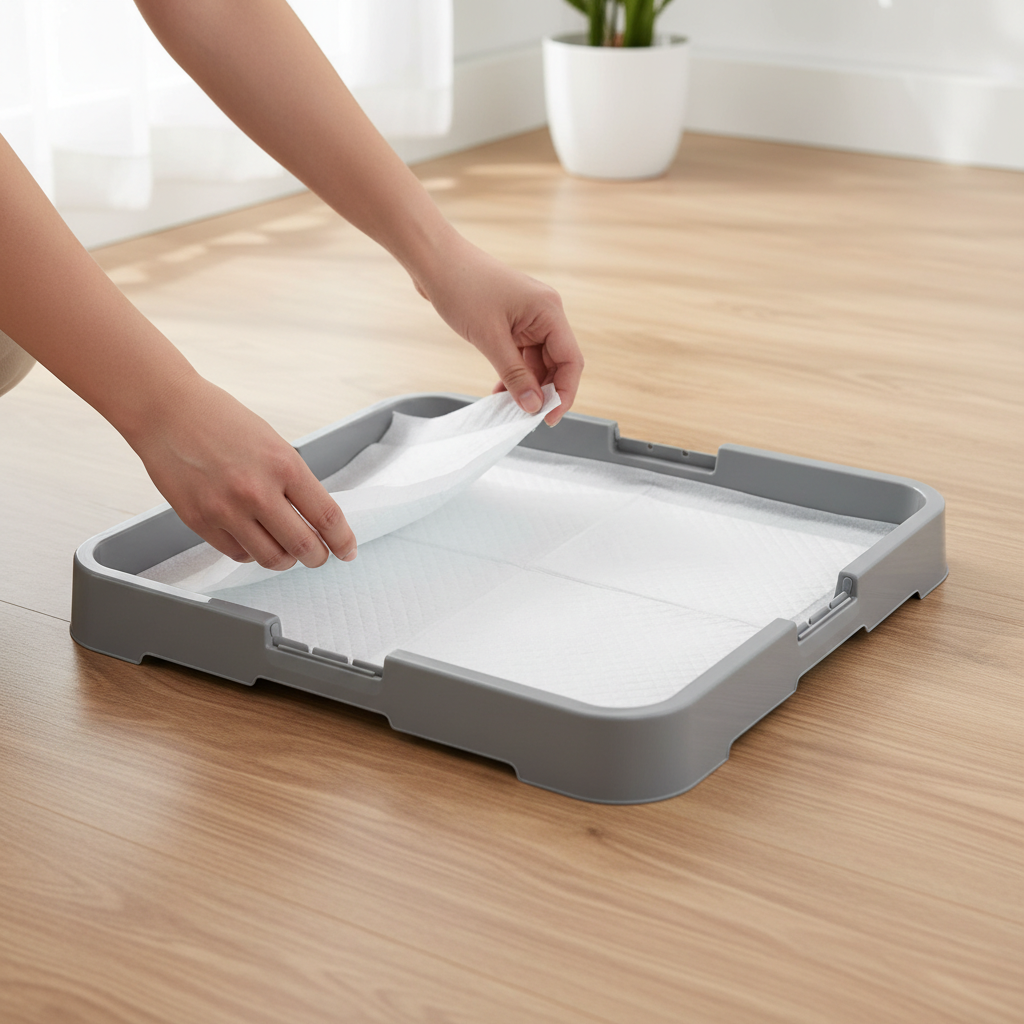
Key point: if accidents happen next to the tray, don’t “chase” the puppy around with it. Keep the location stable, improve supervision, and tighten the routine.
Cleaning, odor control, and floor safety
If you want the tray to stay truly leak-resistant, cleaning habits matter as much as the rim height. Odor often comes from tiny residue films that build up over time.
A realistic cleaning routine
- Daily: wipe the tray basin, especially corners and clip areas, then dry.
- Weekly: wash with mild soap and warm water, rinse well, air-dry fully.
- As needed: if odor persists, use an enzymatic pet cleaner that’s labeled for urine. Follow the label, and if you have sensitivities at home, consider asking a veterinarian about safer options.
Floor safety is part of the decision too. If the tray slides, add a washable non-slip mat underneath, or choose a holder with better grip. This matters in busy kitchens where a surprise skid can startle a puppy and create avoidance.
Common mistakes that make a good tray feel “useless”
Most frustrations come from a few predictable missteps. Fixing them usually makes a bigger difference than switching brands.
- Buying the wrong pad size: a folded pad channels liquid toward the edge.
- Letting the pad over-saturate: even a leakproof tray can overflow if the pad is past capacity.
- Using harsh cleaners without rinsing: strong smell can repel your puppy from the potty spot.
- Moving the tray too often: puppies learn the “map” of your home faster than you think.
- Ignoring medical possibilities: frequent accidents can be training, but sometimes it’s stress or a health issue.
If you see sudden changes in urination frequency, straining, blood-tinged urine, or your puppy seems unwell, it’s smart to contact a veterinarian. Many issues are manageable, but guessing wastes time.
Conclusion: what to buy, and what to do next
A puppy potty pad holder tray plastic option is worth it when your real problem is sliding, leaking edges, or pad destruction, it adds structure and makes your training routine more predictable. The best results usually come from pairing a well-fitting tray with a simple schedule and fast rewards.
If you want a next step that’s actually actionable, start by measuring your current pads, choose a tray that locks them flat, then run a one-week routine with consistent placement and immediate reinforcement, you’ll know quickly whether the setup fits your puppy’s behavior.
FAQ
What size puppy pad holder tray should I get for standard pads?
Start with the pad size you already buy, then look for a tray designed for that exact footprint. “Fits most” trays often leave gaps or force the pad to bunch, which is where leaks usually begin.
Does a plastic tray really stop leaks, or just hide them?
A good tray can stop many leaks by catching runoff inside a raised rim, but it won’t fix a saturated pad. If you routinely see pooling, change pads more often or move up in absorbency.
How do I stop my puppy from chewing the pad inside the tray?
Many puppies grab corners when they can reach them. A tray with a locking frame or grid cover helps, and so does adding supervision and giving a legal chew alternative right after potty breaks.
Is a grid-top holder safe for small puppies?
Often it’s fine, but check the grid spacing and stability. If paws can slip or the surface wobbles, a low-rim tray with a secure frame may feel safer, when in doubt, ask your veterinarian.
Where should I place the indoor potty tray in an apartment?
Pick a spot that’s consistent and easy to reach quickly, usually near the living area at first. Once your puppy uses it reliably, you can shift it toward the door if your goal is outdoor training.
Can I use disinfectant wipes to clean the tray?
Some wipes leave strong residue that can bother noses and paws. Mild soap and water works for routine cleaning, and enzymatic cleaners can help for urine odor if used per label directions.
How often should I replace the plastic tray?
If the tray warps, cracks, or develops deep scratches that hold odor, it’s probably time. In many homes, trays last a long time, but heavy chewers and frequent hot-water washing can shorten lifespan.
If you’re choosing between a few tray options and want a more “set it down and it behaves” setup, look for a leakproof rim plus a reliable pad-locking system, it tends to save the most cleanup time without complicating the routine.