
Best dog life jackets for swimming come down to three things most people underestimate: real buoyancy placement, a secure fit that stays put when wet, and handles that let you lift a stressed dog fast.
If you’ve ever watched a dog start strong, then suddenly gulp water or drift sideways, you already know why this matters, swimming is fun until it isn’t. A good life jacket reduces panic, keeps the airway higher, and gives you control if your dog gets tired or a current picks up.
One quick reality check, not every “float coat” is made for active swimming. Some vests look rugged but ride up at the neck, others add bulk without supporting the chest, and a few simply don’t stay aligned once a dog starts paddling hard. This guide focuses on what actually helps in water and how to choose based on your dog, your water, and your habits.
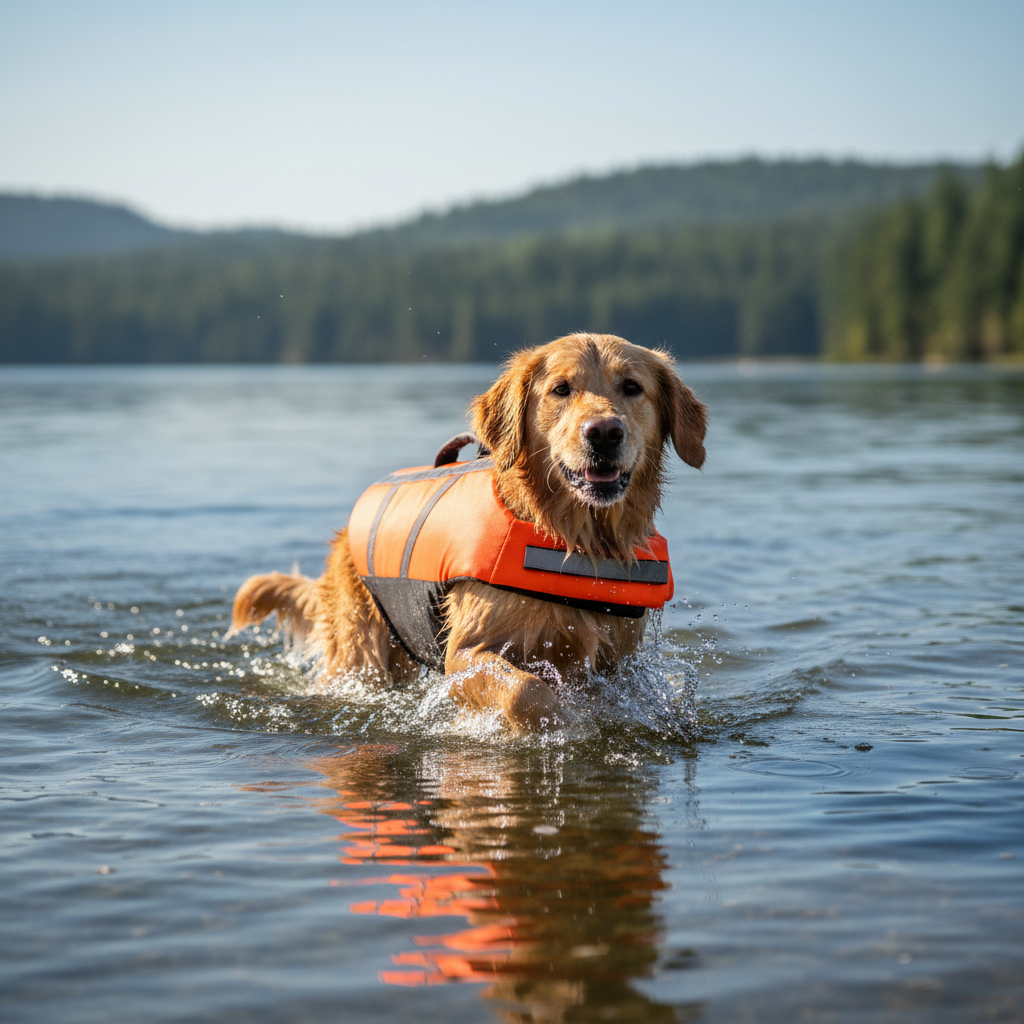
What makes a dog life jacket “best” for swimming
For swimming, the goal is stable body position, not just “floating.” The best-performing vests usually support the chest and ribcage so your dog stays level, with the head naturally above water without forcing the neck up.
- Buoyancy layout: Look for foam panels that support the front half and belly, not only the back. Too much on top can roll some dogs.
- Neck and chin support: A little flotation at the front helps keep the muzzle clear, especially for short-snouted breeds or tired swimmers.
- Secure straps: Wide belly straps with strong buckles tend to shift less than thin straps, especially when wet.
- Lift handle (or two): One handle is good, two handles can be better for large dogs or awkward boat exits.
- Visibility: Bright color plus reflective trim helps you track movement in chop, shade, or crowded water.
According to the American Kennel Club (AKC)... a life jacket is a smart idea for boating, open water, and dogs that tire quickly. That aligns with what most owners discover the hard way, dogs can love water and still need help staying safe.
Quick self-check: does your dog actually need one?
Some dogs swim like little motors, others look confident until they hit deeper water. If any of these feel familiar, a swim-ready vest is worth considering.
- Your dog swims in lakes, rivers, ocean, or anywhere with current, waves, or boat traffic
- Your dog jumps off docks, paddleboards, or boats, then struggles climbing back
- You have a senior dog, a puppy, or a dog that tires suddenly
- Your dog has a deep chest, short legs, a heavy coat when wet, or a dense body build
- You’re working on water confidence, and you want a calmer learning curve
If your dog has breathing issues, joint pain, neurologic concerns, or is recovering from injury, a life jacket may still help, but it’s sensible to ask your veterinarian about swim limits and safe sessions.
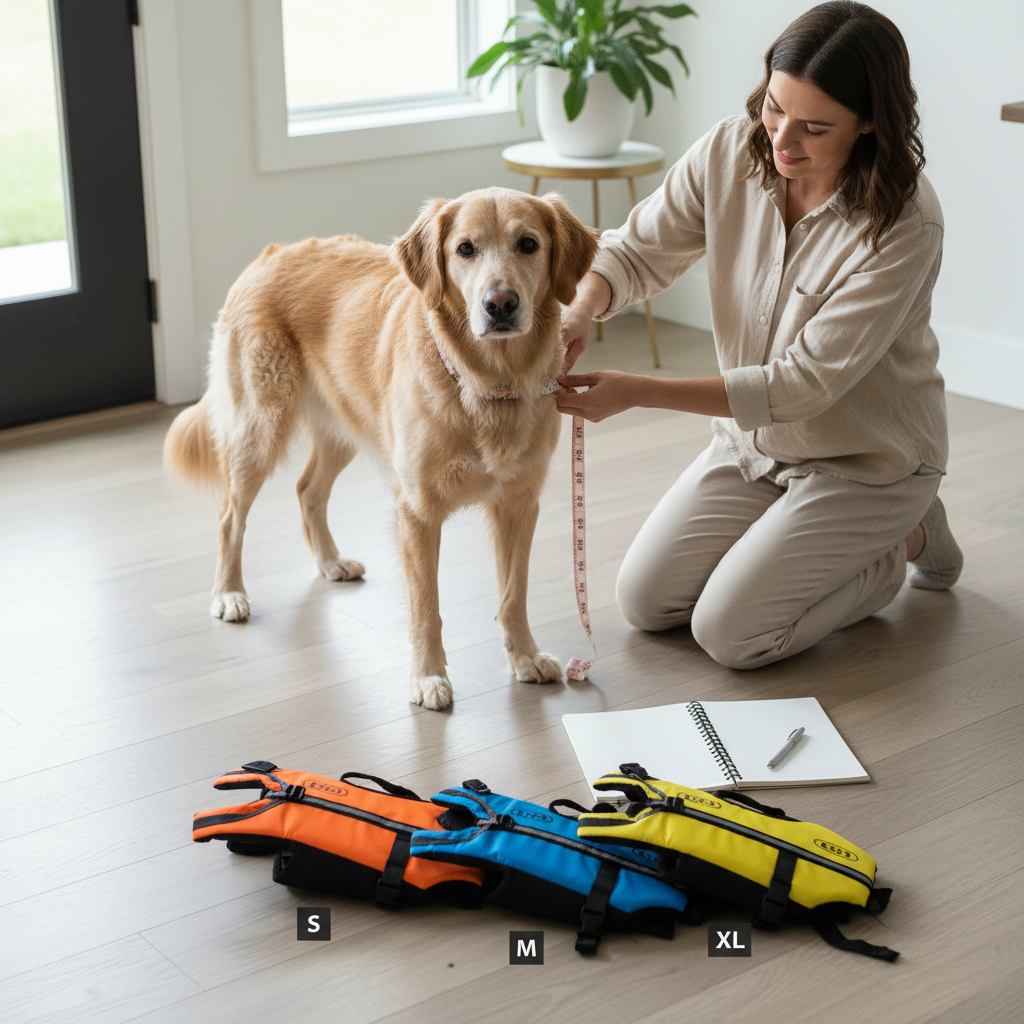
Fit comes first: how to measure and avoid the most common sizing mistakes
Most returns happen because the vest “seems fine” on dry land, then twists or rides up in water. For best dog life jackets for swimming, fit is performance.
Measure these two points
- Girth: The widest part of the ribcage, usually right behind the front legs.
- Back length: From the base of the neck to the base of the tail (rough guide, brands vary).
Do a 30-second fit test at home
- Straps snug enough that you can fit two fingers under them, not four.
- When you lift the handle gently, the vest should not slide toward the ears.
- The chest panel should sit flat, no gaps that let the front end sink.
- Watch shoulder movement, if the front cuts into the armpits, paddling gets awkward fast.
If your dog sits between sizes, many people do better sizing up only when the brand’s girth range still lets the straps tighten properly. A loose jacket is not “more comfortable” once it’s soaked.
Feature checklist: what matters on lakes, pools, boats, and the ocean
Different water changes what “best” means. Use this as a practical filter while shopping.
- Calm pool training: Comfortable lining, low bulk, easy buckles, clear size range for snug fit.
- Lakes and ponds: High visibility, strong handle, durable outer fabric for sand and shoreline rocks.
- Boating/paddleboarding: Dual handles (helpful), sturdy D-ring placement, quick-grab points.
- Ocean or rivers: Extra stability, reflective trim, secure neck closure, straps that don’t loosen under movement.
According to the U.S. Coast Guard... life jackets save lives when used correctly, and fit matters. While their guidance targets humans, the takeaway transfers: flotation works best when it stays correctly positioned.
Comparison table: how to choose the right style for your dog
Brand recommendations change every year, but the selection logic stays stable. Here’s a simple way to match jacket style to dog and use case.
| Dog / Scenario | What to prioritize | What to avoid |
|---|---|---|
| First-time swimmer | Balanced buoyancy, chin support, soft edges | Bulky “armor” fit that restricts shoulders |
| Strong swimmer in calm water | Secure straps, low drag, bright color | Minimal-straps designs that twist easily |
| Boat days and dock jumping | Reinforced handle(s), tough fabric, quick-dry | Single small handle stitched into thin fabric |
| Short-snouted breeds | Extra front float, stable chest support | Neck openings that press the throat |
| Senior dogs or rehab swims | Even support, easy on/off, gentle lift points | Hard seams that rub when wet |
How to introduce a life jacket without turning it into a struggle
The fastest way to make a dog hate the vest is to strap it on and immediately toss them into deep water. Go slower, you’ll usually get a calmer swimmer.
- Let your dog wear the jacket at home for a few minutes, treat, then remove.
- Do a shallow-water session where paws can touch bottom.
- Use the handle to guide, not to suspend. Lifting too much can spike stress.
- Keep first swims short, then end on a good rep, even if it’s only two minutes.
If your dog freezes, flails, or tries to climb you, stop and reset. Many dogs improve with more gradual exposure, but if panic keeps repeating, a trainer experienced with water introductions can help.
Practical buying tips that save money (and keep your dog safer)
People often overpay for features they won’t use, then miss the one feature that matters for their setup. Here are the buying shortcuts that tend to work.
- Prioritize fit over “tactical” looks: A snug, stable vest beats a heavy one that shifts.
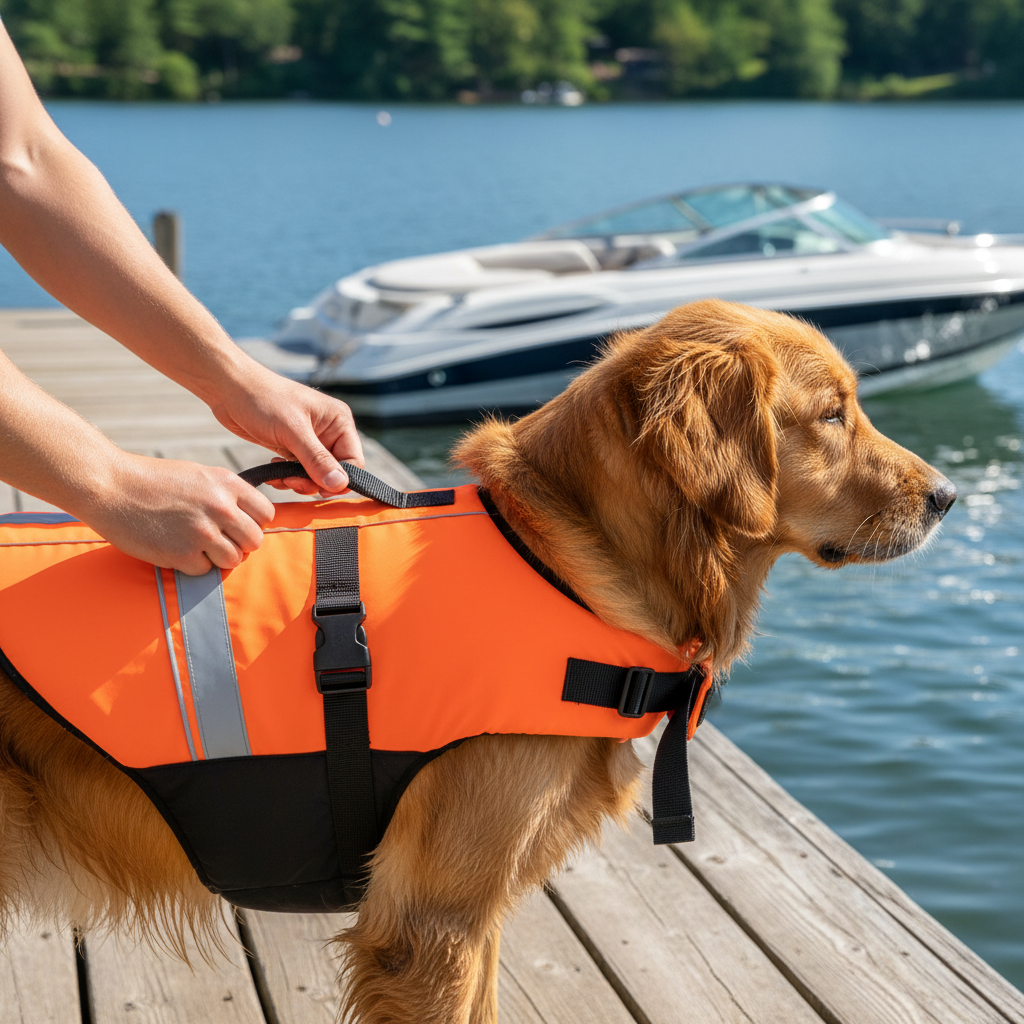
- Inspect stitching around the handle: If you plan to lift your dog into a kayak or onto a dock, this area takes real load.
- Choose easy-clean materials: Lake funk and saltwater smell build fast, quick rinse matters.
- Check return policy before you buy: You may need a size swap after a wet test.
For many households, the best dog life jackets for swimming are mid-priced models from established pet brands, not bargain vests with vague sizing charts. If the chart is confusing, that’s usually a signal.
Common mistakes and safety notes (worth reading)
A life jacket helps, but it doesn’t replace supervision, and it won’t make every situation safe. Keep these in mind.
- Don’t rely on the D-ring for heavy pulling: Some are fine for light leash control on deck, not for hoisting a dog out of water.
- Avoid leaving the jacket on for hours when wet: Chafing and hot spots can happen, especially under the armpits.
- Watch for “chin-up” forcing: If the front float pushes the head awkwardly high, it can tire the neck.
- Do a real water test: A jacket that looks perfect dry can roll when your dog turns or shakes.
If your dog shows coughing, blue/pale gums, extreme fatigue, or disorientation after swimming, it may be safer to stop and contact a veterinarian. Water-related issues can escalate, and it’s not worth guessing.
Bottom line: picking the right vest for your next swim
Choosing best dog life jackets for swimming is less about hype and more about matching buoyancy, fit, and handling to where you swim. If you remember one thing, buy the jacket that stays stable in motion and lets you lift your dog confidently.
Action steps that work: measure girth today, shortlist two models with strong handles and clear sizing, then do a controlled shallow-water test before any big lake or boat day.
FAQ
- What is the best dog life jacket for swimming in a pool?
Usually a lower-bulk vest with soft edges and a secure belly strap works well, pools are about comfort and learning, not current or waves. - How tight should a dog life jacket be?
Snug enough that it doesn’t slide toward the ears when you lift the handle gently, but not so tight it pinches the armpits or restricts breathing. - Do strong swimmers still need a life jacket?
Often yes in open water, boating, or long sessions. Even strong swimmers can get tired, swallow water, or misjudge distance back to shore. - Are dog life jackets safe for brachycephalic breeds?
They can be helpful, but fit around the neck and extra front support matter. Because breathing anatomy varies, it’s smart to ask a vet about safe exertion. - Can I lift my dog by the handle?
You can guide and assist, but repeated full-body lifting depends on handle reinforcement and your dog’s size. For heavy dogs, two handles or a support sling can feel steadier. - How do I know if the jacket has enough buoyancy?
In a controlled swim, your dog should stay level with minimal effort and the muzzle comfortably above water. If the body rolls or the chest sinks, look for better front support. - Should a dog wear a life jacket on a boat even if they don’t swim?
Many owners say yes because falling in can happen fast. A properly fitted vest gives you time and a grab point to recover your dog.
If you’re trying to choose between two sizes or styles and want a more straightforward path, bring your dog’s girth measurement, weight, and typical swim environment to a local pet shop or ask a veterinarian or trainer for a quick fit opinion, that small step often prevents the “twists in water” surprise.