
Best puppy toys for teething are the ones that soothe sore gums without creating new problems, like broken teeth, choking risks, or a pup who learns chewing is a free-for-all. If you feel like you’re rotating shoes into closets and still losing the occasional table leg, you’re not alone.
Teething is short-lived, but it can set long-term habits. Give a puppy the “wrong” chew outlets and you may end up with a dog who either destroys everything or gets bored with safe toys. Give the right outlets and many pups settle faster, chew more appropriately, and become easier to redirect.
This guide focuses on practical, real-home criteria: what materials tend to work, how to match toys to breed and chewing style, what to avoid, and how to use toys day-to-day so they actually get used. You’ll also find a quick comparison table and a short decision checklist.
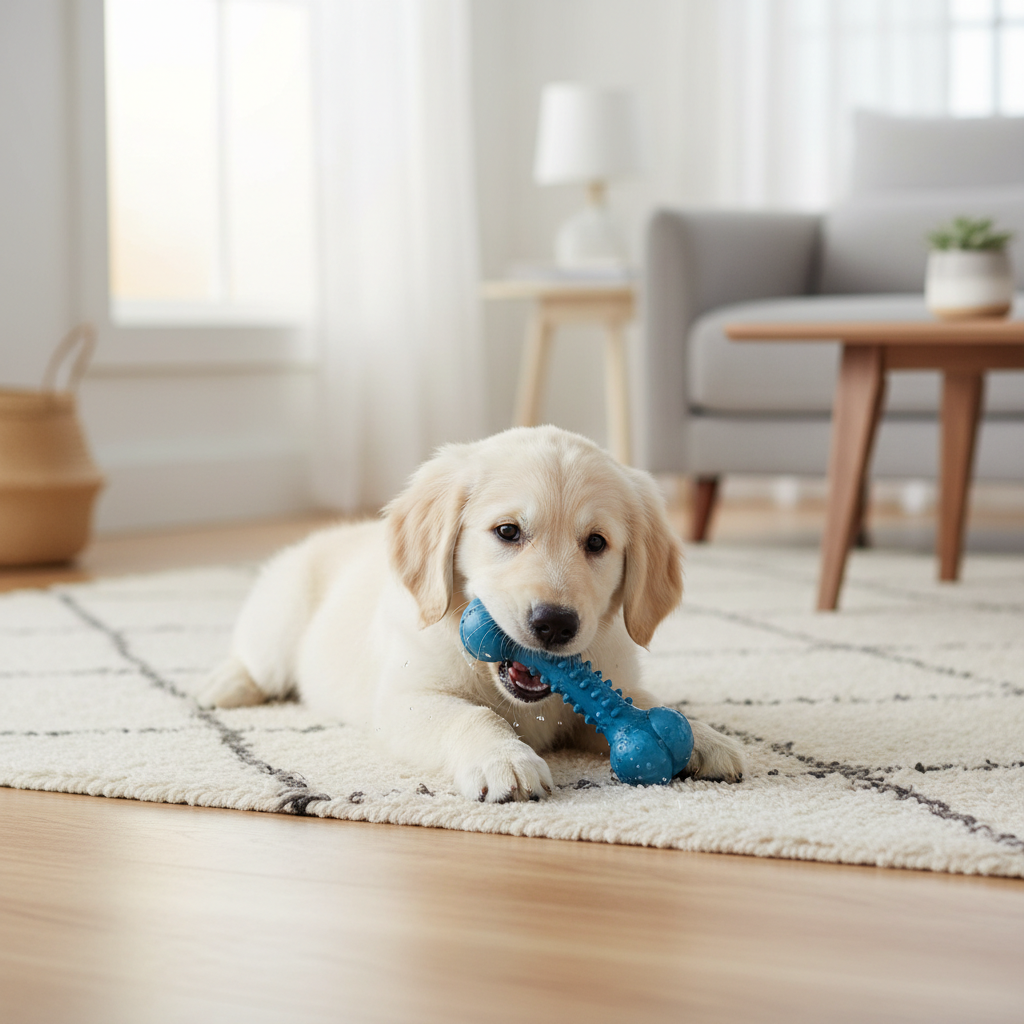
What makes a teething toy “good” (and what makes it risky)
A good teething toy does two jobs at once: it gives gum pressure relief, and it holds your puppy’s attention long enough to compete with furniture. The “perfect” toy varies by pup, but the traits below are reliable starting points.
- Appropriate firmness: firm enough to be satisfying, not so hard it risks tooth damage. If you can’t dent it at all with a fingernail, think twice for young puppies.
- Right size and shape: big enough not to swallow, shaped so the puppy can grip it with tiny mouths.
- Safe, simple construction: fewer glued-on parts, fewer seams, and no easily torn fabric for heavy chewers.
- Easy to clean: teething toys get gross fast, especially if they’re food-stuffed.
Risky toys often share the same red flags: small detachable pieces, splintering materials, very hard chews that don’t “give,” or toys that shred into strings. According to the American Veterinary Medical Association (AVMA), chew objects should be chosen with safety in mind and supervised, especially when your pet is learning what to do with them.
Best puppy toys for teething by type (what usually works in real homes)
Most puppies do best with a small “rotation” rather than one miracle toy. The idea is to mix textures and difficulty levels so your pup doesn’t get bored, and you can escalate to stronger options if chewing intensity increases.
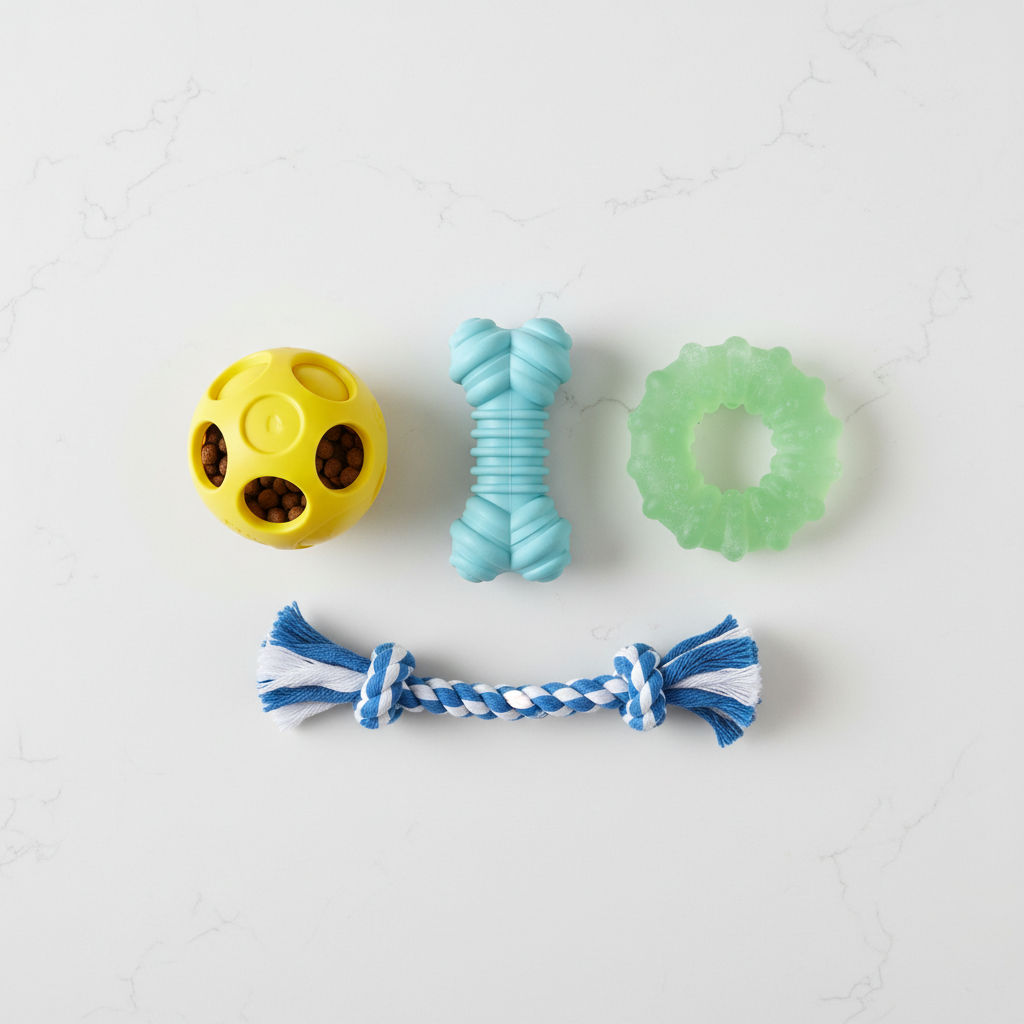
1) Durable rubber chew toys (everyday go-to)
Rubber toys are the closest thing to a teething staple. They typically have enough flex to feel good on gums, and you can often freeze them or stuff them for longer sessions.
- Best for: most puppies, especially moderate chewers
- Look for: one-piece rubber, puppy-specific sizing, textured ridges
- Skip if: your pup can tear chunks off quickly
2) Freezable teething toys (quick relief for “spicy” gum days)
Cold can help reduce discomfort for some puppies, kind of like a chilled teether for babies. Many owners find these are most useful during short, intense chewing bursts.
- Best for: 10–20 minute calming sessions
- Pro tip: chill per instructions, don’t DIY-freeze toys that aren’t meant for it
3) Treat-dispensing and stuffable toys (boredom + chewing)
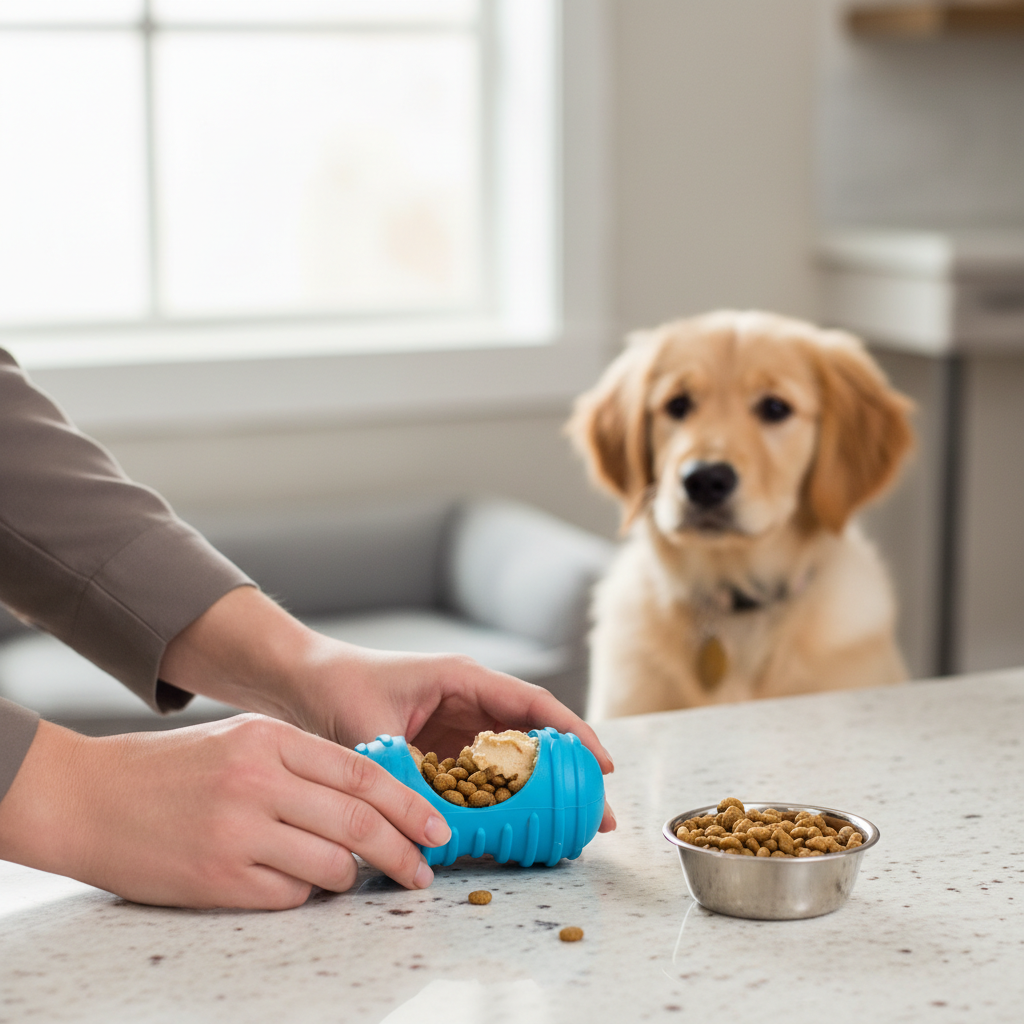
Stuffable toys turn teething into a focused project. This is where you “buy time” during meetings, dinner prep, or that witching hour in the evening.
- Best for: pups who chew then roam for trouble
- Stuffing ideas: kibble + a small smear of wet food, plain yogurt, or pumpkin, then chill for longer licking
- Watch-outs: adjust meals so extra treats don’t creep up
4) Soft-but-tough fabric chews (for comfort chewers, not shredders)
Some puppies want something they can “mouth” rather than crush. Reinforced fabric toys can work, but they’re not for everyone. If your pup’s style is to rip seams and eat fuzz, this category tends to cause frustration and mess.
- Best for: gentle chewers, pups who like to carry toys around
- Avoid if: your puppy routinely pulls threads loose
Quick comparison table: match the toy to the chewing problem
If you’re shopping fast, this table narrows choices by what you’re trying to fix. Think of it as a shortcut to the best puppy toys for teething based on day-to-day behavior, not marketing claims.
| Problem you see | Toy type to try | Why it helps | What to watch |
|---|---|---|---|
| Chewing furniture edges | Durable rubber chew | Similar resistance, safer target | Size up to prevent choking |
| Evening “zoomies” + nipping | Stuffable treat toy | Turns energy into licking/chewing | Limit rich fillings if stomach is sensitive |
| Whining, restless chewing bursts | Freezable teether | Cold can soothe gums | Use only as directed, supervise |
| Chews toys for 30 seconds, quits | Textured rubber or mixed-texture | More “interesting” mouth feel | Avoid tiny nubs that tear off |
| Shreds plush and eats bits | Heavy-duty rubber + food puzzles | Less shreddable, more engaging | Retire damaged toys promptly |
Self-check: how to choose the right toy for your puppy
Before you buy five new items, do a quick read on your pup. Many “this toy didn’t work” stories are really a mismatch in size, texture, or chewing style.
- Age and stage: younger puppies often prefer slightly softer, smaller grips, older teething pups may graduate to firmer rubber.
- Chewing intensity: does your pup gnaw steadily, or do they clamp down and try to rip?
- Body size and jaw strength: a toy safe for a Yorkie may be risky for a Lab puppy, and the reverse can be too hard for tiny mouths.
- Interest type: mouthy and busy usually likes food puzzles, comfort chewers often prefer softer textures.
- Household risk zones: if cords and chair legs are the obsession, prioritize redirect-friendly shapes you can “swap in” quickly.
Key point: if you see bleeding gums, excessive drooling, or your puppy won’t eat, it’s smart to check in with a veterinarian since discomfort can overlap with other issues.
How to use teething toys so they actually work (simple routine)
Buying the right product matters, but the routine is what changes behavior. The goal is to make your puppy think, “When my mouth feels weird, I go find my chew.”
- Stage toys where problems happen: keep one chew by the couch, one near the crate, one in the kitchen.
- Rotate, don’t overload: offer 2–3 options at a time, swap daily so they feel “new.”
- Pair chewing with calm: after potty and a short play session, offer a chew in a predictable spot.
- Trade, don’t grab: if your pup has contraband, exchange for a higher-value chew to avoid resource guarding habits.
- Use short supervision windows: especially with new toy types, watch how your puppy uses it before assuming it’s safe.
According to the American Kennel Club (AKC), providing appropriate chew outlets and redirecting unwanted chewing are common strategies during puppy teething, and consistency matters more than “winning” one moment.
Safety rules and common mistakes (the stuff people learn the hard way)
Teething toys are supposed to reduce stress, not create emergency vet visits. A few guardrails keep the experience boring, in a good way.
- Retire damaged toys early: once you see chunks missing, deep cracks, or unraveling fabric, swap it out.
- Match toy to the chewer, not the label: “for puppies” is broad, your pup may chew like a tiny power tool.
- Avoid very hard chews for young puppies: items that don’t flex at all can be risky for developing teeth in many cases.
- Be careful with ropes: rope toys can be fine for supervised tug, but if your pup eats strings, skip them.
- Don’t overdo rich fillings: sudden diet changes can cause loose stool, keep fillings simple and small.
According to the U.S. Food and Drug Administration (FDA), pet owners should supervise pets with treats and chews and remove products that become a choking hazard or show signs of wear. If you’re unsure about a specific chew type for your puppy, a veterinarian can help you choose a safer option.
When to get professional help (it’s not always “just teething”)
Most teething discomfort comes and goes, but certain signs deserve a closer look. It’s easy to miss the line between normal chewing and a problem that needs treatment.
- Persistent bleeding, swollen gums, or foul mouth odor that doesn’t improve
- Broken teeth or visible cracks
- Refusing food or sudden sensitivity on one side
- Repeated vomiting, lethargy, or constipation after chewing toys or treats
- Compulsive chewing that escalates with anxiety, not gum relief
If any of these show up, it’s reasonable to call your vet for advice. They can rule out retained baby teeth, mouth injuries, or GI issues, and recommend chew options that fit your puppy’s mouth and health history.
Practical takeaway: a simple “starter set” most puppies do well with
If you want a low-stress shopping list, aim for a small kit and adjust from your puppy’s feedback. For many homes, this covers the basics without clutter.
- One durable rubber chew in the right size
- One stuffable treat toy for calm time
- One freezable teether for rough gum days
That small set is often enough to find your puppy’s preference, and it helps you land on the best puppy toys for teething without buying a dozen “maybes.” Pick two spots in the house where chewing is allowed, start rotating daily, and keep trades positive.
If you want one action step today, choose a safe chew to stage near your puppy’s favorite trouble zone, then practice a quick trade game for 3 minutes a day. It’s boring, but it saves furniture.