
how to clean pet stains from carpet is mostly about two things: removing what you can see, and breaking down what you can’t, especially the odor compounds that keep pets returning to the same spot.
If you’ve tried “scrub + air freshener” and the smell still creeps back on humid days, you’re not alone, many carpet stains look gone while residue sits deeper in the fibers or even the pad.
This guide walks you through a practical, at-home approach that works for most everyday accidents, plus a quick decision checklist so you don’t waste time with the wrong product on the wrong stain.
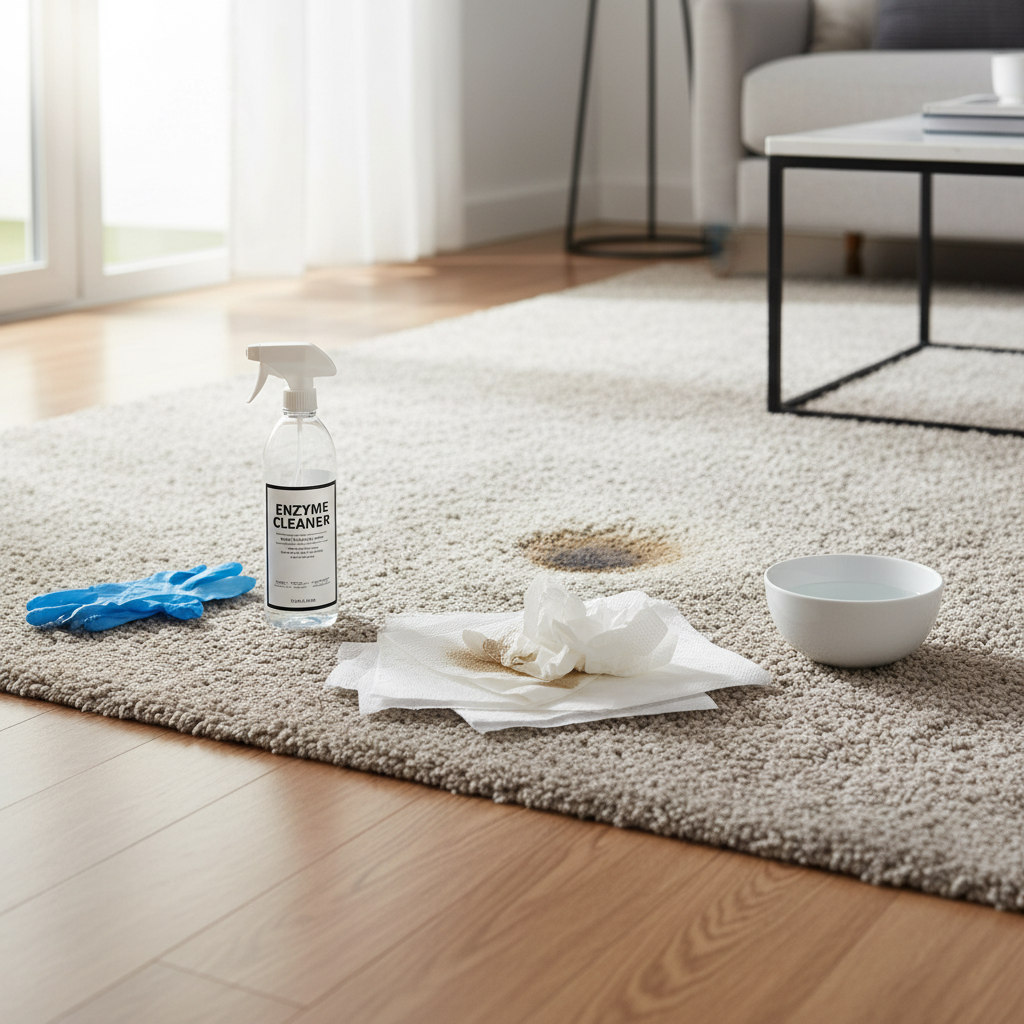
Know what you’re dealing with: fresh vs. set-in stains
The biggest difference isn’t the pet, it’s time. A fresh spot usually stays in the carpet fibers. A set-in spot often reaches the backing or pad, and that’s where odors “live.”
- Fresh stain (minutes to a few hours): easier to blot out, less odor bonding, lower chance of pad saturation.
- Set-in stain (overnight or repeated accidents): discoloration, crystallized residue, odor returns after cleaning, sometimes a stiff patch in the pile.
According to the American Kennel Club (AKC), enzymatic cleaners are commonly recommended for pet urine because they help break down odor-causing components rather than masking them.
Quick judgment checklist before you start
Before you reach for a random spray, take 30 seconds to check these, it saves a lot of “why did this get worse?” moments.
- Color test: Is your carpet wool or dyed? If you’re not sure, test any cleaner in a hidden corner first.
- Location: Near a wall or under furniture can mean slower drying and stronger odor rebound.
- What type of stain: urine, vomit, feces, muddy paw marks, or mixed messes need slightly different handling.
- Has it been cleaned before: soap residue from past cleaning can “hold” dirt and smell.
- Does it feel damp underneath: if the pad is wet, surface-only cleaning usually disappoints.
Key point: If you suspect the pad is saturated, your plan needs a longer soak-and-dry cycle, not harder scrubbing.
Step-by-step: how to clean pet stains from carpet (most common method)
This is the core routine for most urine and general pet messes on synthetic carpet. Adjustments for vomit and feces come next.
1) Blot, don’t rub
Use paper towels or clean white cloths, press firmly to pull moisture up. Rubbing can fray fibers and spread the stain outward.
- Stand on a thick layer of towels for 20–30 seconds.
- Replace towels and repeat until they come up nearly dry.
2) Rinse lightly with cool water
A small amount of cool water helps dilute what’s left. Pouring too much can push urine deeper, so keep it controlled.
- Dampen the spot, don’t flood it.
- Blot again until mostly dry.
3) Apply an enzyme cleaner correctly
Enzymes need contact time. Many people spray, wait 2 minutes, then wipe, and then wonder why the odor returns.
- Follow the label for dwell time, often 10–15 minutes or more.
- For older urine, the area may need to stay lightly damp with product longer.
- Cover with a towel so it doesn’t evaporate too fast.
4) Blot, then air-dry fully
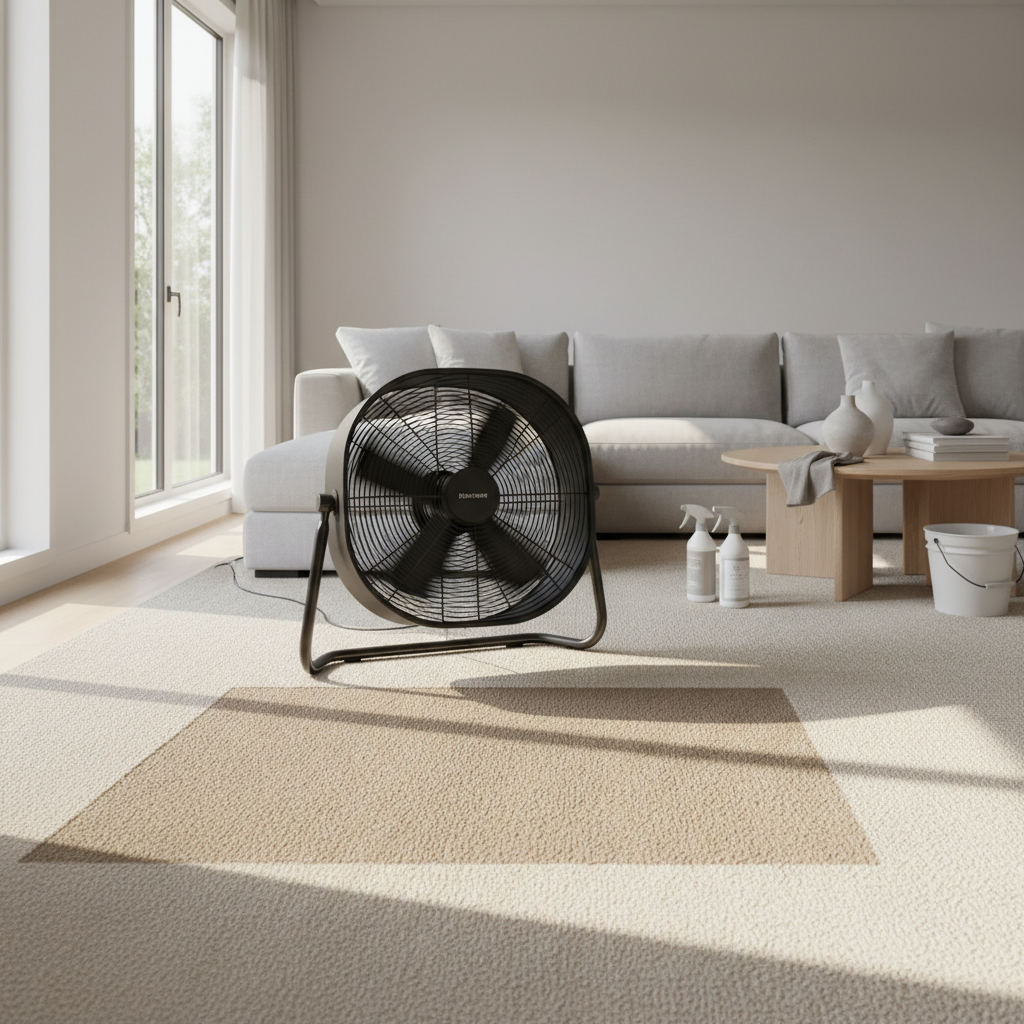
After dwell time, blot up excess moisture. Let the area dry completely, a fan helps. Odor judgment is more reliable after drying.
If odor remains after drying: repeat enzyme treatment, this usually beats switching to stronger-smelling products.
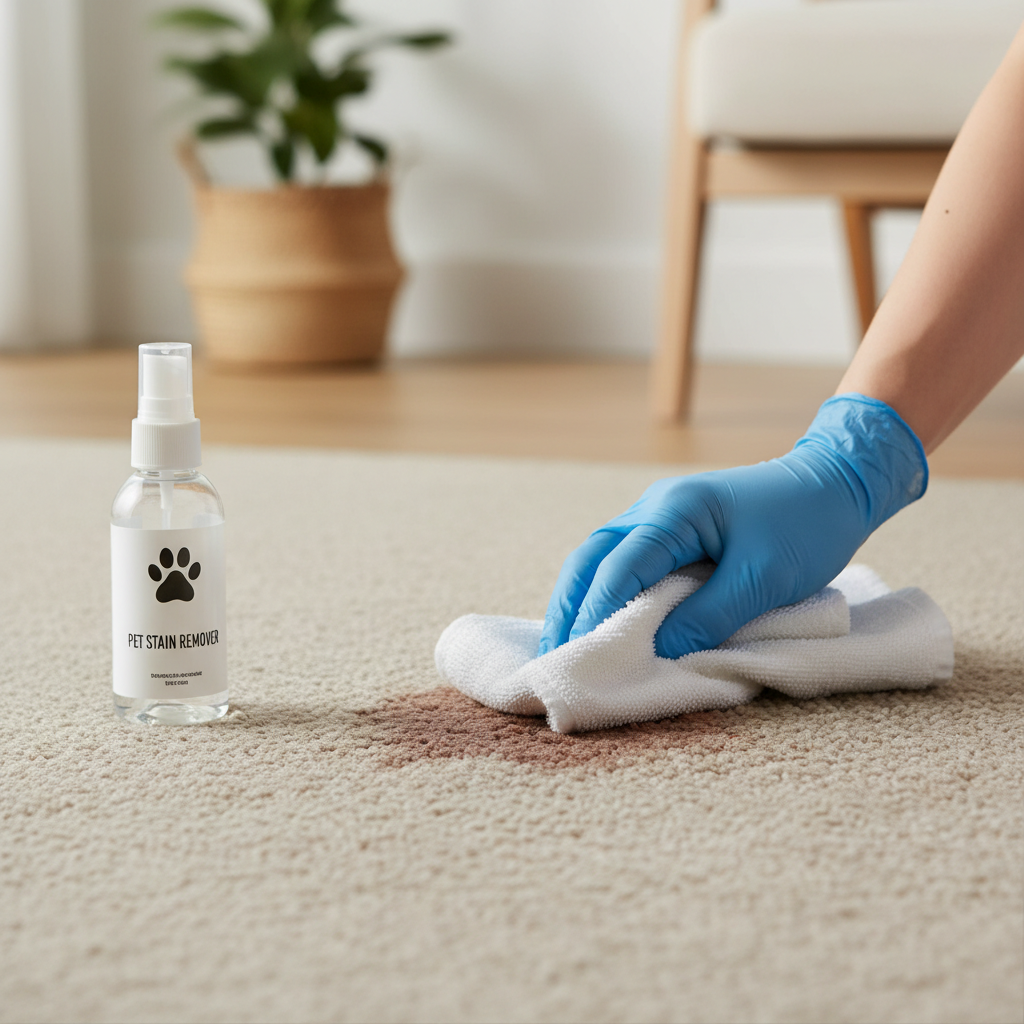
What to do for different pet stains (urine, vomit, feces, muddy paws)
Not every accident behaves the same. Here’s the practical split, with minimal fuss.
| Stain type | What works best | What to avoid |
|---|---|---|
| Urine (fresh) | Blot + light rinse + enzyme cleaner + full dry | Steam too early, heavy soap that leaves residue |
| Urine (set-in) | Enzyme soak with longer dwell time, multiple cycles, aggressive drying | Over-wetting without drying plan |
| Vomit | Remove solids, blot, rinse, enzyme cleaner (often helps with proteins) | Hot water, it can set protein stains |
| Feces | Lift solids first, then enzyme cleaner, then rinse and dry | Smearing by rubbing or using colored rags |
| Muddy paws | Let dry, vacuum, then spot clean with mild carpet-safe solution | Scrubbing wet mud deeper into fibers |
According to the ASPCA, household cleaning products should be chosen carefully around pets because some chemicals can irritate or harm them, if you’re unsure, a pet-safe enzymatic option is often the safer starting point.
Set-in odor that keeps coming back: a realistic plan
If you’re stuck in the cycle of “clean today, smell tomorrow,” it’s usually one of these: the pad stayed contaminated, the cleaner dried too fast, or older residue got reactivated by humidity.
- Extend contact time: keep the enzyme-treated area slightly damp longer, per label directions.
- Use pressure blotting: towels plus body weight pull more moisture from deeper layers.
- Dry like you mean it: fan + open window + dehumidifier if you have one, slow drying often equals lingering odor.
- Confirm with your nose after full dry: don’t judge while it’s still wet, many products have their own scent.
For severe repeat marking, you may be dealing with multiple old spots. A UV flashlight can help identify areas, but it’s not perfect, detergents and some carpet treatments can also glow.
Common mistakes that make carpet stains worse
A lot of “failed cleaning” is really good effort aimed the wrong way. These are the repeat offenders.
- Scrubbing hard: pushes mess deeper and fuzzes carpet fibers.
- Using too much soap: residue attracts dirt, the spot reappears as it dries.
- Mixing chemicals: especially bleach with ammonia-type residues can create irritating fumes, if you’re unsure what was used, rinse with water and stop.
- Steam cleaning too soon: heat can set certain stains and may lock in odor if the source isn’t removed.
- Covering up before fully dry: putting a rug or furniture back traps moisture, odor rebounds, and mildew risk rises.
Practical rule: if you can’t explain what each product is doing, you’re more likely to create a sticky layer than a clean carpet.
When it’s time to call a professional (and what to ask)
Home methods handle many accidents, but some situations deserve professional equipment, especially extraction that reaches the pad.
- Odor returns after two thorough enzyme cycles and full drying.
- The carpet backing feels stiff or the stain area is larger than you thought.
- You have wool carpet, antique rugs, or unknown dye stability.
- There’s possible mold smell, or the area stayed wet for a long time.
When you call, ask if they offer hot water extraction (deep rinse and vacuum), pet-odor treatment, and whether they can assess pad contamination. If you’re dealing with health sensitivities, it may be worth mentioning up front, a reputable cleaner can suggest lower-fragrance options, though you may still want to consult a medical professional for personal guidance.
Practical maintenance to prevent repeat accidents
Cleaning solves today’s mess, but prevention keeps you from cleaning the same square foot every week.
- Neutralize fully: if any odor remains, pets may revisit the spot.
- Block access while drying: a chair or pet gate helps.
- Vacuum routinely: grit wears fibers and makes future spots harder to lift.
- Consider a washable runner: in high-risk zones like near the door or litter box.
Key takeaway: for many homes, a small bottle of enzyme cleaner plus disciplined blotting and drying beats a cabinet full of random sprays.
Conclusion: a simple routine that holds up in real life
how to clean pet stains from carpet comes down to fast blotting, light rinsing, and giving an enzyme cleaner enough time to work, then drying the area completely so you can judge results honestly.
If you only do two things this week, do this: stock a pet-safe enzymatic cleaner you trust, and use a fan or dehumidifier after every wet cleanup, that combination prevents most “it looked clean but still smells” surprises.
FAQ
- How long should enzyme cleaner sit on carpet?
It depends on the product, but many need at least 10–15 minutes. For older urine, longer contact time often helps, as long as the carpet can dry thoroughly afterward. - Can I use vinegar and baking soda for pet urine?
Some people do, and it may reduce odor short-term, but it doesn’t always break down urine components the way enzymes can. If odor keeps returning, switching to an enzymatic formula is usually more effective. - Will steam cleaning remove pet urine smell?
It can help after the source is treated, but using heat too early may set odors or stains. If you steam clean, make sure you’ve already neutralized the urine and you can dry the carpet quickly. - Why does the stain come back after it dries?
Wicking is common: moisture pulls residue up from the pad or backing as it dries. Re-treating with enzyme cleaner and blotting with pressure, then drying faster, often fixes this. - What if my carpet is wool or an area rug?
Be cautious, dyes can bleed and fibers can shrink or distort. Spot test everything in a hidden area, and if the piece is valuable or delicate, a professional rug cleaner is a safer route. - Is it safe to use bleach on pet stains?
Usually not a good idea. Bleach can discolor carpet and may react with ammonia-like residues in urine, creating irritating fumes. If you’re unsure what products were used before, stick to water rinse and a pet-safe enzyme cleaner. - How do I keep my pet from peeing in the same spot again?
Full odor removal matters, then block access while the area dries. If accidents repeat, it may be behavioral or medical, a vet or trainer can help you rule out issues.
If you’re cleaning frequent accidents and want a more predictable routine, it may help to build a small “stain kit” with enzyme cleaner, white towels, gloves, and a fan plan, it keeps you from improvising under stress and accidentally making the spot harder to remove.