
how to make a cat comfortable starts with one simple idea: let your cat feel in control of their space, their hiding options, and how fast interactions happen.
If you have a new cat, a recent move, guests coming over, or a normally social cat suddenly acting withdrawn, the “fix” is rarely one magic product. Comfort usually comes from a predictable setup, fewer surprises, and a home layout that makes sense to a prey-minded animal who also thinks like a tiny predator.
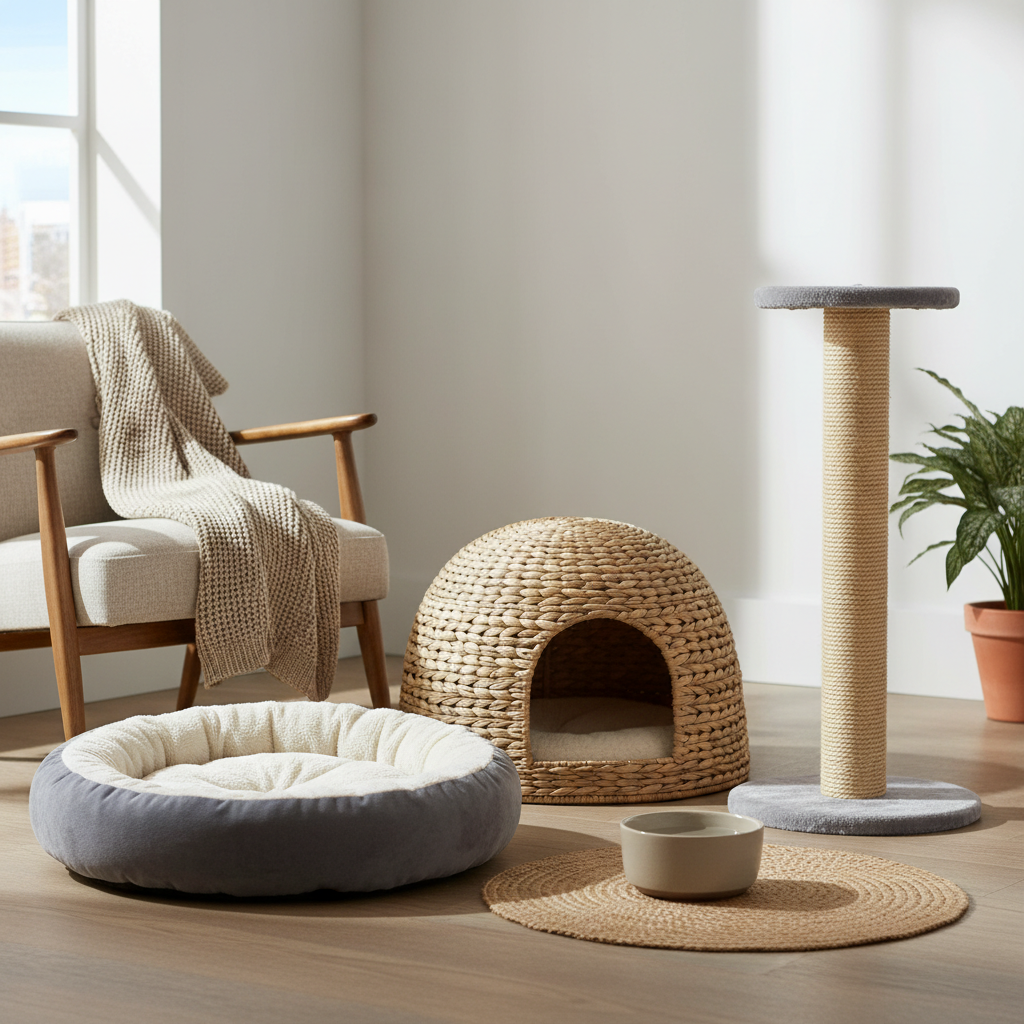
People also underestimate how long “settling in” can take. Some cats relax in hours, others need days or weeks, especially if they had a rough past, poor socialization, or a big change in routine. The goal here is not to force confidence, it’s to build it.
Below you’ll find practical home adjustments, a quick self-check list, and a few do-not-do items that can slow progress, plus guidance on when it makes sense to talk with a veterinarian or a behavior professional.
What “comfortable and safe” looks like in cat behavior
Comfort in cats is mostly body language and routine, not “cuddly mood.” A relaxed cat often shows a loose posture, neutral tail, normal appetite, and curiosity that returns in small bursts.
Common signs your cat is feeling safer include:
- Eating, drinking, and using the litter box consistently
- Resting with paws tucked or stretched out, rather than tightly crouched
- Choosing to come out of hiding for short checks of the room
- Grooming normally, without frantic over-grooming
- Playing, even briefly, especially at dawn/dusk
On the flip side, hiding nonstop, growling, swatting, appetite changes, and litter box avoidance can mean stress. It does not automatically mean your cat is “mean,” it often means the environment feels unsafe.
Why cats get uncomfortable: the usual triggers (and the ones people miss)
Most comfort issues come from a handful of categories. Knowing which one you’re dealing with helps you pick the right fix instead of trying everything at once.
New territory or a sudden change
Moving, renovations, a new roommate, or even rearranging furniture can throw some cats off. Many cats map the home mentally, so the “landmarks” matter more than you’d expect.
Too much social pressure, too soon
Direct eye contact, reaching over the head, trying to pick up a hiding cat, or letting multiple people approach at once can make a shy cat shut down. For many cats, comfort grows fastest when the human acts a little boring.
Resource competition (even in one-cat homes)
In multi-cat homes, a blocked litter box or a guarded food station creates tension. In single-cat homes, the “competition” can be a loud dog, a toddler, or a hallway that forces the cat to pass close to people.
Sensory overload
Loud TVs, strong cleaners, scented litter, or constant foot traffic can keep a cat on alert. According to the American Veterinary Medical Association (AVMA), stress can contribute to behavior changes in pets, so reducing avoidable triggers is not just “nice,” it can be preventative.
Discomfort or illness
Pain, nausea, dental problems, and urinary discomfort can show up as hiding, irritability, or avoiding the litter box. According to the American Association of Feline Practitioners (AAFP), medical issues should be considered when behavior changes are sudden or unusual, so it’s smart to keep health on the radar.
A quick self-check: which situation are you in?
If you want to know how to make a cat comfortable without guessing, start by placing your cat in a scenario bucket. Pick the closest match.
- Brand-new cat (first 1–14 days): hiding a lot, exploring at night, startle responses
- Established cat, sudden change: new schedule, move, guests, construction noise
- Multi-cat tension: staring, blocking doorways, one cat “owns” key areas
- Handling sensitivity: swats during petting, bites during pickup, dodges hands
- Possible medical flag: appetite drop, litter box changes, crying, sudden aggression
If you check that last bullet even “maybe,” consider pairing the home-comfort steps with a vet call. You can still make the environment calmer while you schedule help.
Set up a “base camp” that lowers stress fast
The fastest wins usually come from environment, because you can change that today. A base camp is a small area where your cat can meet all needs without feeling exposed.
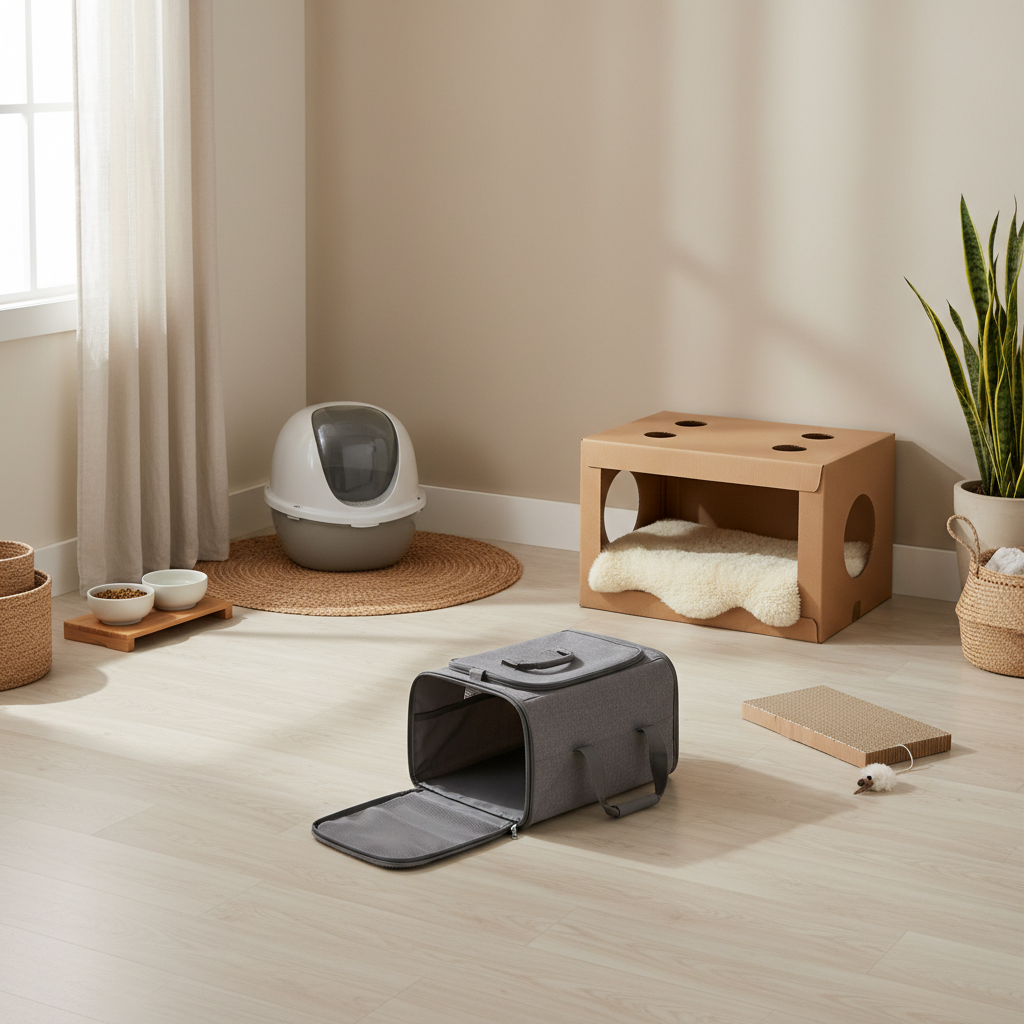
Base camp basics (small room or quiet corner):
- Hiding option: covered bed, box on its side, or carrier with the door propped open
- Litter box: placed away from food and away from noisy appliances
- Food and water: simple, consistent location, no crowding by other pets
- Scratching surface: one vertical or horizontal option, ideally both over time
- Resting spot: soft, washable, and not in the middle of foot traffic
A small but important detail: give the cat vertical space. A sturdy cat tree or a cleared bookshelf level lets your cat observe without feeling cornered, which often speeds up social confidence.
If you’re dealing with multi-cat stress, replicate key resources around the home so one cat can’t control all the “good stuff.” According to the ASPCA, providing sufficient resources like litter boxes and resting places helps reduce conflict in many households.
Comfort rules for humans: what to do (and what to stop doing)
This is the part many people find annoying because it sounds too simple, but it works: slow down, lower pressure, and let your cat choose contact.
What helps
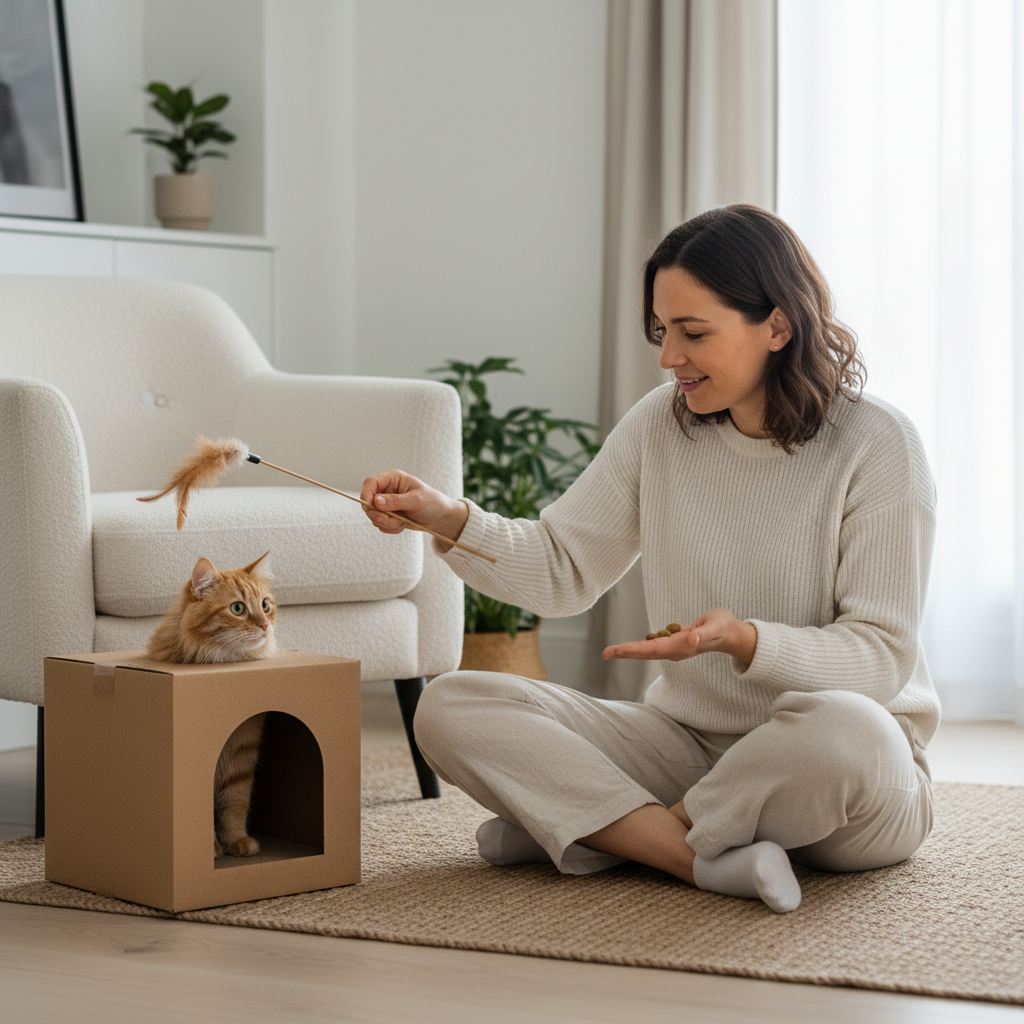
- Sit sideways rather than facing your cat head-on
- Use the slow blink, then look away to reduce “staring” pressure
- Offer a hand at nose level and wait, don’t chase
- Pet in safe zones for many cats: cheeks, chin, base of ears, shoulders
- Keep sessions short, end before your cat feels the need to escape
What often backfires
- Pulling a cat out from under a bed “to show them it’s fine”
- Picking up a cat who is already tense, stiff, or wide-eyed
- Letting kids or visitors crowd the hiding spot
- Free-feeding in a way that removes structure, especially in multi-cat homes
If you’re trying how to make a cat comfortable with people, one reliable approach is to make yourself the predictor of good things, not the source of surprise. Meals, treats, and play should come from you, with calm body language attached.
Routine, play, and scent: the “quiet levers” that change behavior
Once the environment is stable, comfort is mostly routine. Cats do not need a rigid schedule, but they tend to do better when the big daily events happen in a similar order.
Use a simple daily loop
- Food at roughly consistent times
- Play in short bursts, especially before meals
- Rest in a protected spot after activity
Play deserves special attention because it’s “confidence training” disguised as fun. Use a wand toy to create distance at first, then slowly bring play closer as your cat relaxes.
Scent also matters more than people think. Keep a few familiar fabrics unwashed for a bit after moving, avoid heavy fragrances near the cat’s core areas, and consider pheromone diffusers if your vet thinks they fit your situation. Results vary, but in many homes they can take the edge off during transitions.
Practical problem-solving table: match the symptom to a first step
If you’re stuck, this table can keep you from spiraling into random changes. Make one or two adjustments, then reassess after a few days.
| What you’re seeing | What it often means | A first step that usually helps |
|---|---|---|
| Hiding all day, exploring at night | New territory stress | Create a base camp, add a covered hide and a high perch |
| Swats during petting | Overstimulation or handling sensitivity | Shorten petting sessions, focus on cheeks/chin, stop before tail flicking |
| One cat blocks doorways | Resource control or tension | Duplicate litter/food/water stations, add vertical escape routes |
| Not using litter box | Stress or possible medical issue | Call a vet, meanwhile add a second box in a quiet location |
| Startles at every sound | Sensory overload | Give a quieter room, add white noise, reduce sudden approach |
When comfort issues may need professional help
Home changes help many cats, but there are times you should not wait it out. If any of these show up, it’s reasonable to call a veterinarian and describe the behavior change in plain terms.
- Sudden appetite drop or not drinking as usual
- Litter box changes, straining, blood, frequent trips, or crying
- Rapid behavior shift in a cat who was previously stable
- Aggression with no clear trigger, especially if escalating
- Over-grooming that creates bald patches or skin irritation
For behavior-specific support, a credentialed professional can help you build a plan. According to the American College of Veterinary Behaviorists (ACVB), behavior problems can have medical and environmental components, so coordinated help tends to be more effective than trying to “train it out” with pressure.
Key takeaways you can use today
- Control beats comfort items: give choice, hiding, and vertical space before buying more gear.
- Lower social pressure: let the cat approach, keep interactions short, end on a calm note.
- Stability matters: base camp, predictable routine, and duplicated resources reduce stress faster than constant changes.
- Health is part of the picture: sudden or intense behavior changes deserve a vet conversation.
Conclusion: a calmer cat usually comes from calmer inputs
Learning how to make a cat comfortable is mostly about designing the home so your cat can eat, rest, and move around without feeling trapped, then pairing that setup with low-pressure human behavior and a steady routine.
Pick two actions you can do in the next 24 hours, usually a base camp upgrade and a shorter, calmer interaction style, then watch what changes over the next week. If your gut says something feels “off” medically, trust that instinct and talk with a veterinarian.