
how to stop puppy from whining is usually less about “getting them to be quiet” and more about figuring out what the whining is trying to say, then teaching a calmer way to ask for help, attention, or a break.
If you’ve got a puppy who whines all day, it can feel like you’re failing at training, or like you’ve created a “needy” dog. Most of the time, it’s simpler than that: puppies have tiny coping skills, and whining is one of the few tools they have.
This guide walks you through common causes, a quick self-check to narrow it down, and training steps that tend to work in real homes. You’ll also see where people accidentally reinforce whining, and when it’s smarter to loop in a vet or a qualified trainer.
What constant whining usually means (and what it doesn’t)
Whining is communication. Sometimes it’s a need, sometimes it’s frustration, sometimes it’s a learned habit. The trick is to identify which category you’re dealing with before you pick a plan.
- Needs-based whining: potty, hunger, thirst, discomfort, too hot/cold, or “I can’t settle.”
- Separation or confinement stress: whining in the crate, behind a gate, or when you leave the room.
- Overtired and overstimulated: the classic “toddler meltdown” puppy who cannot turn off.
- Attention-seeking that got reinforced: whining made people talk, look, pet, or pick the puppy up.
- Excitement and anticipation: whining before meals, leash walks, car rides, or greeting guests.
One misconception worth clearing up: ignoring is not a universal fix. Ignoring a potty whine, pain signal, or escalating anxiety can backfire, and it can damage trust.
A fast self-check: pinpoint the trigger in 5 minutes
Before you train anything, run a quick check. This prevents you from treating a physical need like a “behavior problem,” which is where many households get stuck.
Ask these questions
- When does it happen? crate time, evening witching hour, when you stand up, when you pick up keys.
- What happened right before? play session, visitors, meal prep, loud noise, you left the room.
- What stops it? going outside, chewing a toy, you sitting nearby, being let out of the crate.
- What does the body look like? pacing, panting, tucked tail, pinned ears, yawning, or just “bored squeaks.”
- How old is the puppy? very young puppies often cannot hold it long, and they fatigue fast.
Key point: If your puppy’s whining escalates into frantic behavior, drooling, self-scratching at the crate, or sudden personality changes, treat it as a welfare issue, not a “manners” issue.
Common causes and what to do in each scenario
Below are the situations I see most often. You might have two overlapping causes, for example a puppy who’s overtired and also learned that whining gets attention.
1) Potty needs (especially in crates and at night)
Very young puppies whine because they truly cannot wait. A clean, consistent potty routine reduces the “panic whine,” and it also helps you avoid accidentally teaching them to cry for random outings.
- Use a predictable schedule: after sleep, after play, after eating, and every 1–2 hours for young pups.
- Nighttime: keep it boring, leash on, quick potty, then back to bed with minimal talking.
- If accidents are frequent or sudden, consider checking with a veterinarian to rule out urinary issues.
2) Overtired puppies who can’t settle
Many “constant whiners” are actually running on fumes. They look wired, but they need sleep. Enforced naps can feel like magic when done calmly.
- Aim for regular nap windows, especially after active play.
- Lower stimulation: dimmer room, white noise, chew or lick toy to help downshift.
- Keep the pre-nap routine consistent so the puppy learns the pattern.
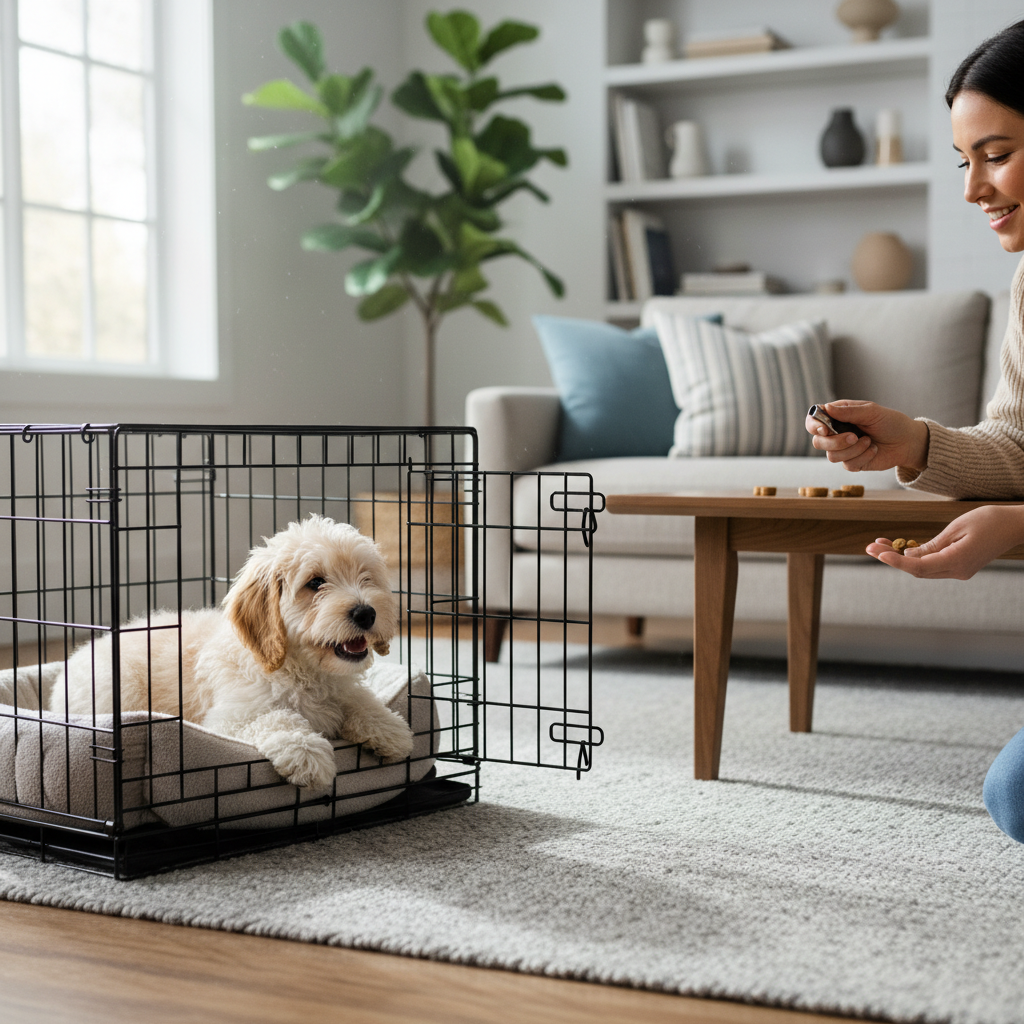
3) Crate or pen whining
Crate training fails when the crate only predicts isolation and nothing else. You want the crate to predict safety, rest, and good stuff, not an emotional cliff.
- Feed some meals in the crate, door open at first.
- Practice short, easy reps: in for one treat, out again, repeat.
- Increase time slowly, and return while the puppy is quiet when possible.
- If whining spikes when you move away, train distance like a skill, not a test.
4) Attention whining (learned behavior)
If whining reliably makes you talk, touch, or look, the puppy will keep using it. Here the goal is not to be cold, it’s to reward an alternative like sitting, lying down, or even a brief pause.
- Decide what earns attention: quiet, four paws on the floor, or a sit.
- Catch and pay calm moments with low-key praise and a treat.
- When whining starts, keep your body language neutral, then reward the first second of quiet.
5) Separation-related distress
Some puppies struggle when you leave. This is where “just ignore it” can create more panic. According to the American Veterinary Medical Association (AVMA), behavior changes can be linked to medical or behavioral concerns, and discussing persistent anxiety signs with a veterinarian is a reasonable step.
- Start with tiny absences the puppy can handle, even 5–10 seconds.
- Pair departures with food puzzles only if they truly help the puppy settle.
- Build a cue for relaxation (mat training, settle on cue) when you’re home.
- If distress is intense, consider a certified trainer who works with fear/anxiety.
A practical training plan: teach “quiet,” don’t just hope for it
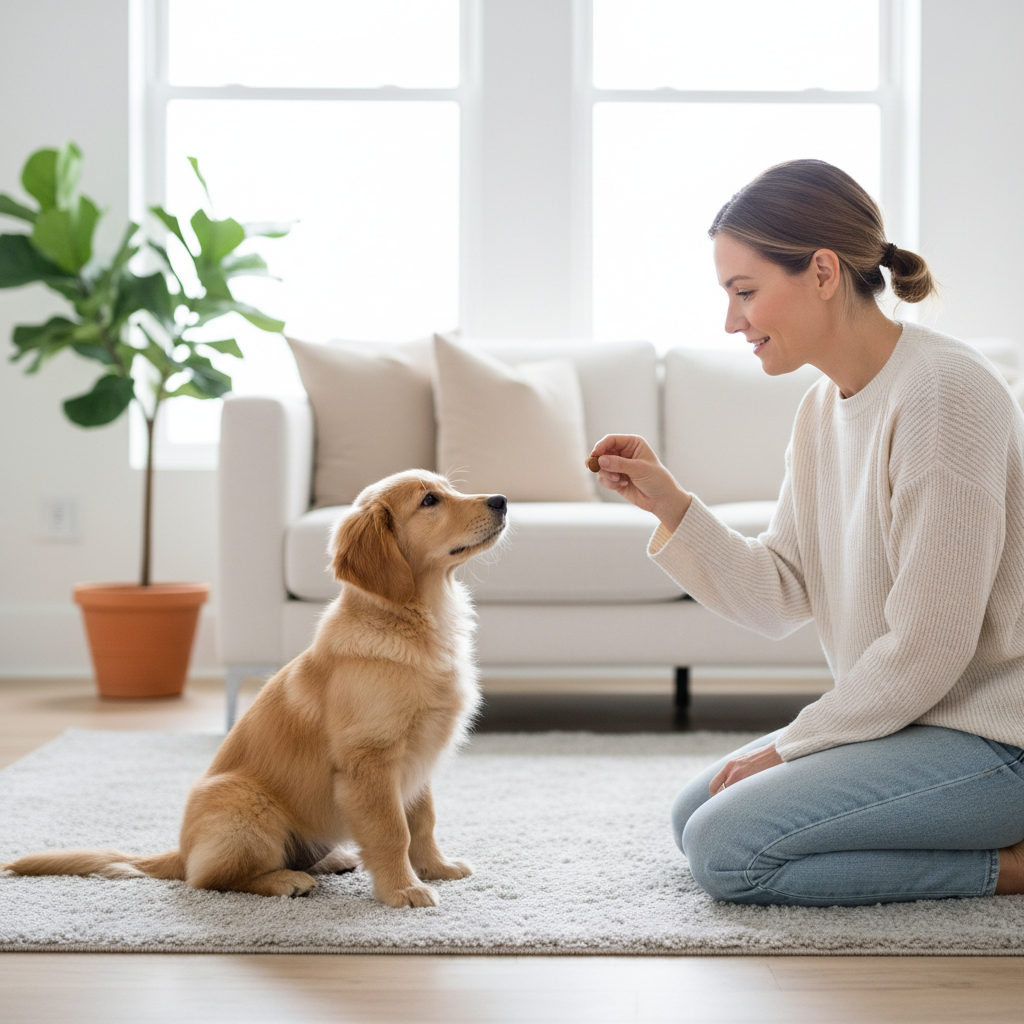
If you want how to stop puppy from whining to actually stick, give your puppy a clear, rewarded behavior that replaces whining. Quiet isn’t just the absence of noise, it’s a skill.
Step 1: Capture one second of quiet
- Wait for the tiniest pause in whining.
- Mark it with “yes” (or a click), then reward.
- Repeat until pauses happen more often.
Step 2: Add a cue (optional, but helpful)
- When the puppy is reliably offering quiet pauses, softly say “quiet,” then mark and reward.
- Keep your tone calm, avoid sounding like a correction.
Step 3: Build duration and real-life difficulty
- Reward 2 seconds, then 3, then 5.
- Practice in easy contexts first, not at peak meltdown moments.
- If whining returns, your step got too hard; drop back to an easier version.
Helpful mindset: You’re shaping calm the same way you shape “sit,” through many small wins.
Use this table to match the fix to the cause
When owners search how to stop puppy from whining, they often try one tactic everywhere. This quick map keeps you honest about the cause.
| Where/When Whining Happens | Most Likely Cause | What to Try First |
|---|---|---|
| Right after waking, circling/sniffing | Potty need | Leash potty trip, boring and fast |
| Evening “witching hour,” nippy and restless | Overtired/overstimulated | Quiet room, chew/lick, enforced nap |
| Crate/pen when you leave the room | Confinement stress or FOMO | Short reps, reward calm, gradual distance |
| While you cook, answer emails, sit on couch | Attention-seeking | Reward quiet pauses, teach settle on mat |
| Sudden new whining, reduced appetite, limping | Possible discomfort/medical issue | Contact veterinarian for guidance |
Real-world management that makes training easier
Training works better when the puppy’s day makes sense. Management isn’t cheating, it’s how you prevent a bad loop while the new habit forms.
- Meet needs early: potty, water, age-appropriate meals, nap rhythm.
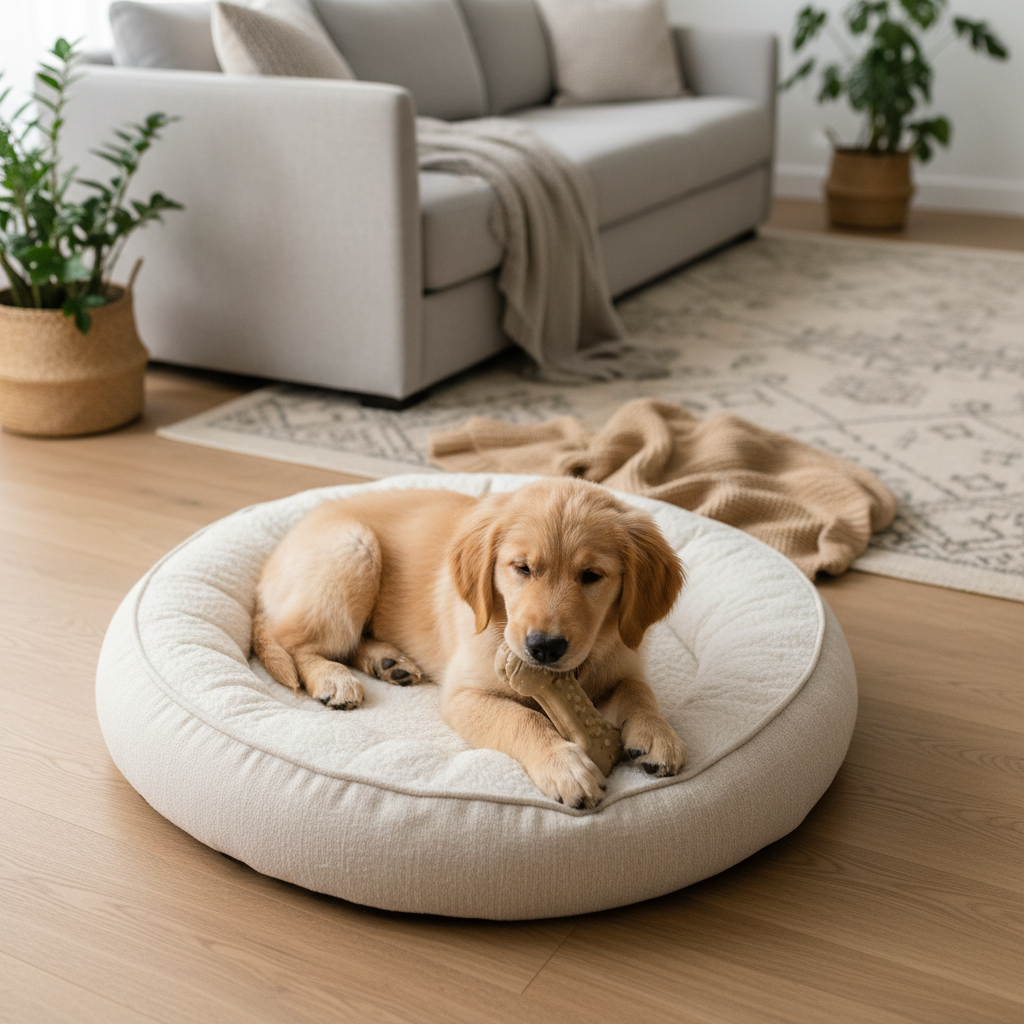
- Chew and lick outlets: stuffed Kongs, lick mats, safe chews your vet approves, these lower arousal for many pups.
- Reduce trigger stacking: long play + visitors + skipped nap often equals nonstop whining later.
- Use a pen or baby gate strategically: close enough for comfort, far enough to practice independence.
According to the American Kennel Club (AKC), puppies benefit from positive reinforcement training, rewarding the behaviors you want to see more often. That applies here: reward calm, not noise.
Common mistakes that keep the whining going
Some mistakes are totally understandable, you’re tired, you just want quiet. But they can lock the habit in.
- Responding inconsistently: if whining sometimes works, it often becomes more persistent.
- Accidental “comfort spirals”: lots of talking, eye contact, and hovering can reward the noise even if you feel like you’re soothing.
- Asking too much too fast: long crate sessions before the puppy can settle often leads to louder protest.
- Too much freedom too early: an overtired puppy roaming the house often whines more, not less.
- Punishing vocalizing: scolding may increase stress, and it rarely teaches what to do instead.
If you’re unsure whether you’re rewarding the whining, record a short video. Many people spot the pattern immediately when they watch it back.
When to get professional help (vet or trainer)
Some whining is normal, especially in the first weeks. Other cases deserve support sooner rather than later.
- Call a veterinarian if whining comes with vomiting, diarrhea, limping, sudden lethargy, appetite changes, or if it appears out of nowhere.
- Look for a qualified trainer if whining is paired with panic signs in the crate or when alone, or if progress stalls despite consistent training.
- Consider a veterinary behaviorist for intense anxiety cases, since behavior plans sometimes include medical considerations.
According to the American College of Veterinary Behaviorists (ACVB), problem behaviors can have medical and emotional components, and professional evaluation can help tailor a safe plan.
Conclusion: the calm plan that usually works
How to stop puppy from whining becomes much more manageable once you treat whining as information, meet real needs quickly, then reward quiet moments until calm becomes your puppy’s default option.
If you want a simple next step, pick one scenario where whining happens most, run the 5-minute self-check, and train for quiet in that exact context for a week, short sessions, lots of easy wins. If the whining feels intense or out of character, looping in a veterinarian or a credentialed trainer can save you time and stress.