
how to remove pet hair from couch is usually less about “scrubbing harder” and more about using the right friction, direction, and tools for your upholstery type.
If you share a sofa with a dog or cat, you already know the pattern: hair shows up right after you clean, it weaves into seams, and it loves textured fabrics. The upside is you can get noticeably better results with a few small changes, especially if you stop relying on one tool for every mess.
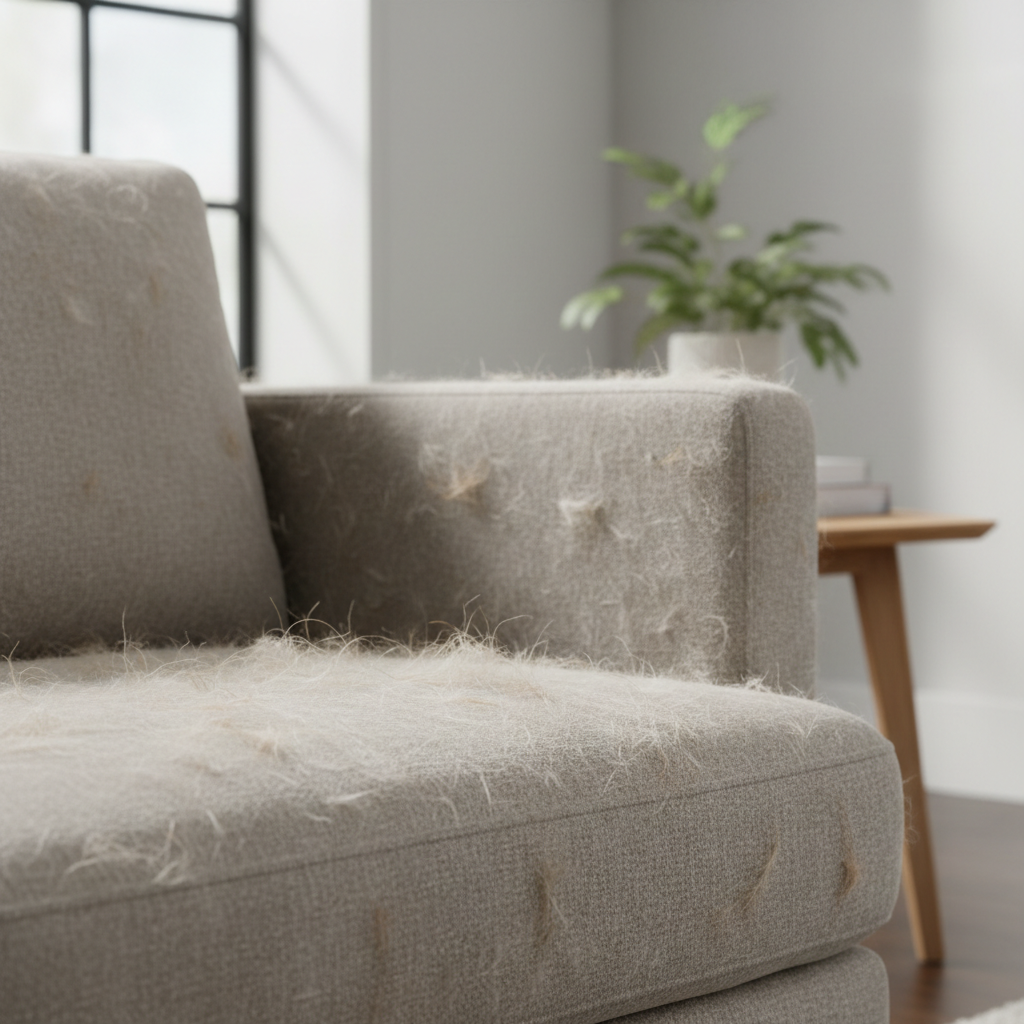
This guide focuses on what works in real homes: quick daily removal, deeper weekly cleanups, and a few prevention habits that keep hair from building up. I’ll also call out common mistakes, because some “viral” tricks can shorten the life of your couch.
Why pet hair clings to couches (and why some tools fail)
Pet hair doesn’t just sit on the surface. It grabs onto fabric in a few different ways, and that’s why a normal vacuum pass can feel pointless.
- Static charge: Dry air and synthetic upholstery can make hair “stick” like a magnet, especially in winter.
- Fabric texture: Microfiber, tweed, and woven blends trap hair in tiny loops, so it resists straight suction.
- Body oils and dander: Hair can pick up oils and fine debris, making it tackier and harder to lift.
- Seams and creases: The worst areas are cushion edges, piping, and where the seat meets the back.
That’s also why brushes and rubber tools often beat “more vacuum power.” You’re not only removing hair, you’re breaking its grip.
Quick self-check: what couch fabric and hair type are you dealing with?
Before you pick a method, take 60 seconds to identify the setup. It saves time and avoids damaging delicate fabrics.
Upholstery clues
- Microfiber/suede-like: Hair mats into the nap, rubber tools work well, too much water can leave marks.
- Tight weave (canvas, performance fabric): Hair stays more on top, vacuum + lint tools work fast.
- Textured weave (tweed, boucle): Hair tangles, brushing in one direction matters more than suction.
- Leather/faux leather: Hair doesn’t embed much, but static can make it cling; wipe and sweep methods shine.
Hair clues
- Short, stiff hair: Often “needles” into fabric; use rubber + crevice work.
- Long hair: Forms ropes that wrap brush rollers; choose tools that won’t tangle.
- Fine undercoat: Looks like dust bunnies, floats, and clings via static; light misting can help.
Best tools for removing pet hair from a couch (with a simple comparison)
You don’t need every gadget. Most households do well with one rubber tool, one vacuum setup, and one finishing tool for details.
| Tool | Best for | Pros | Watch-outs |
|---|---|---|---|
| Rubber squeegee or rubber brush | Woven fabric, microfiber, heavy buildup | Grabs hair fast, no power needed | Can “pill” delicate weaves if you press too hard |
| Vacuum with upholstery + crevice tools | Loose hair, seams, crumbs with hair | Removes debris and allergens together | Brush rolls can tangle with long hair |
| Lint roller or reusable lint brush | Final pass, spot cleanup | Fast and tidy | Adhesive rollers get expensive on big couches |
| Microfiber cloth (dry or slightly damp) | Leather, faux leather, light static | Gentle, good for quick wipe-downs | Too-wet cloth can leave water marks on some fabrics |
| Pet hair removal stone (pumice-style) | Stubborn embedded hair on some fabrics | Very effective when compatible | Can snag certain upholstery; patch test first |
According to the American Lung Association, regular cleaning with a vacuum that has good filtration can help reduce allergens in the home. If pet dander is part of your concern, prioritize a vacuum that seals well and uses a quality filter.
Step-by-step: how to remove pet hair from couch quickly (10–15 minutes)
This is the most reliable “reset” routine for a typical fabric couch. The trick is doing a dry pull first, then vacuuming what you loosened.
1) Prep the surface
- Pull off throw blankets and removable covers, shake them outdoors if possible.
- If your covers are machine washable, check the tag and plan a wash day, it’s the easiest “bulk hair removal.”
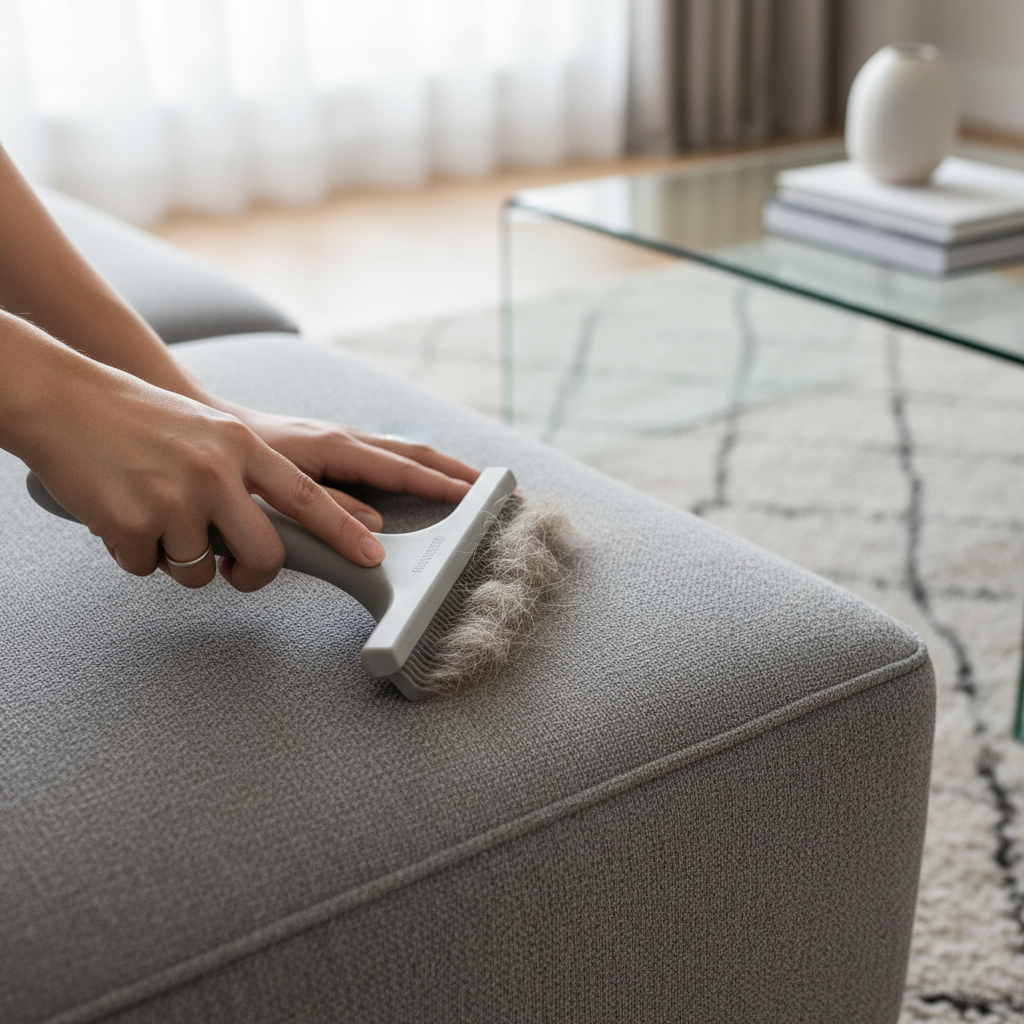
2) Use a rubber tool to gather hair
- Work in one direction with medium pressure, short strokes.
- Push hair into piles, especially along seams and piping.
- Pick up piles by hand or with a small piece of tape so you don’t re-spread it.
3) Vacuum like you mean it (but slowly)
- Use the upholstery tool on the big areas, then switch to the crevice tool for seams.
- Slow passes beat fast ones, suction needs time to lift what the brush loosened.
- If your vacuum has a brush roll option, consider turning it off for long hair to reduce tangles.
4) Finish with a lint tool for the “last 10%”
- Hit armrests, headrests, and the front edge where jeans rub hair into the fabric.
- Spot-clean strays instead of rolling the entire couch again.
Key point: If you only vacuum, hair often stays anchored. If you only use a rubber tool, you may leave fine dander behind. Pairing them is what makes the couch look truly clean.
Stubborn hair and tricky spots: seams, cushions, and textured fabric
When people say they’ve tried everything, it’s usually because hair is hiding where tools don’t reach, or the fabric texture keeps re-catching it.
Seams and cushion cracks
- Pop cushions off if the couch design allows it, then vacuum the base.
- Run the crevice tool along stitching lines, not just the gap.
- If hair is “stitched in,” a rubber brush used across the seam can pull it free.
Textured weaves (tweed, boucle, heathered blends)
- Brush in one consistent direction to lift hair from the weave.
- A light mist of water on a microfiber cloth can reduce static, but avoid soaking and always patch test.
Leather and faux leather
- Dry microfiber cloth first, then a slightly damp cloth for static cling.
- Don’t use abrasive stones or stiff brushes, they can scratch finishes.
Prevention that actually reduces couch hair (without babying your pet)
Once you know how to remove pet hair from couch efficiently, prevention keeps the job small. This is where most households win back time.
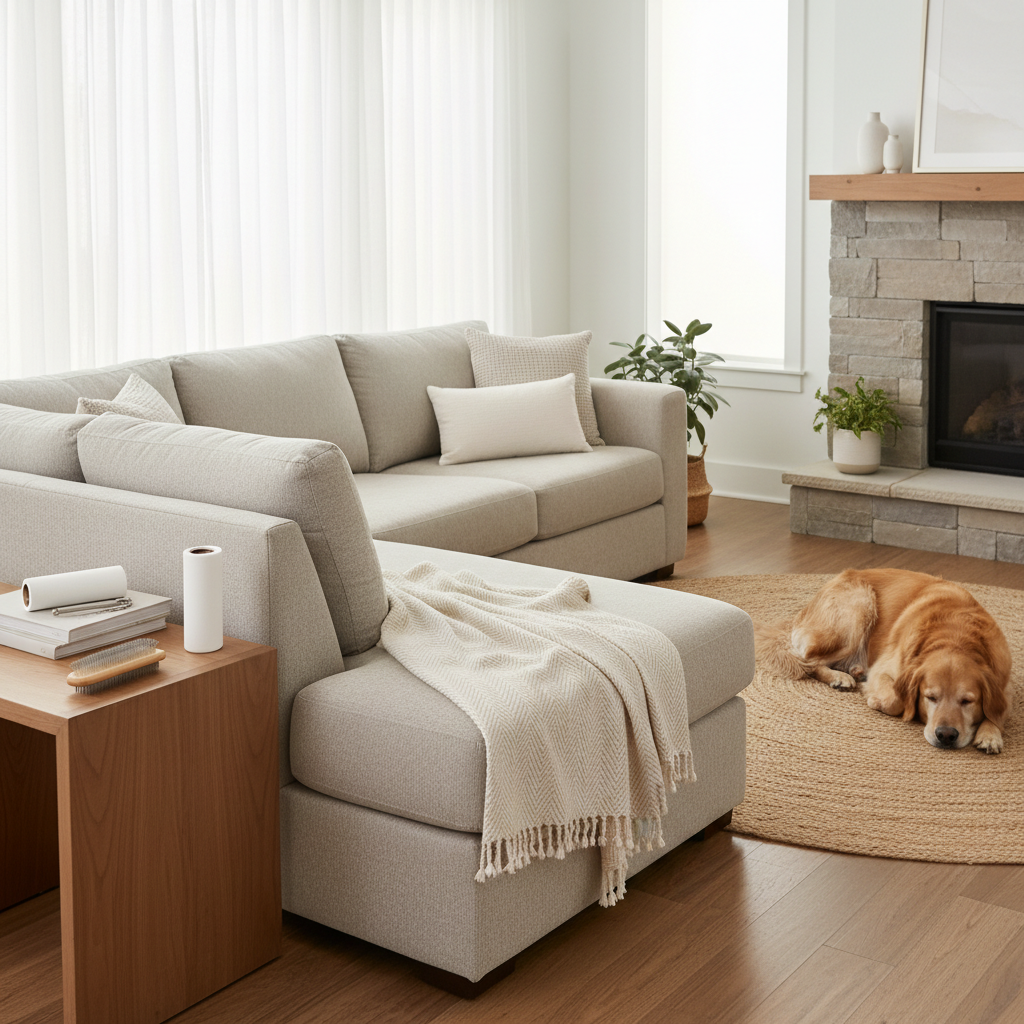
- Use a washable throw in the “pet zone”: One blanket that gets washed twice a week beats deep-cleaning the whole sofa.
- Brush your pet on a schedule: Many pets shed continuously, frequent quick brushing often helps more than occasional marathon sessions.
- Choose covers with tight weaves: Hair tends to sit on top, so removal stays easy.
- Run a quick lint pass midweek: Two minutes prevents the weekend pile-up.
- Control static: In dry climates, a humidifier can reduce cling, and it may also feel better for skin and sinuses.
According to the ASPCA, regular grooming supports coat health and can reduce shedding-related mess in the home. If your pet suddenly sheds much more than usual, it may be worth asking a veterinarian, since coat changes can have multiple causes.
Mistakes that make pet hair removal harder (or damage upholstery)
A few common habits can turn a simple cleanup into a frustrating loop.
- Over-wetting fabric: Water can push hair deeper into some upholstery, and it may leave rings or texture changes.
- Using harsh adhesives on delicate weaves: Some sticky rollers can pull fuzz and create pilling over time.
- Ignoring the vacuum filter: A clogged filter reduces suction, so you end up making more passes for less result.
- Going aggressive with pumice-style tools: These can work, but on the wrong couch they snag threads fast. Patch test in a hidden area.
- Only cleaning the seat surface: Armrests, back cushions, and the couch “ledge” collect hair too, then it migrates back.
When it’s time to escalate: deep cleaning, allergies, and professional help
If you’re doing regular upkeep and the couch still looks hairy or smells “pet-ish,” the issue may be embedded debris, not just visible fur.
- Consider washing removable covers (follow the care tag), then air-dry properly to avoid shrinkage.
- Try a fabric-safe upholstery cleaner if there are oils and grime trapping hair, but test a hidden spot first.
- Allergy concerns: If symptoms persist, it may help to talk with a healthcare professional, and focus on filtration plus frequent removal of dander, not only fur.
- Professional upholstery cleaning: Useful for heavily soiled couches, delicate materials, or when you want a reset before switching to a simpler maintenance routine.
Wrap-up: a simple routine that keeps couches looking clean
Most of the time, how to remove pet hair from couch comes down to a two-tool combo: rubber to gather, then vacuum to lift, with a quick lint finish for the spots you actually see. Do that once a week, then keep a throw blanket and a two-minute midweek touch-up, and the problem stops feeling endless.
If you want one action to take today, pick a rubber brush or squeegee and store it near the couch, convenience is what turns a “big clean” into a quick habit.
FAQ
What’s the fastest way to remove pet hair from a fabric couch?
A rubber brush or rubber squeegee to pull hair into piles, followed by a slow vacuum pass, tends to be the quickest combo for most fabrics.
Do dryer sheets work for getting hair off a couch?
They can reduce static and help hair release, but residues and fragrance may bother sensitive people or pets. If you try it, test a small area and don’t rely on it as your main method.
How do I get pet hair out of couch seams and cracks?
Remove cushions if possible, then use a crevice tool along the seam line. A rubber brush used across the seam can help pull hair that’s anchored by stitching.
Why does vacuuming alone not pick up all the hair?
Hair often hooks into fabric texture and holds through static. Vacuuming works better after you loosen hair with rubber friction or brushing.
Is a pet hair removal stone safe for upholstery?
Sometimes, but it depends on the fabric. It can snag loops and damage delicate weaves, so patch testing in a hidden spot is a smart guardrail.
How often should I clean pet hair off my couch?
For most homes, a weekly deeper cleanup plus a quick midweek touch-up keeps hair from building up. Heavy shedders may need shorter, more frequent sessions.
What if my couch still smells after removing hair?
Odor usually comes from oils and dander in fabric, not the hair itself. Washing covers or using a fabric-safe upholstery cleaner may help, and professional cleaning is worth considering for a full reset.
If you’re dealing with constant shedding and want a more “set it and forget it” setup, it can help to choose one dedicated couch tool set (rubber brush, crevice attachment, reusable lint brush) and build a 10-minute weekly routine around it, it’s often easier than chasing hair every day.