
Reptile fogger humidity problems usually show up the same way: the tank looks “wet” but the hygrometer reads low, or humidity spikes at night and you wake up to condensation everywhere. If you’re trying to dial in an adjustable fogger, you’re not alone, this is one of those setups that feels simple until you chase numbers for a week.
The value of getting it right is practical, not aesthetic. Many reptiles and amphibians rely on a stable moisture range for shedding, hydration, and comfortable breathing. But too much moisture, especially paired with low ventilation, can push you toward mold, soggy substrate, and a habitat that smells “off.”
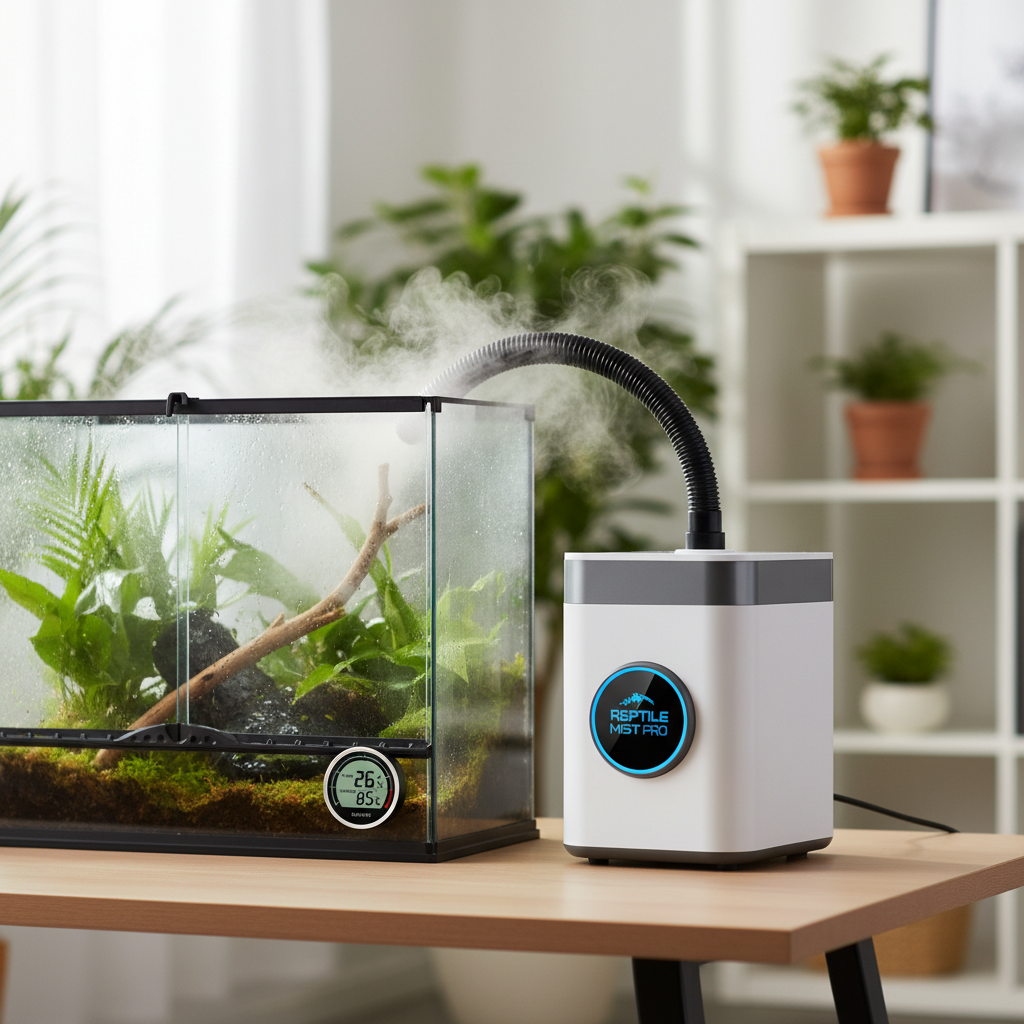
This guide breaks down what “humidity adjustable” really means on a fogger, why your readings can feel inconsistent, and how to build a setup that behaves the same on Monday as it does on Saturday. I’ll also share a quick decision checklist and a simple schedule you can copy.
What “humidity adjustable” on a reptile fogger actually controls
Most adjustable units change fog output or run time, not humidity in a smart, self-correcting way. That difference matters. A fogger can only add moisture; it can’t remove it, and it can’t “know” your enclosure humidity unless you add a controller.
- Output dial/levels: increases or decreases mist volume per minute.
- Timer-based control: runs in set intervals (for example, 15 minutes on, 45 minutes off).
- Hygrostat/controller (separate accessory in many cases): uses a probe to turn the fogger on/off to hold a target range.
If your goal is stable numbers, a controller tends to do more than a stronger fogger. Bigger output without feedback often just creates bigger swings.
Why your humidity swings (even when the fogger “works”)
If your reptile fogger humidity readings spike and crash, it’s rarely because the machine is “bad.” More often it’s the enclosure behaving like a small weather system.
Common real-world causes
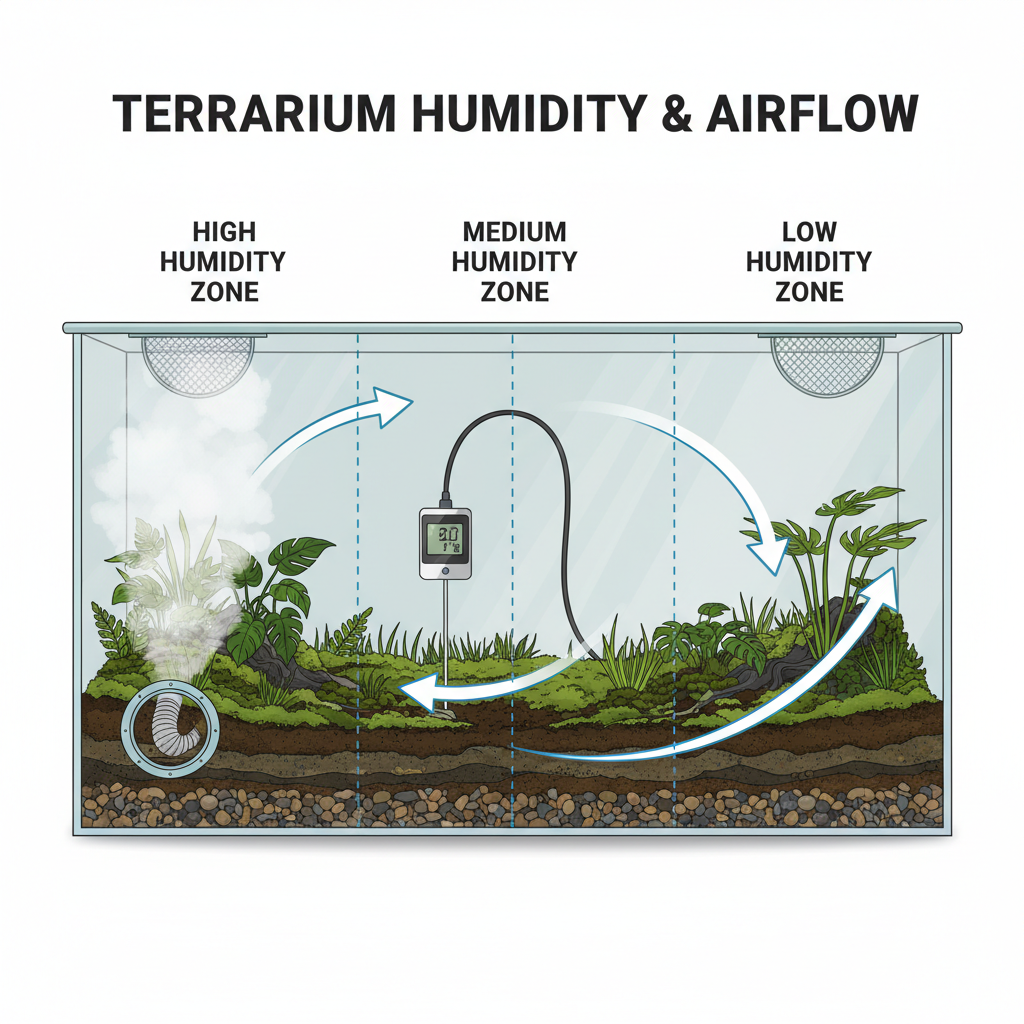
- Ventilation mismatch: screen tops dump humidity fast; sealed tanks trap it and create condensation.
- Room conditions: HVAC cycles in U.S. homes can dry air aggressively, especially in winter.
- Probe placement: a hygrometer near the fog outlet reads higher than where the animal actually sits.
- Heat source effects: basking lights and CHEs warm air and can lower relative humidity even if moisture stays constant.
- Substrate and decor: bioactive soil, sphagnum, cork, and live plants buffer humidity, bare setups do not.
According to U.S. Geological Survey (USGS) guidance on humidity measurement, relative humidity is temperature-dependent, meaning the same amount of water vapor can read differently as temperatures change. In a terrarium with hot and cool zones, that effect is magnified.
Quick self-check: are you using the fogger for the right job?
Foggers are great for some use cases and questionable for others. This quick check helps you decide whether you should adjust settings, add equipment, or switch methods.
- You want overnight humidity support for tropical species: a fogger can help, if ventilation is managed.
- You only need short spikes (like a morning “dew”): a small timed run often works better than long sessions.
- Your enclosure stays wet and smells musty: the issue is usually airflow and substrate choice, not more fog.
- You keep arid species and only need a humid hide: targeted moisture beats whole-tank fogging in many cases.
If you’re trying to fix a shedding problem, also remember humidity is only one variable. Hydration, rough surfaces, and correct temperature gradients all play a role. If shedding issues persist, it may be worth asking an experienced exotics vet or qualified keeper for a second look.
Target humidity ranges (practical starting points) + a simple table
Species needs vary by locality, life stage, and enclosure style, so treat ranges as a starting point, not a rule carved in stone. When in doubt, lean on reputable care sheets from established organizations and cross-check with your vet.
Key point: aim for a range your enclosure can hold steadily, not a “perfect number” that forces constant tinkering.
| Animal type (examples) | Typical humidity goal (range) | Fogger role that usually makes sense |
|---|---|---|
| Tropical geckos (many Crested Gecko setups) | ~50–80% with daily rise/fall | Short cycles, often evenings/nights, avoid constant saturation |
| Rainforest snakes (some boas/pythons, by husbandry style) | Often ~60–80% with ventilation | Controller-based use, prioritize airflow and dry-out periods |
| Amphibians (some frogs/newts) | Often high, frequently 70–90%+ | Frequent micro-cycles, watch stagnation and water quality |
| Arid reptiles (many leopard geckos, some desert lizards) | Lower ambient, humid hide for shedding | Usually skip fogger; use localized humidity instead |
For many U.S. households, the room itself sits around 30–50% seasonally. That’s why an enclosure that looks “fine” in summer can struggle in heated winter air.
How to set an adjustable fogger: a step-by-step approach that holds
If you change five variables at once, you’ll never know what helped. This is the slow, slightly boring approach that usually saves time.
Step 1: confirm your readings are trustworthy
- Use a decent digital hygrometer, and place the probe near the animal’s main zone, not right at the fog outlet.
- Let readings stabilize for 20–30 minutes after changes, especially after opening the door.
Step 2: choose a control method
- Timer-only: best when your enclosure holds humidity well and you just need periodic boosts.
- Hygrostat/controller: best when your environment swings (dry HVAC, screen top, big day/night differences).
Step 3: start with short, repeatable cycles
- Begin with 2–5 minutes per cycle, then watch how long humidity stays in range.
- If humidity crashes fast, extend frequency before extending duration, long runs often create wet surfaces.
Step 4: manage where fog lands
- Aim the tube so mist disperses into open air, not directly onto substrate or the animal.
- Use a gentle bend in tubing to reduce “jetting” into one corner.
Step 5: build in a daily dry-out window
Many setups do better with a planned drop (often daytime) so surfaces can dry. You’re not chasing dryness, you’re preventing a constantly damp enclosure that invites mold.
Mold, bacteria, and respiratory risk: what to watch for (and what to avoid)
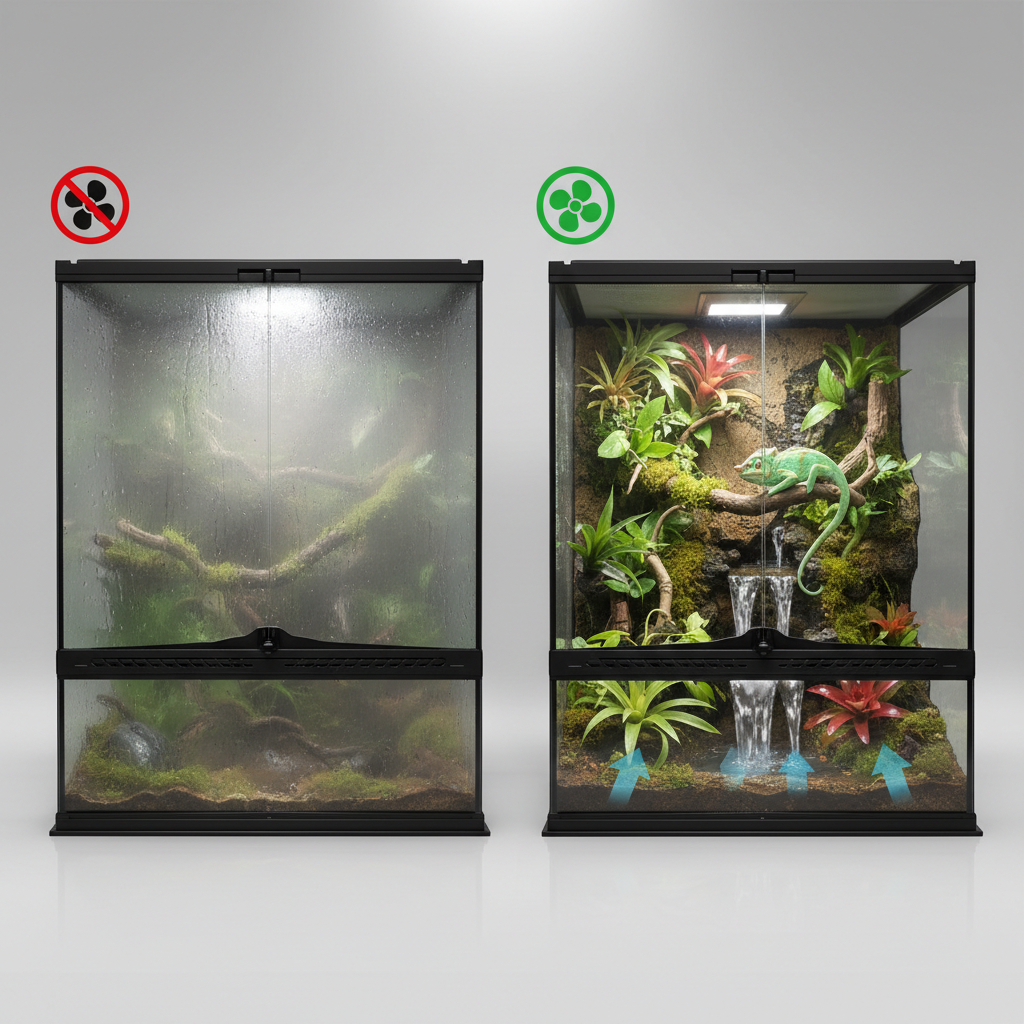
High humidity isn’t automatically dangerous, but high humidity + stagnant air is where many keepers get burned. If you notice persistent condensation, wet walls, or a sour smell, reduce fogging and increase airflow.
- Warning signs: fuzzy growth on wood/substrate, gnats, consistently wet corners, fog lingering for long periods.
- Common mistake: cranking fog output to fix shedding while temperatures are off. If the warm side is too cool, relative humidity can read “okay” while the animal still struggles.
- Another mistake: using distilled vs. RO vs. tap without understanding mineral buildup. Many foggers clog from minerals; manufacturers often recommend distilled water, but follow the manual for your unit.
According to Centers for Disease Control and Prevention (CDC) guidance on reptiles and amphibians in the home, good hygiene and habitat cleanliness reduce health risks for both animals and people. If you’re dealing with recurring mold, treat it as a husbandry signal, not just a cleaning chore.
If you suspect a respiratory issue, like wheezing, excess saliva, open-mouth breathing, or persistent lethargy, it’s smart to consult a qualified exotics veterinarian. Online humidity advice can’t replace a proper exam.
Practical setup tips that make humidity control easier
This is the part most guides skip: the fogger is only one piece. A few hardware choices often reduce how much you need to “fight” humidity.
- Partially cover screen tops (safely, without blocking heat fixtures): helps retain moisture in dry rooms.
- Add humidity buffers: cork bark, leaf litter, and appropriate substrate blends can smooth out swings.
- Use a drip loop on power cords and keep the unit below electronics: basic safety, easy to forget.
- Clean on a schedule: biofilm buildup in hoses and reservoirs can happen, follow manufacturer cleaning steps.
Key takeaways: stable humidity comes from a balanced system, output control, airflow, and accurate measurement, not maximum fog.
Conclusion: a calm way to stop chasing numbers
Reptile fogger humidity control gets easier when you treat “adjustable” as a fine-tuning tool, not a promise of automatic stability. Set realistic ranges, measure where it matters, run short repeatable cycles, and protect airflow so the enclosure can dry out between boosts.
If you want an easy next step, pick one change you can verify today: move the probe to the animal’s zone, shorten run time, or add a controller. Do that, wait a day, then adjust again based on what you see.
FAQ
Why does my fogger make the tank look wet but the hygrometer stays low?
That often happens when mist condenses on cool glass and decor instead of raising the air moisture where the probe sits. Try repositioning the tube, increasing airflow slightly, and placing the probe mid-tank away from the fog stream.
Is a humidity controller worth it for an adjustable fogger?
If your room humidity swings a lot or you use a screen top, a controller can reduce big peaks and crashes. If your enclosure already holds humidity well, a timer may be enough and simpler.
Where should I place the humidity probe in a reptile enclosure?
Place it near the animal’s primary resting area, usually mid-height on the warm-to-middle zone, not directly under the fog outlet or on the substrate. You want the number that reflects what the animal experiences most.
Can a fogger run all night?
It can in some setups, but constant fogging commonly creates condensation and stagnant air. Many keepers have better results with short cycles overnight and a daytime dry-out period, adjusted for the species.
What water should I use in a reptile fogger?
Many units perform best with distilled water to reduce mineral scale, but you should follow your fogger’s manual. If you notice white buildup or reduced output, scale is a likely culprit.
How do I prevent mold when using a fogger?
Focus on ventilation and drying cycles, not just cleaning. Reduce long fog sessions, avoid soaking substrate, and remove or replace damp organic materials that never dry.
Do I need a fogger for a leopard gecko or other arid species?
Often no, these species frequently do better with lower ambient humidity and a properly maintained humid hide for shedding. If you’re considering a fogger anyway, confirm your care approach with a reputable source or a vet.
If you’re still fighting settings, or you’d rather not babysit humidity every day, a simpler path is to map your enclosure’s “baseline” for 24 hours, then choose a fogger schedule or controller setpoint that nudges it into range without soaking everything.