
How to bathe a cat without stress usually comes down to two things: prep work you do before any water runs, and handling that keeps your cat feeling in control.
If you have ever ended a “quick bath” with soaked sleeves, a furious cat, and a bathroom that looks like a splash zone, you are not alone. Cats are not being “difficult” on purpose, many simply hate slippery footing, loud water, and restraint.
This guide focuses on practical choices that lower stress and reduce scratches, when to skip the bath entirely, and a simple routine you can repeat. You will also get a quick decision checklist, a comparison table, and a few “do this instead” options that many cats tolerate better than a full soak.
Do you actually need a bath?
Before you wrestle with a tub, it helps to ask a slightly annoying question: does your cat need water right now, or does your cat need grooming? Many cats do fine with brushing and spot-cleaning, and a forced bath can make future handling harder.
- Usually skip a full bath for normal “cat smell,” mild shedding, or a little dust.
- Consider a bath for sticky substances, feces or urine contamination, oily coat that does not resolve with brushing, or medical reasons your vet recommended.
- Be extra cautious with seniors, kittens, cats with heart or breathing issues, or cats that panic hard. In those cases, calling your veterinarian or a professional groomer may be safer.
According to the American Veterinary Medical Association (AVMA), stress can affect a pet’s health and behavior, so minimizing fear during handling is not just about convenience, it can be a welfare issue.
Why baths go sideways: the real triggers
When people search how to bathe a cat without stress, they usually blame water. Water is part of it, but the bigger triggers tend to stack up.
- Noise and vibration: running faucets, sprayers, and echoing bathrooms can feel like “predator-level” sensory overload.
- Slip and loss of footing: many cats panic when paws slide on porcelain, panic quickly turns into claws.
- Cold or sudden temperature shifts: lukewarm to you can still feel wrong on thin fur.
- Restraint and surprise: scooping a cat and dropping them into water breaks trust fast.
- Owner tension: your grip tightens, your cat reads it, and the spiral starts.
So the goal is not “make the cat like baths,” it is “remove triggers, keep steps predictable, end quickly.”
Quick self-check: pick your safest approach
Use this short checklist to decide whether you should do a full bath, a partial wash, or a no-water alternative today.
- Your cat tolerates brushing and handling for 2–3 minutes without struggling
- Your cat is not open-mouth breathing, drooling heavily, or freezing in fear when placed in the bathroom
- You can trim nails or apply nail caps without a full meltdown
- You have a non-slip mat and enough towels to control drying
- The mess is localized (for example, one paw or tail), so a spot clean could work
If you are checking “no” on multiple items, you can still solve the hygiene problem, but it is often smarter to switch methods or ask for help than to force a traditional bath.
Set up first: what to gather and how to stage it
This is the part people rush, then regret. A calm bath is mostly logistics: everything within reach, no scrambling, no loud surprises.
Supplies that actually matter
- Non-slip mat (sink, tub, or a shallow plastic bin)
- 2–3 towels, one becomes a “wrap towel”
- Cat-safe shampoo (avoid human shampoo, it can irritate skin)
- A cup or small pitcher for rinsing, often quieter than a sprayer
- Optional: cotton balls for ears (do not push into the canal)
- High-value treats you do not use daily
Staging tips that reduce panic
- Close doors, remove breakables, and plan a short route from bath to towel.
- Run water before bringing your cat in, then turn it off, the “water noise phase” is over.
- Keep water shallow, think ankle level, not “bath.”
- Warm the room if possible, cold air makes everything harder.
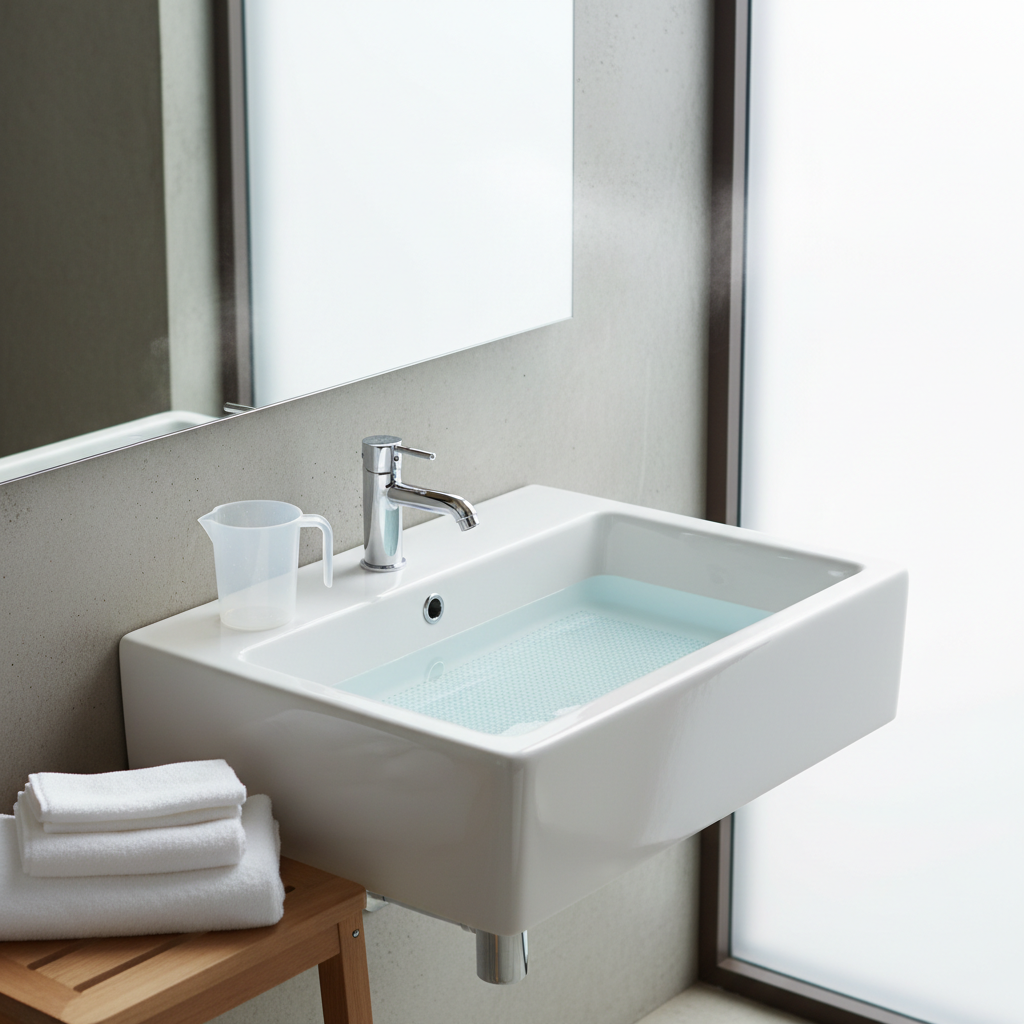
Key point: if your setup is not ready, you will end up holding a wet cat with one hand while searching for a towel with the other. That is where scratches happen.
Step-by-step: a low-drama bath routine
This routine is designed for “get clean, get out,” not a spa day. Keep your voice low, movements slow, and steps consistent. If your cat escalates, pause, wrap, and reassess.
1) Pre-bath calm and nail management
- Brush for 1–2 minutes to remove loose fur and small tangles.
- If your cat allows, trim sharp nail tips earlier in the day, not right before the bath.
- Offer a treat in the bath area before any water contact.
2) The “towel burrito” start (optional but helpful)
- Wrap your cat snugly in a towel, leaving the area you need to wash exposed.
- This reduces flailing and gives a sense of containment without a harsh grip.
3) Wet gently, then shampoo fast
- Use a cup to wet from shoulders down, avoid face and ears.
- Apply a small amount of cat shampoo, lather quickly, focus on dirty zones.
- Keep the timeline tight, many cats tolerate 2–5 minutes better than 10.
4) Rinse longer than you think
- Rinse until water runs clear and the coat feels “squeak-free.”
- Leftover soap can cause itching, which can turn into overgrooming later.
5) Dry with pressure, not rubbing
- Lift your cat onto the dry towel immediately.
- Press and blot, do not aggressively rub, rubbing can tangle fur and annoy skin.
- Use a second towel as the first gets soaked.
According to the American Animal Hospital Association (AAHA), handling that reduces fear and supports predictable routines can improve cooperation during care tasks, bathing included.
Sink vs. tub vs. waterless options (quick comparison)
If your last bath felt like a wrestling match, changing the “venue” often helps more than buying a new shampoo.
| Option | Best for | Pros | Watch-outs |
|---|---|---|---|
| Sink | Small/medium cats, spot washing | Less space to flail, easy reach | Some cats dislike height, secure footing matters |
| Bathtub | Larger cats, full-body wash | More room, less splash onto counters | Can feel “echo-y,” slipping is common without a mat |
| Plastic bin in tub | Most cats who panic in open spaces | Contained, shallow water control | Bin must be stable, avoid tipping |
| Waterless shampoo / wipes | Light dirt, seniors, high-stress cats | No running water, usually faster | Some products leave residue, avoid eyes and mouth |
Common mistakes that create stress (and scratches)
Most “bad bath” stories share the same few missteps. Fixing them is often the fastest route to how to bathe a cat without stress, even if your cat never loves the process.
- Using the sprayer because it is convenient, many cats interpret it as an attack.
- Filling the tub deep, deeper water removes footing and spikes panic.
- Grabbing the scruff as the main restraint, some cats freeze, others escalate; gentle, secure support tends to work better.
- Washing the face like a dog, instead use a damp cloth for chin and cheeks if needed.
- Dragging it out, if you are negotiating for 20 minutes, the bath already failed.
- Blow-drying on high, the noise and hot air often backfire; if you use a dryer, use low heat, low speed, and give distance.
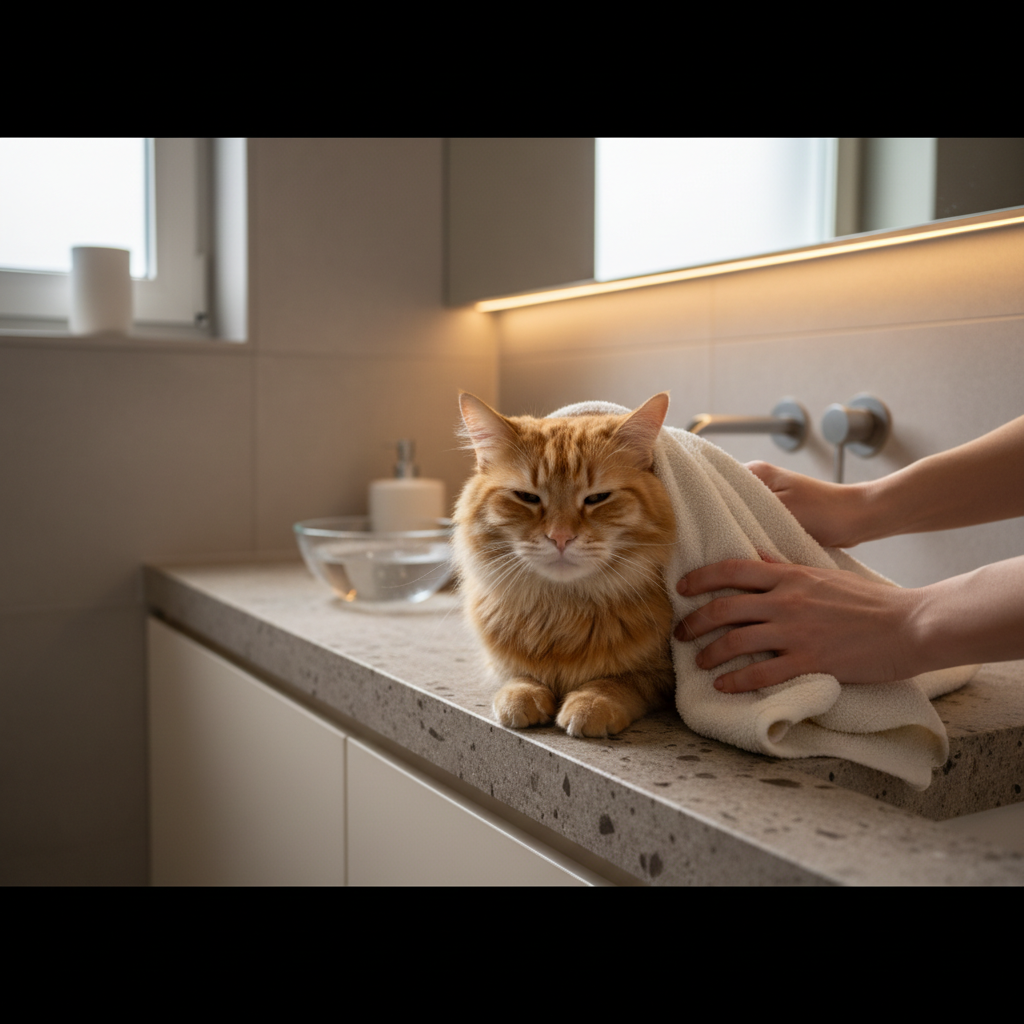
Small but powerful change: swap loud running water for a pre-filled container and a cup rinse, it feels quieter and more predictable.
When to stop and call a professional
There is a point where pushing through is not “being consistent,” it is increasing risk. If any of the below shows up, it is usually time to pause and consider your vet clinic or a cat-experienced groomer.
- Open-mouth breathing, blue-tinged gums, collapse, or extreme lethargy
- Repeated frantic escape attempts that could cause falls
- Aggression that feels panic-driven, not just annoyance
- Skin redness, sores, heavy dandruff, or strong odor that keeps returning
- Fleas or skin problems that may need targeted treatment
According to the American Association of Feline Practitioners (AAFP), using feline-friendly handling and minimizing stress during care can be important for safety, if your cat cannot cope at home, professional support can be the kinder route.
Practical “key takeaways” to keep on your phone
- Prep beats bravery: stage towels, mat, shampoo, and rinse cup before bringing your cat in.
- Shallow water only: keep paws grounded to prevent panic spirals.
- Quiet rinse: cup rinsing often works better than a sprayer.
- Fast timeline: aim for a few focused minutes, not perfection.
- Dry by pressing: blot and wrap, avoid vigorous rubbing.
Conclusion: keep it predictable, keep it short, keep trust intact
How to bathe a cat without stress is less about finding a magic technique and more about removing the “scary parts” that stack up: noise, slipping, surprise, and a long timeline. If you set up a non-slip surface, use shallow warm water, rinse with a cup, and end with a calm towel wrap, many cats tolerate baths far better than you would expect.
If you want one action today, make it this: set up your bath station once, then practice a treat-and-towel routine with no water. When the real cleanup day comes, your cat has already seen the setup and survived it.
If you are dealing with repeated skin issues, heavy odor, or extreme fear, consider asking your veterinarian or a feline-focused groomer for a plan that fits your cat’s temperament and health.