
bird swing toy small options can be surprisingly confusing, because “small” might mean a budgie in one listing and a conure in another. If your bird ignores the swing, chews it too hard, or looks unsteady, it’s usually a sizing or material issue, not “your bird being picky.”
This matters more than people expect, because swings sit in a high-use spot of the cage: birds perch, preen, nap, and sometimes chew hardware when bored. A good choice supports foot comfort and balance, while a bad one can create constant low-level stress (slipping, awkward posture) that shows up as less play.
Below is a practical way to pick a safe, appropriately sized swing, set it up so your bird actually uses it, and spot the red flags that mean it’s time to swap it out.
What “Small” Really Means for a Bird Swing
In product listings, “small” typically describes the swing’s length and perch diameter, not the bird species it suits. The better way to decide is to match the swing to your bird’s foot size, balance style, and cage layout.
- Perch diameter: your bird should wrap toes comfortably without flattening the foot. Too thin feels unstable, too thick can strain toes.
- Swing width: enough room to stand centered without brushing tail feathers constantly.
- Vertical clearance: a swing that bumps perches, toys, or bars won’t get used much.
Many small birds also prefer a bit of “give” (gentle movement) but not wobble. If the swing twists easily, your bird may hop off and avoid it.
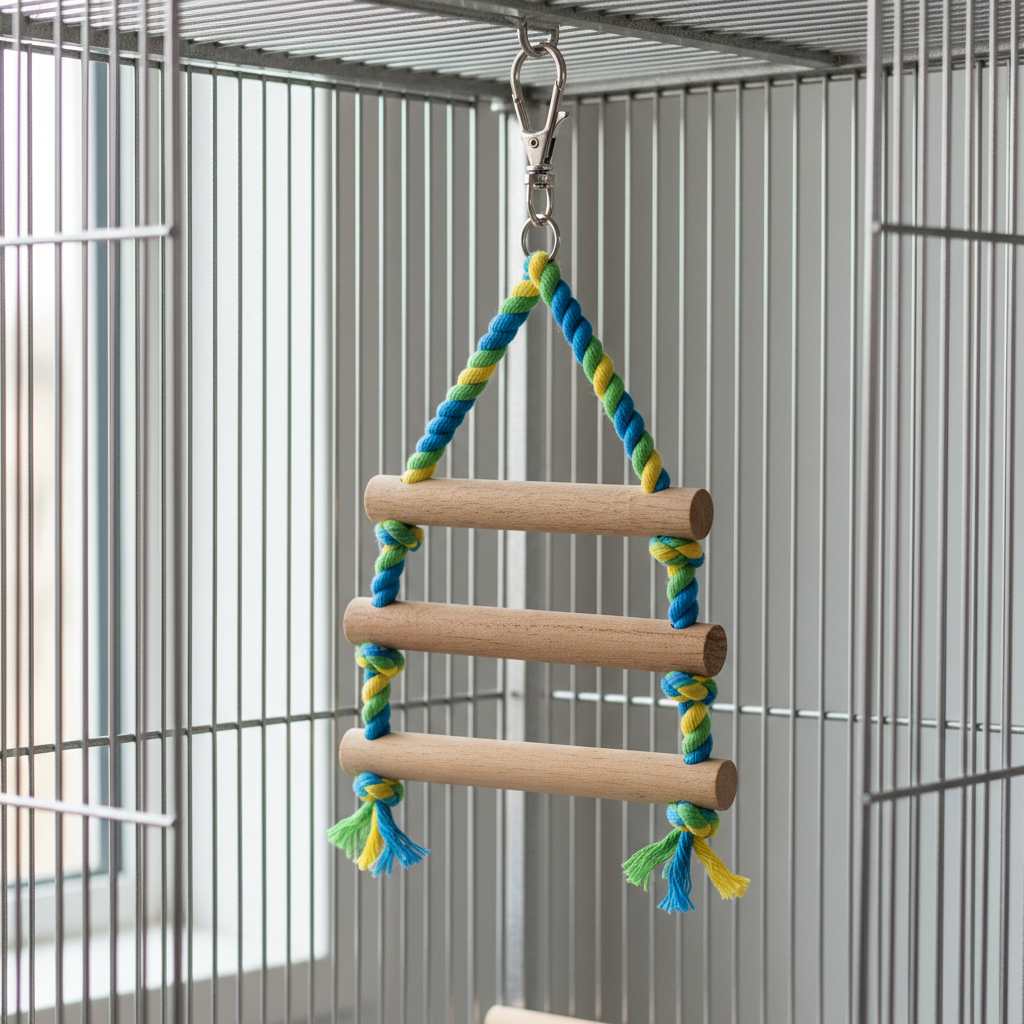
Safety First: Materials and Hardware That Usually Hold Up Better
For a bird swing toy small to be “safe,” it’s less about being cute and more about what happens after weeks of chewing, droppings, and cleaning. The same swing can be fine for a light chewer and a problem for a bird that targets knots and clips.
According to the Association of Avian Veterinarians, birds may hide signs of illness, so preventing avoidable hazards in the cage environment is a sensible baseline.
Materials to look for
- Stainless steel hardware: tends to resist rust and flaking better than many plated metals.
- Untreated hardwood: common in perches and swings; check for smooth sanding and minimal splintering.
- Natural fiber rope (with caveats): can be great for comfort, but you must monitor fraying.
Common red flags (not always fatal, but worth caution)
- Loose threads or long fibers: toes and nails can snag, and some birds may ingest strands.
- Gaps in chain links or S-hooks: can catch beaks or toes if spacing is awkward.
- Strong chemical smell: paint, glue, or coating odor suggests off-gassing; airing out may help, but consider returning it.
If you’re unsure about a specific material for your species, it’s reasonable to ask an avian vet, especially for heavy chewers or birds with a history of ingesting fibers.
Quick Fit Check: A Simple Checklist Before You Buy
Instead of guessing from photos, do a 60-second check using what you already know about your bird and cage. This avoids the most common “arrives, gets ignored, returns” cycle.
- Species and personality: cautious birds often prefer steadier swings; bold birds tolerate more movement.
- Footing comfort: if your bird avoids thin dowels elsewhere, don’t buy a thin swing perch.
- Cage footprint: leave a clear “swing zone” so it doesn’t collide with bowls or ladders.
- Chewing style: does your bird shred rope, target clips, or ignore hardware?
- Cleaning reality: if you won’t hand-scrub daily, choose simpler shapes with fewer crevices.
Key point: A swing that fits your bird but not your cage still fails, because constant bumping makes it feel unsafe.
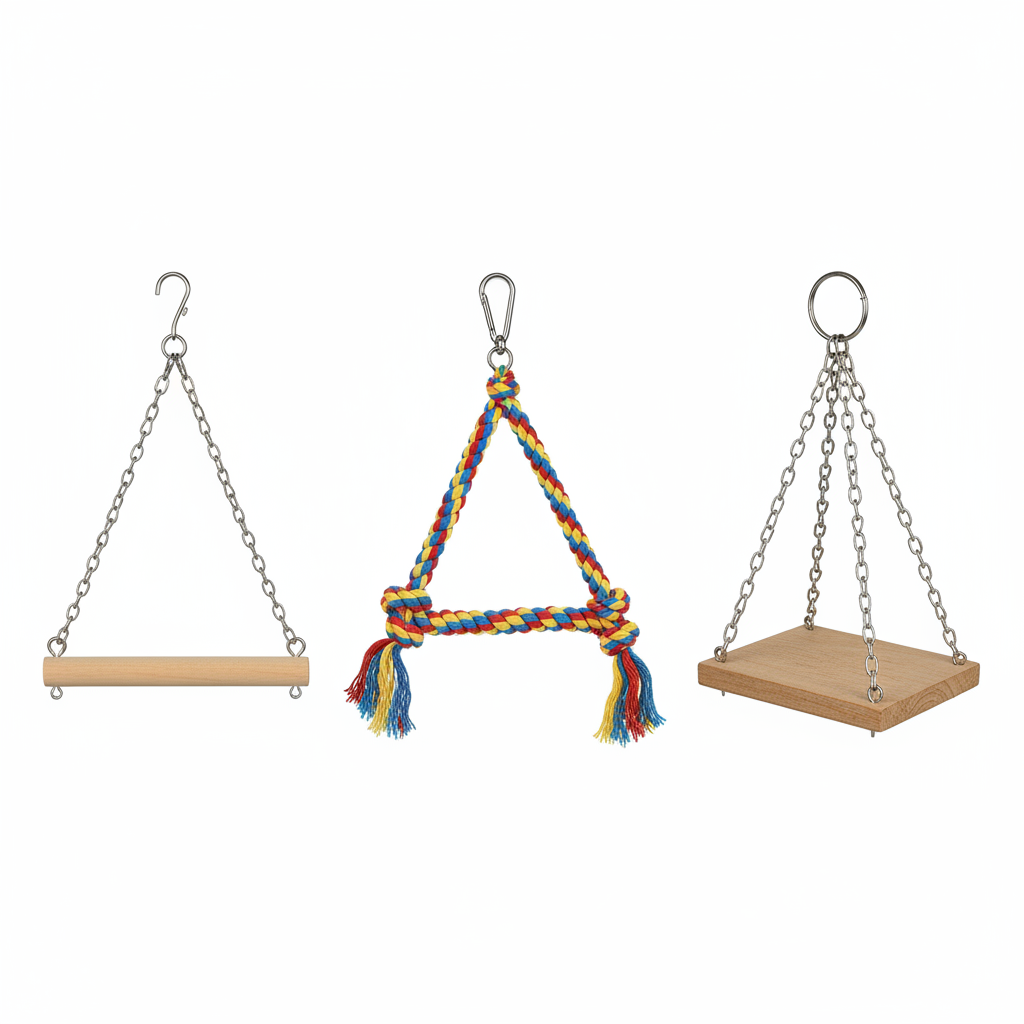
Choosing the Right Type: Dowel, Rope, Platform, or Boing-Style
Different swing styles “solve” different problems. If your bird slips, choose stability. If your bird gets bored fast, choose texture and movement, but keep safety in the driver’s seat.
| Swing type | Why people like it | Watch-outs |
|---|---|---|
| Wood dowel swing | Simple, easy to clean, predictable movement | Very smooth dowels can be slippery; inspect for splinters |
| Rope perch swing | Comfortable grip, gentle texture, cozy for lounging | Fraying strands; monitor for chewing and toe snags |
| Platform swing | Great for birds that dislike perching, seniors, or rest breaks | Can collect droppings; needs frequent cleaning |
| Ring swing / boing-style mini swing | More play value, encourages balancing and movement | Too much wobble for timid birds; check link gaps |
If you’re buying your first bird swing toy small, a steadier dowel or a well-made rope perch swing tends to be the easiest “starter” choice.
Setup That Actually Gets Used (Placement, Height, and Introductions)
Even a good swing gets ignored if it’s installed in the “wrong neighborhood” of the cage. Birds often test new items cautiously, then adopt them if the experience feels stable.
Placement tips that often work
- Start near a familiar perch: install the swing so your bird can step onto it, not leap.
- Keep it out of traffic: avoid tight corners where wings brush bars during hops.
- Mind the food bowls: swings above bowls can create mess and make birds avoid the area.
Introduction tips (especially for cautious birds)
- Let the swing hang in view for a day outside the cage if your bird startles easily.
- Offer a high-value treat when your bird investigates it, then back off and let curiosity work.
- If your bird panics, remove it and reintroduce slower. Pushing usually backfires.
According to the American Veterinary Medical Association, stress reduction is an important part of animal welfare, and cage changes can be a stressor for some birds. Slow introductions are not “overkill,” they’re often just practical.
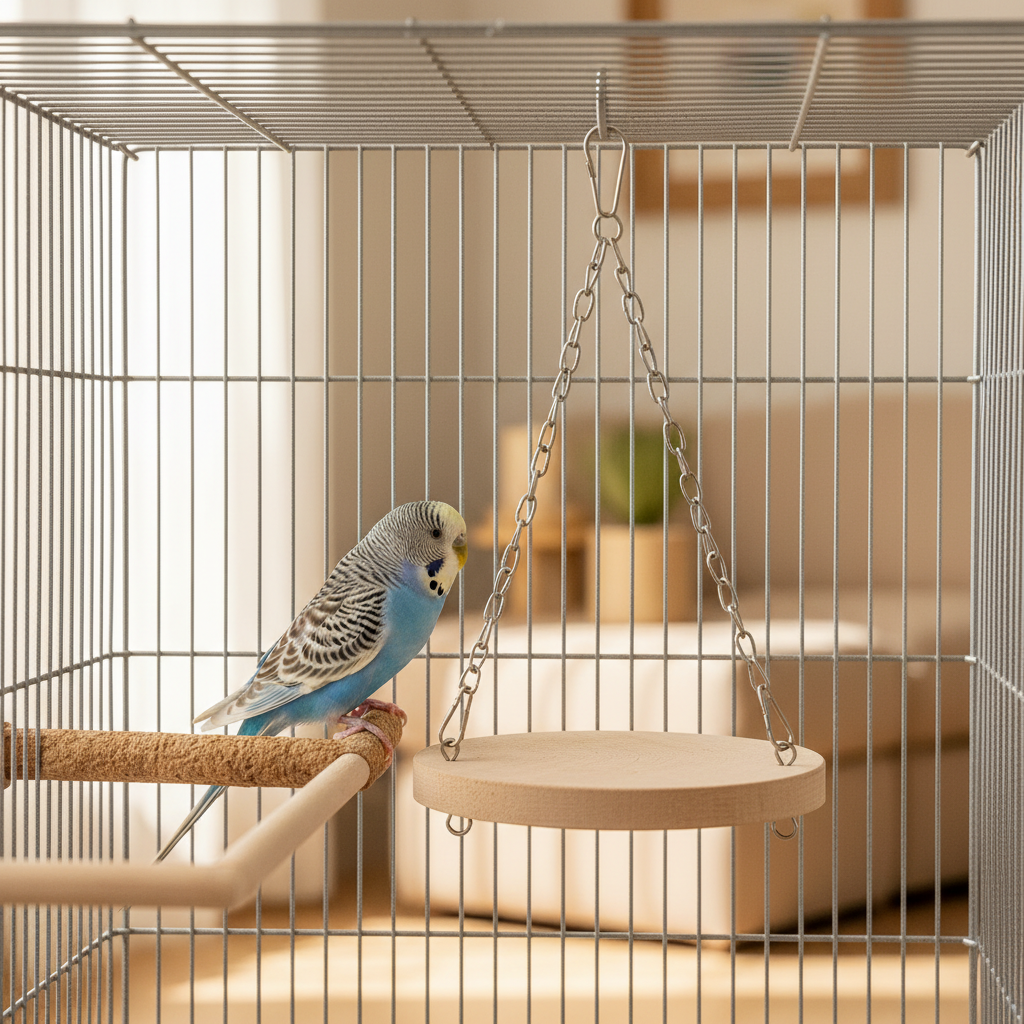
Cleaning, Inspection, and Replacement: The Unsexy Part That Matters
A swing is “safe” on day one, but it stays safe only if it’s maintained. The routine is simple, and it prevents most of the weird issues people blame on “bad toys.”
- Daily glance: check for frayed rope, sharp edges, and hardware that loosened.
- Weekly wipe-down: warm water and bird-safe cleaning practices; let it dry fully before reinstalling.
- Rotate and rest: if your bird fixates on chewing one spot, rotating toys can reduce over-chewing.
If you see rust, cracking wood, or rope unraveling fast, replacement is usually cheaper than trying to “repair” something your bird will immediately chew again.
When to Stop DIY and Ask a Professional
Most swing choices are straightforward, but a few situations deserve outside input because the risk profile changes.
- Toe, nail, or leg injuries: if your bird limps, favors a foot, or has swelling, consult an avian vet promptly.
- Repeated snagging: a bird that keeps catching nails or toes may need a different perch texture or diameter.
- Heavy chewing or ingesting fibers: if you suspect your bird swallows rope strands, switch materials and ask for guidance.
- Behavior shifts: sudden fear, aggression, or withdrawal can have medical or environmental causes; a vet can help rule out illness.
This isn’t to alarm you, it’s just the line between “normal adjustment” and “something else might be going on.”
Practical Recommendations and Key Takeaways
If you want one clean rule: pick a bird swing toy small based on perch comfort and hardware quality, then install it where your bird can succeed on the first try.
- Choose materials your bird can live with long-term, not just something that looks nice in photos.
- Prioritize stable movement if your bird is timid or new to swings.
- Inspect often, because “safe” changes as wear shows up.
If you’re deciding today, start with a simple, easy-to-clean swing with sturdy attachment hardware, then adjust style once you learn what your bird actually prefers.
FAQ
- What size is “small” for a bird swing toy?
It varies by brand, so use perch diameter and overall swing width as your real guide. For many small birds, the comfortable perch thickness is the deciding factor, not the label. - Is a rope swing safe for small birds?
Often yes, but it depends on chewing habits and how quickly the rope frays. If strands loosen or your bird pulls fibers, switching to wood or another design may be safer. - Why won’t my bird use the swing?
Common reasons include too much wobble, poor placement, or the swing being in a “busy” spot near bowls and doors. Moving it closer to a familiar perch can help. - How high should I hang a small bird swing?
Many birds like swings higher in the cage, but it still needs clearance from the top bars and nearby perches. A good target is a spot where the bird can step on and off without jumping. - Are metal bells on swings okay?
Some are fine, some aren’t. Focus on bell construction and whether there are small gaps, loose clappers, or sharp edges; if you’re unsure, a bell-free swing is the simpler choice. - How often should I replace a bird swing?
Replace when you see rust, cracks, sharp edges, or persistent fraying that returns quickly after trimming. The timeline depends on use and chewing intensity. - Can a swing help with boredom?
It can, especially if it encourages movement and balancing, but it’s usually most effective as part of a rotation of perches and toys rather than the only enrichment item.
Conclusion: A good small swing is less about “small” and more about fit, stability, and materials that stay predictable under chewing and cleaning. If you want a more hassle-free setup, consider building a simple rotation plan (one swing, one chew toy, one foraging option) so your bird stays engaged without relying on a single toy.