
how to help a bloated dog starts with one hard truth: if you suspect bloat, you should treat it like an emergency until a veterinarian rules out something serious.
A swollen belly can be as simple as gas after a fast meal, but it can also signal GDV, often called “bloat,” where the stomach can twist and cut off blood flow. That situation can become life-threatening quickly, so the goal here is not to “fix it at home,” it’s to help you make the right call fast.
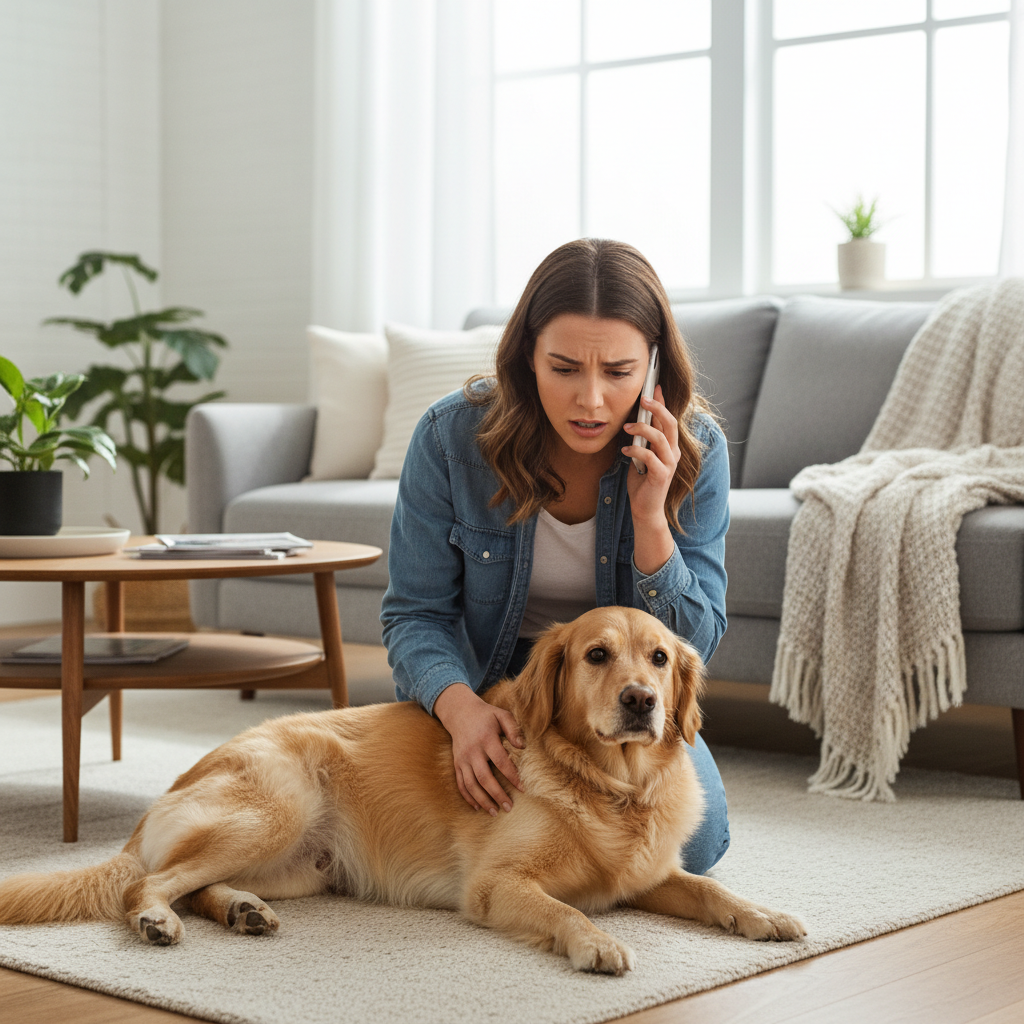
In the next few minutes, you’ll get a quick triage checklist, safe “do and don’t” actions, and a practical plan for getting to urgent care without making things worse. If you’re reading this because your dog looks uncomfortable right now, skip to the emergency signs section.
Know what “bloat” can mean (and why vets take it seriously)
People use “bloated” to describe different problems, and that confusion can cost time. In real life, these are the usual buckets.
- Simple gas or indigestion: mild belly fullness, some burping, maybe one vomit episode, dog still somewhat responsive.
- Gastric dilatation-volvulus (GDV): the stomach fills with gas and may twist; this is the true emergency most people mean by bloat.
- Fluid buildup or internal bleeding: abdominal swelling can come from other causes that also need urgent care.
According to the American College of Veterinary Surgeons (ACVS), GDV is a life-threatening condition that requires immediate veterinary treatment. That’s why your safest mindset is: if the signs match, act like it’s GDV until proven otherwise.
Emergency red flags: when to go to an ER vet right now
If you see several of the signs below together, don’t wait for them to “pass.” This is the moment for a phone call to an emergency clinic while you get your keys.
- Hard, visibly distended abdomen that seems to enlarge
- Unproductive retching or repeated gagging with little to no vomit
- Restlessness, pacing, can’t get comfortable, “panicked” look
- Excess drooling or foamy saliva
- Weakness, collapse, pale gums, rapid breathing
- Sudden severe abdominal pain when touched
Call the clinic on the way. If you ask “how to help a bloated dog” and the dog is retching without producing vomit, most veterinarians will tell you to come in immediately.
Fast self-check: 2-minute triage you can do at home
This is not a diagnosis, it’s a quick way to decide urgency and communicate clearly to the vet team.
Step 1: Look and listen
- Is the belly round and tight like a drum, or just a bit full?
- Is your dog trying to vomit repeatedly, or just nauseated once?
- Is your dog alert and responsive, or dull and weak?
Step 2: Check gum color and refill
- Healthy gums are usually pink (pigment varies). Pale/gray gums can mean shock.
- Press a gum lightly; color should return quickly. If it seems slow, tell the ER.
Step 3: Note risk factors
- Large or deep-chested breeds (like Great Danes, German Shepherds) often have higher GDV risk.
- Eating fast, one large meal daily, heavy exercise after meals can contribute.
Write down what you see, even as bullet points in your phone. In emergencies, clear details help.
What you can do immediately (safe actions while you head to care)
There’s a narrow lane of “helpful” actions here. Your job is to minimize risk, prevent choking, and reach professional care quickly.
- Remove food right away. Offer small sips of water only if your dog can swallow normally and is not actively retching.
- Keep your dog calm and still. Slow leash walk to the car is fine; avoid stairs if your dog seems weak.
- Call the ER clinic and say you suspect bloat or GDV. Ask if they can take you immediately.
- Bring notes: time symptoms started, last meal size/time, vomiting attempts, any known medical issues.
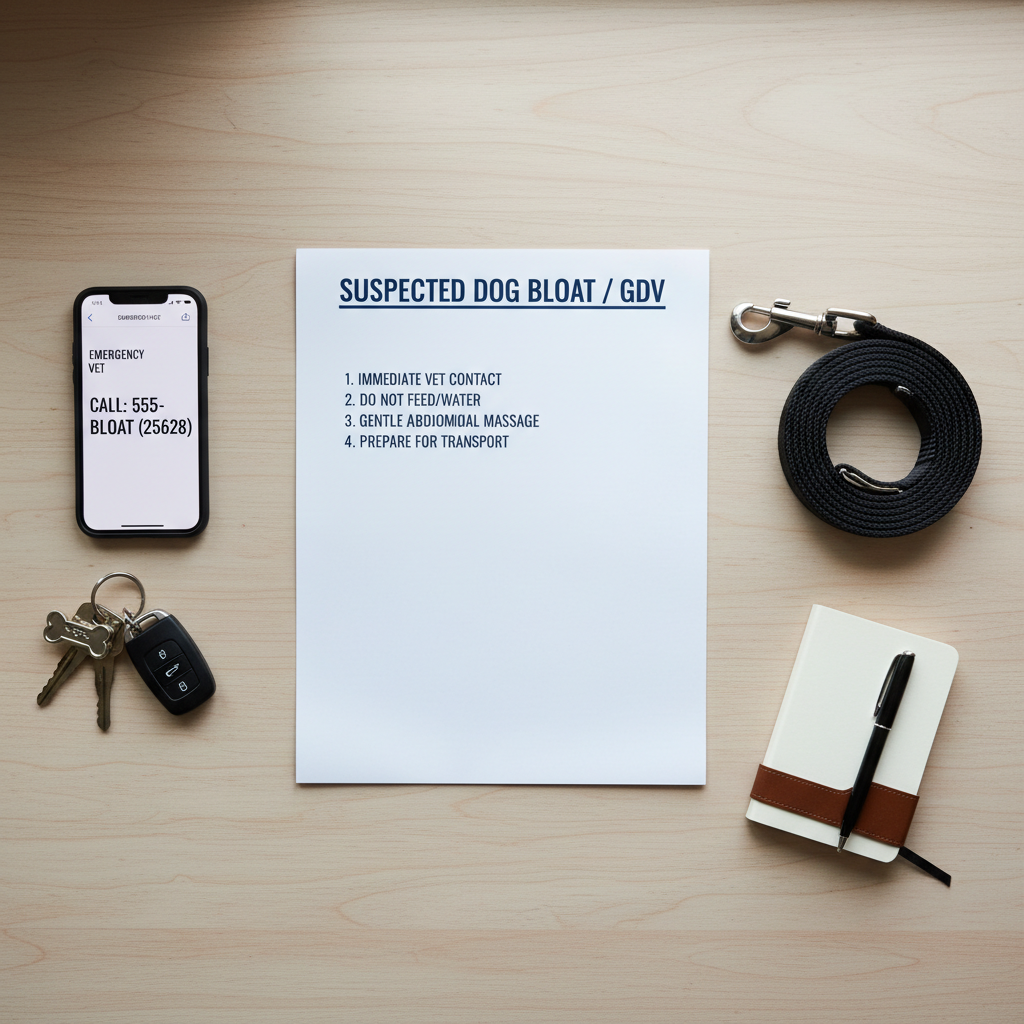
If the situation looks mild and your dog is comfortable, you can still call your regular vet for guidance, but don’t let “maybe it’s just gas” talk you into waiting when red flags stack up.
What not to do (common mistakes that waste time or add risk)
When someone searches how to help a bloated dog, they often want a home remedy. The problem is that several popular “fixes” can backfire if this is GDV or another serious cause.
- Don’t force exercise to “work the gas out.” If the stomach is compromised, movement can increase stress.
- Don’t try to make your dog vomit. It can raise aspiration risk and wastes critical time.
- Don’t give human meds (including pain relievers). Many are toxic to dogs or mask symptoms.
- Don’t do belly pressing or “massage hard” if your dog shows pain or distress.
- Don’t wait for a bowel movement as proof it’s fine. GDV can still be present.
According to the American Veterinary Medical Association (AVMA), pet owners should avoid giving medications without veterinary direction because dosing and safety vary widely. If you already gave something, tell the vet; it changes their plan.
Quick reference table: symptoms, what they may mean, what to do next
This table is meant to speed up decisions, not replace an exam.
| What you notice | Often suggests | What to do |
|---|---|---|
| Hard swollen abdomen + repeated dry heaving | Possible GDV (emergency) | Go to ER now; call ahead and say “suspected bloat/GDV” |
| Distension + weakness, pale gums, collapse | Shock risk (emergency) | Immediate ER; carry dog if needed, keep warm |
| Mild belly fullness after eating fast, dog otherwise normal | Gas/indigestion possible | Monitor closely, call vet for advice, avoid food for a short period |
| One vomit episode, still interested in surroundings | GI upset possible | Watch hydration and behavior; call vet if symptoms persist or worsen |
| Swelling with bruising, trauma history, very lethargic | Possible internal bleeding | ER evaluation even if no retching |
After the emergency: prevention and lowering recurrence risk
If your vet rules out GDV and you go home, you’ll probably still want a plan so this doesn’t become a repeating scare.
Feeding and routine tweaks many vets recommend
- Smaller, more frequent meals instead of one large feeding.
- Slow-feeding strategies (puzzle feeders, slow bowls) for dogs that inhale food.
- Calm after meals: avoid hard running and rough play for a while after eating.
- Track triggers: food changes, rich treats, table scraps often correlate with GI upset.
Ask your vet about preventive options for high-risk dogs
Some dogs have higher GDV risk due to breed, body shape, or history. In those cases, your veterinarian may discuss gastropexy, a surgical procedure that helps reduce the chance of stomach twisting. It’s not a DIY decision, but it’s worth a thoughtful conversation if bloat risk keeps you up at night.
Key takeaway: If your dog has had a close call, prevention is usually about routines and risk management, not one magic product.
Bottom line: a simple action plan when your dog looks bloated
If you remember nothing else, remember this: how to help a bloated dog is mostly about recognizing when “wait and see” is unsafe.
- If you see distension + unproductive retching or signs of shock, go to an ER vet immediately.
- Keep your dog calm, remove food, don’t try home “fixes,” and call ahead.
- If symptoms are mild, monitor closely and still check in with a veterinary professional, because dogs can worsen fast.
If you’re deciding whether to drive in, err on the side of getting help. In many cases, the costliest mistake is time.