
How to stop cat from attacking feet usually comes down to one thing: your cat has learned that moving ankles are a fun, reliable target, and nobody has shown them a better option that works just as well.
If you are dealing with ambushes in the hallway, ankle bites under the desk, or a cat that “hunts” you at bedtime, you are not alone. This is a common behavior pattern in indoor cats, especially young cats and high-energy breeds, and it can escalate if it keeps getting rewarded.
The good news is you rarely need a dramatic fix. Most households see improvement when they remove the “game” from feet attacks, add structured play, and reward calmer ways to get attention. The trick is consistency, because cats are excellent at repeating whatever works.
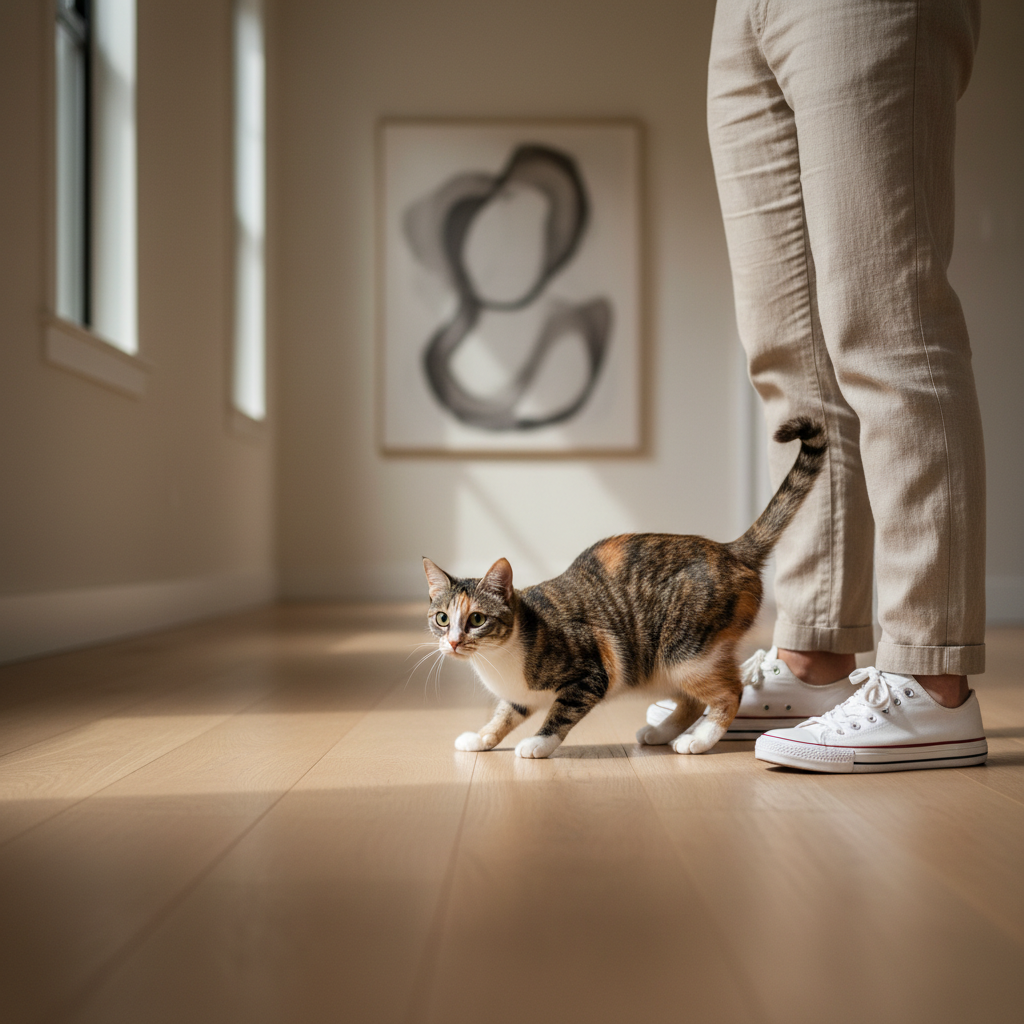
Why cats attack feet (and why it keeps happening)
Feet attacks almost always sit in the overlap between hunting instinct and learned behavior. Your cat is not “being mean,” they are practicing a sequence that feels natural, stalk, pounce, bite, grab, kick.
- Movement triggers prey drive: toes wiggling under blankets, legs swinging while you walk, slippers sliding across the floor.
- Accidental rewards: you squeal, jump, chase them away, wave your hands, all of that can read as “play.”
- Under-stimulation: many indoor cats do not get enough daily hunting-style activity, so they invent it.
- Rough play history: hands and feet were used as toys when they were kittens, so the cat keeps that rule.
- Stress and over-arousal: some cats tip from playful to bitey fast, especially in busy homes.
According to the American Veterinary Medical Association (AVMA), understanding normal cat behavior and using positive reinforcement are key parts of preventing problem behaviors, which fits feet-attacking issues well.
Quick self-check: which “feet attacker” do you have?
This matters because the same bite can have different motives. Use this quick checklist to match what you see at home.
- Play hunter: ears forward, dilated pupils, crouch, wiggle-butt, then pounce, usually most intense at dawn or dusk.
- Attention biter: attacks happen when you are on calls, cooking, or about to feed them, and stop when you engage.
- Overstimulated cat: it starts as petting or cuddling, then skin ripples, tail thumps, and feet get nailed as you move away.
- Anxious or reactive cat: attacks cluster around changes, guests, new pets, or loud noises, and the cat seems “on edge.”
If you see limping, sudden sensitivity, or a dramatic personality shift, consider a veterinary check. Pain can make behavior look like “random aggression.” According to the American Association of Feline Practitioners (AAFP), medical issues can contribute to behavior changes, so ruling that out is often a smart first step.

What to do in the moment (without turning it into a game)
When a cat launches at your ankles, your instinct is to react fast. Unfortunately, fast reactions often reinforce the behavior. Your goal is boring, predictable consequences.
Do this
- Freeze: stop moving your feet for two seconds, then slowly step away.
- Quiet redirect: toss a small toy away from your body or present a wand toy at a distance.
- End access: if they persist, calmly leave the room and close the door for 30 to 60 seconds.
- Reinforce calm: return and reward a sit, a soft approach, or “four paws on the floor.”
Avoid this (it often backfires)
- Yelling, spraying water, or smacking, it may increase fear and intensity.
- Chasing them, it reads like play and teaches them to escalate.
- Wiggling toes “to tire them out,” it trains precision.
According to the American Society for the Prevention of Cruelty to Animals (ASPCA), punishment can create fear and may worsen behavior issues, so redirection and positive reinforcement tend to be safer and more effective.
Build a simple daily plan that prevents ambushes
Most people try to solve this only when it happens, but prevention does the heavy lifting. Think “hunt, catch, eat, rest,” and you will be speaking your cat’s language.
- Two short play sessions daily: 10 to 15 minutes each, wand toys work well because your hands stay out of range.
- Finish with a “catch”: let them grab the toy at the end so frustration does not spill onto your feet.
- Then feed: even a small portion after play can help the sequence feel complete.
- Add micro-enrichment: puzzle feeders, treat scatters, window perches, and rotation of toys every few days.
If you are searching how to stop cat from attacking feet and you only have time for one change, make it scheduled play at the times attacks usually happen. Many cats bite ankles right before meals or in the evening when they have stored-up energy.
Training that actually sticks: teach an alternative to biting feet
You are not just trying to stop a behavior, you are teaching a replacement that pays better. Keep it simple and repeatable.
Step-by-step: “Go to mat” for feet attacks
- Place a small mat or towel in the main ambush zone, hallway, kitchen entrance, bedroom doorway.
- When your cat steps on it, mark with a word like “Yes” and give a treat.
- After a few reps, toss the treat so they step off, then reward when they return.
- Add a cue like “Mat” once the movement is predictable.
- When you anticipate an ankle attack, cue “Mat,” reward, then redirect into a short play burst.
Step-by-step: teach “hands and feet are never toys”
- Use toys for all rough play, never fingers, socks, or slippers.
- If teeth touch skin, stop interaction and remove attention for 20 to 30 seconds.
- Resume only when they are calm, reward gentle play with toys.
This is where many people slip: they are consistent for a week, then “play with their feet” once, and the cat learns to keep trying because sometimes it works. Intermittent rewards are powerful.
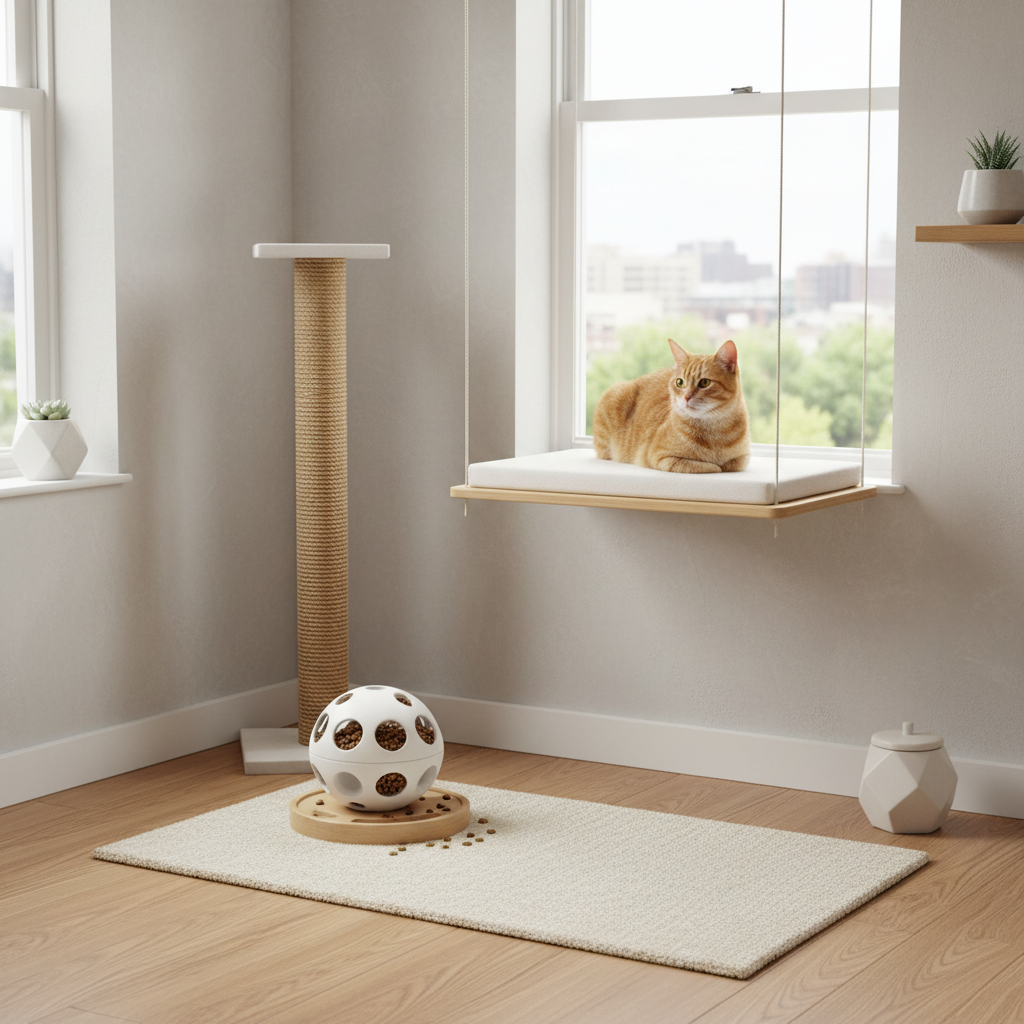
Home setup changes that reduce ankle ambushes
Behavior change gets easier when the environment stops setting traps for you. A few small adjustments can cut attacks fast, especially in narrow hallways and bedtime situations.
- Manage high-traffic chokepoints: add a cat tree or perch near the hallway so they can watch without lunging.
- Give “legal” hunting lanes: a long rug runner plus a kicker toy at the end can absorb some stalking energy.
- Use barriers temporarily: baby gates or closing bedroom door for a week can break the rehearsal loop.
- Nighttime plan: play, feed, then lights low and ignore attempts to initiate foot play under blankets.
If your cat attacks feet during sleep, keep a wand toy on the nightstand and redirect before they make contact, then stop all interaction. Over time, most cats stop trying when it never turns into midnight entertainment.
Common mistakes that slow progress
These are the “small” things that keep the cycle alive. They are also the ones that make people feel like nothing works, when the plan is fine but the execution leaks.
- Too much hand play: even gentle wrestling trains targeting of human limbs.
- Inconsistent consequences: sometimes you laugh, sometimes you yell, the cat keeps testing.
- Play that ends abruptly: no “catch” moment can leave your cat in a revved-up state.
- Only adding toys, not structure: more toys in a bin rarely beats scheduled interactive play.
- Ignoring stress signals: tail lashing, skin twitching, ears sideways, those are warnings that a bite is coming.
A quick action table: match the situation to the fix
If you want a fast reference, use this chart for the most common scenarios.
| When it happens | Likely driver | What to do today |
|---|---|---|
| Morning hallway ambush | High energy, routine trigger | 5–10 minutes wand play before you move through the hallway, then breakfast |
| During work calls | Attention seeking | Scheduled play break, reward calm sitting near you, briefly leave room if biting starts |
| Under blankets at night | Movement triggers prey drive | Play + feed before bed, keep feet still, redirect once, then ignore |
| After petting | Overstimulation | Shorter petting, stop at early signals, reward calm, offer a toy instead |
| New home, guests, new pet | Stress, insecurity | More hiding spots, predictable routine, consider pheromone support, consult a pro if escalating |
When to get professional help (and what kind)
How to stop cat from attacking feet is usually a training and enrichment project, but some situations deserve a higher level of support. If bites break skin, attacks feel truly predatory, or the behavior escalates quickly, talk to your veterinarian and consider a credentialed behavior professional.
- Vet visit: helpful if behavior changed suddenly, your cat seems painful, or you see new aggression in other contexts.
- Qualified behavior support: a board-certified veterinary behaviorist or a certified cat behavior consultant can build a plan tailored to your home.
According to the American College of Veterinary Behaviorists (ACVB), behavior problems can have medical and environmental components, and individualized treatment plans often work better than generic advice, especially for aggressive behavior.
Key takeaways (so you can start tonight)
- Make feet boring: freeze, step away, no squealing, no chasing.
- Give a better outlet: short daily interactive play that ends with a “catch,” then food.
- Reward alternatives: teach “go to mat” or another simple stationing behavior.
- Reduce triggers: manage hallways, bedtime movement, and overstimulation patterns.
If you pick two actions, pick these: schedule play at peak attack times and stop all accidental reinforcement. That combination solves a large chunk of household ankle ambushes within a few weeks in many cases.
If you want, write down when attacks happen for three days, time, location, what you were doing, and what happened right after. That tiny log often makes the pattern obvious, and once you see the pattern, changing it feels less like guessing.
FAQ
- Why does my cat only attack my feet and not other people’s?
Often it is timing and reinforcement. If you walk faster, wear slippers they like to grab, or react in a more exciting way, you become the “best toy.” Changing your response and adding structured play usually helps. - Should I hiss or yelp when my cat bites my ankles?
Some cats back off, but many treat it like noisy play. A calmer approach tends to work better: freeze, redirect, then remove attention briefly if they keep going. - Is my cat being aggressive or just playing?
Play can look intense, but body language matters. If it is crouch-pounce-repeat with no other warning signs, it is often play. If you see stiff posture, growling, or attacks outside play contexts, consider professional input. - Do I need to buy more toys to fix this?
More toys help less than better use of a few good ones. One wand toy, a kicker toy, and a puzzle feeder can go far when you use them on a routine. - How long does it take to stop a cat from attacking feet?
It varies. Some cats improve in days once the “game” disappears, but building a new habit often takes a few weeks of consistency, especially if the behavior is long-standing. - Will a second cat solve the foot-attacking problem?
Sometimes it helps, sometimes it adds stress. A second cat is a big decision, and it is not a guaranteed fix for under-stimulation. Try enrichment and training first. - What if my cat draws blood?
Clean the wound and consider medical advice for yourself if needed. For the cat, involve your veterinarian promptly and ask about behavior referral, especially if bites are frequent or escalating.
If you are dealing with daily ambushes and you would rather not troubleshoot alone, a vet visit plus a session with a qualified cat behavior professional can be a very efficient next step, they can spot patterns in your routine and tailor enrichment and training to your home layout.