
Fish tank decoration live moss ball is usually bought for the “instant nature” look, but the same ball can turn brown, float, or shed debris if the tank setup and care routine don’t match what it needs. The good news is most problems come from a handful of predictable causes: light, flow, handling, and the tank’s nutrient balance.
If you want a moss ball to look clean and stay green, you’re really aiming for two things: stable water conditions and gentle maintenance that doesn’t crush or smother it. That’s worth caring about because a stressed moss ball can become a constant source of annoyance, and in some tanks it can contribute to extra mulm buildup that makes everything look “dusty.”
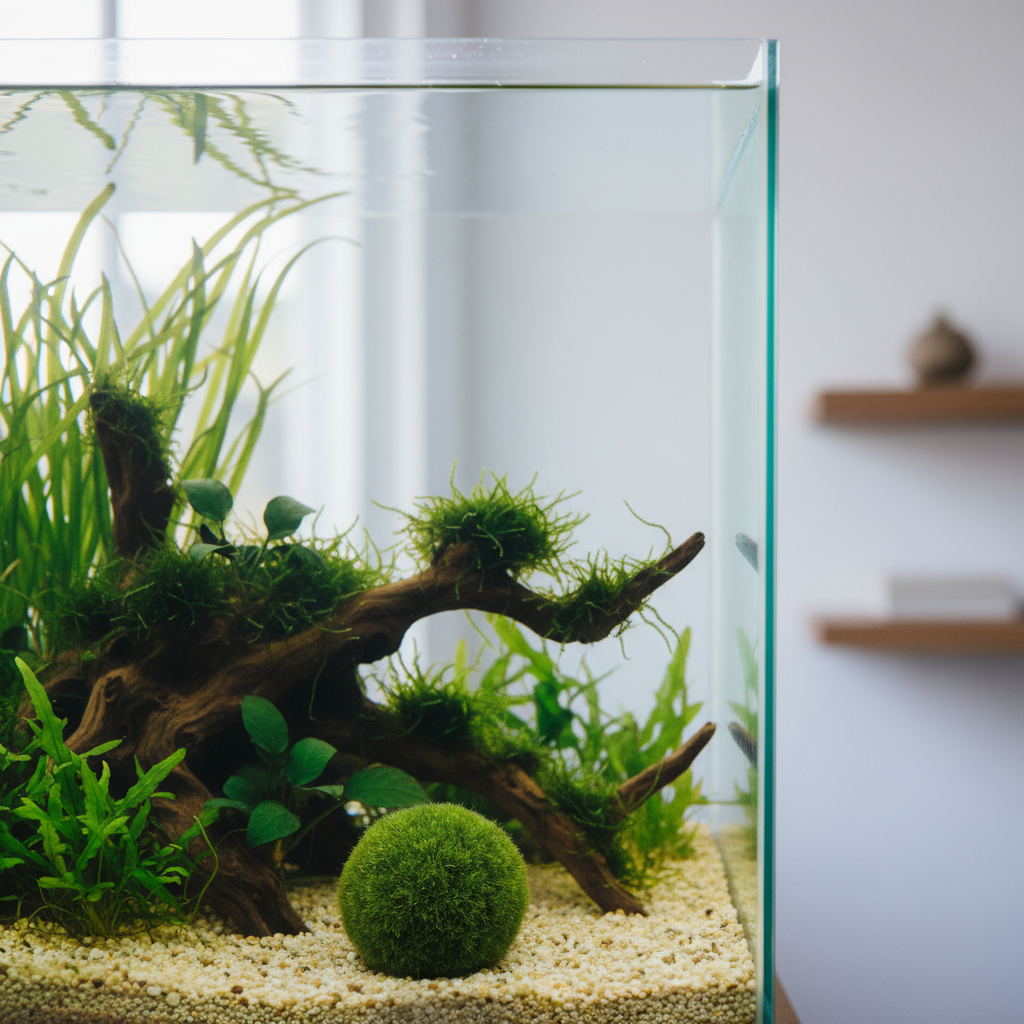
One quick expectation reset: “moss ball” is a common name, and many products are actually Marimo (a type of algae growth form). That’s not a bad thing, it just changes what “healthy” looks like and how fast it grows. Also, not every tank is a fit, especially high-heat tropical setups.
Why live moss balls struggle in real tanks
When a fish tank decoration live moss ball fails, it’s rarely mysterious. It’s usually one of these practical issues that shows up in everyday hobby setups.
- Too much heat: Many moss balls do better in cooler freshwater tanks. Prolonged warmer temperatures can stress them, and they may brown or break apart.
- Lighting mismatch: Very intense light can encourage algae growth on the surface, while very low light slows growth and can dull the color.
- Low flow + flat spots: If the ball sits in one position, the underside may yellow because it gets less light and less circulation.
- Dirty surface: Debris and hair algae can cling to the texture, making it look “fuzzy” in a bad way.
- Rough handling: Squeezing too hard or tearing it open to “clean it” can damage its structure and create loose strands.
According to the U.S. Fish & Wildlife Service, invasive zebra mussels can spread through aquarium products, and they’ve specifically advised consumers to take precautions with moss balls. In the U.S., it’s smart to verify sourcing and follow any local guidance, and if you ever suspect contamination, consider asking a local aquarium store or state wildlife agency what disposal steps they recommend.
Quick self-check: is your moss ball actually healthy?
This is the “don’t overthink it” section. A moss ball can look imperfect and still be fine, but these checks help you decide whether you’re dealing with normal adjustment or a bigger problem.
- Color: Mostly deep green is a good sign. Small pale areas often indicate a “resting” side that needs rotation.
- Texture: Firm and springy beats mushy. A slimy feel can hint at decay or trapped detritus.
- Smell (out of tank): Earthy or neutral is normal. A strong rotten smell suggests decay and you may want to quarantine it.
- Floating: Occasional floating often means trapped air. Persistent floating can mean it’s drying out at the surface or breaking down inside.
- Shedding strands: A few strands happen. Continuous shedding can point to damage or poor conditions.
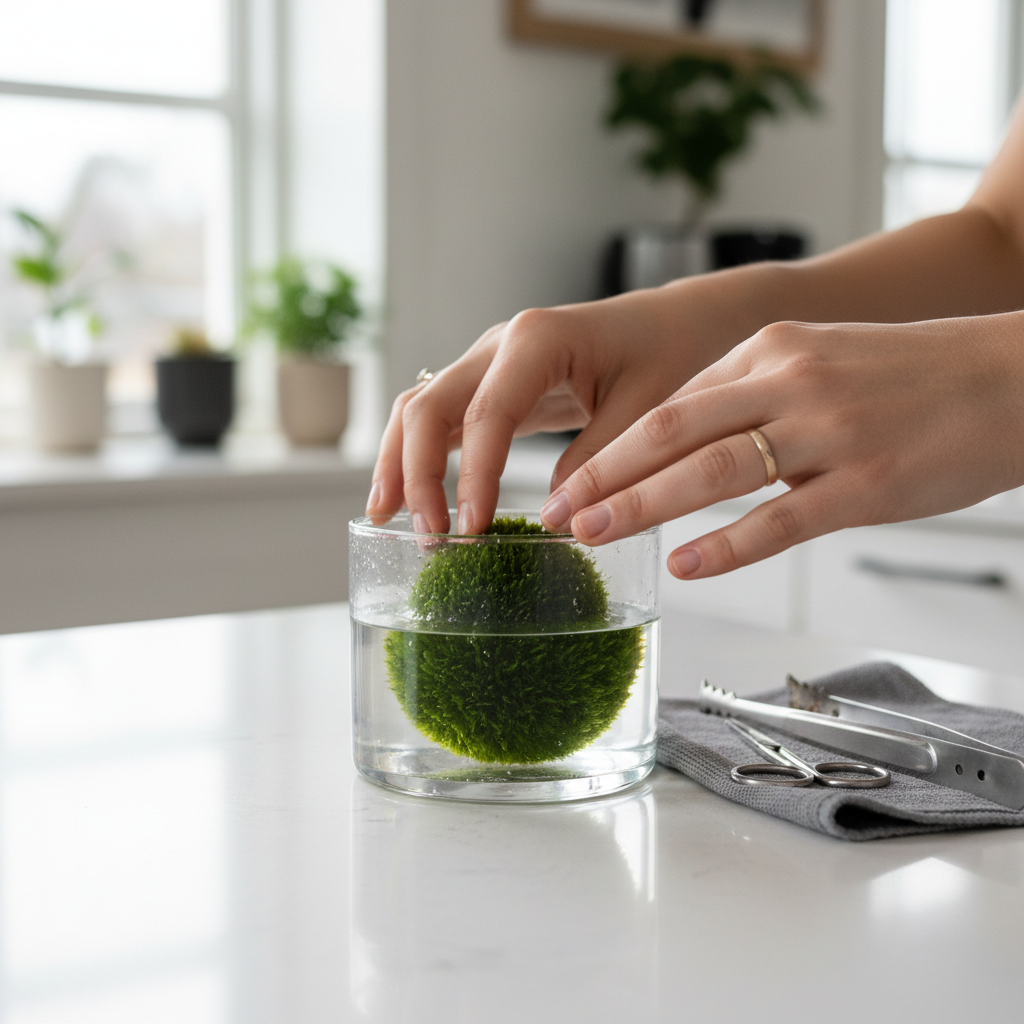
If you’re on the fence, quarantine is the calm move. A simple container with conditioned water lets you watch it for a week without the whole tank paying the price for guesswork.
How to place a moss ball so it stays green (and looks intentional)
Placement is half aesthetics, half biology. You want gentle flow, moderate light, and easy access for rotating.
Good placement ideas
- Front-midground accent: Put it near a rock or driftwood so it reads like a “natural cluster,” not a random green sphere.
- Low-to-mid light zone: Bright enough to stay green, not so bright it becomes an algae magnet.
- Gentle current: Near but not directly in front of a filter outflow helps keep debris from settling.
What to avoid
- Direct blast from a powerhead that tumbles it constantly, that can fray the surface over time.
- Dark corners behind hardscape where the underside stays shaded for weeks.
- Being buried in substrate, moss balls can trap gunk and decline.
Care routine: simple steps that make a big difference
A fish tank decoration live moss ball doesn’t need complicated dosing schedules. It needs a small routine that keeps its surface clean and its shape intact.
- Rotate weekly: Roll it a quarter turn during water changes so all sides see light.
- Rinse gently (as needed): Swish it in a bowl of dechlorinated tank water to dislodge debris. Avoid tap water if your tap contains chlorine or chloramine.
- Light sanity check: If you’re fighting algae elsewhere, the moss ball will usually show it too. Reducing light duration often helps more than scrubbing harder.
- Keep the ball round: Lightly roll it between your palms underwater. If it’s flattening, it’s often sitting still too long.
About “feeding”: in many planted tanks, moss balls do fine without targeted fertilizer. In very lean setups, small, conservative dosing might help, but it depends on livestock and plant mass. If you’re unsure, ask a knowledgeable local fish store about your specific tank and stocking.
Troubleshooting chart: symptoms, likely causes, fixes
Use this like a quick decision map. Don’t do all fixes at once, change one variable, then watch for a week or two.
| What you see | Likely cause | What to do next |
|---|---|---|
| Browning on the bottom | Not rotated, low circulation | Rotate weekly, move to gentler flow, clean debris |
| Floats repeatedly | Trapped air, drying at surface, internal breakdown | Squeeze lightly underwater to release air; if mushy or smelly, quarantine |
| Hair algae on surface | Too much light, excess nutrients, poor maintenance | Reduce photoperiod, manually remove algae, improve water-change routine |
| Ball falling apart | Heat stress, rough handling, long-term decline | Lower temp if appropriate, handle gently, consider replacing |
| Brown “dust” around it | Detritus trapped in texture | Rinse in conditioned water, increase gentle flow nearby |
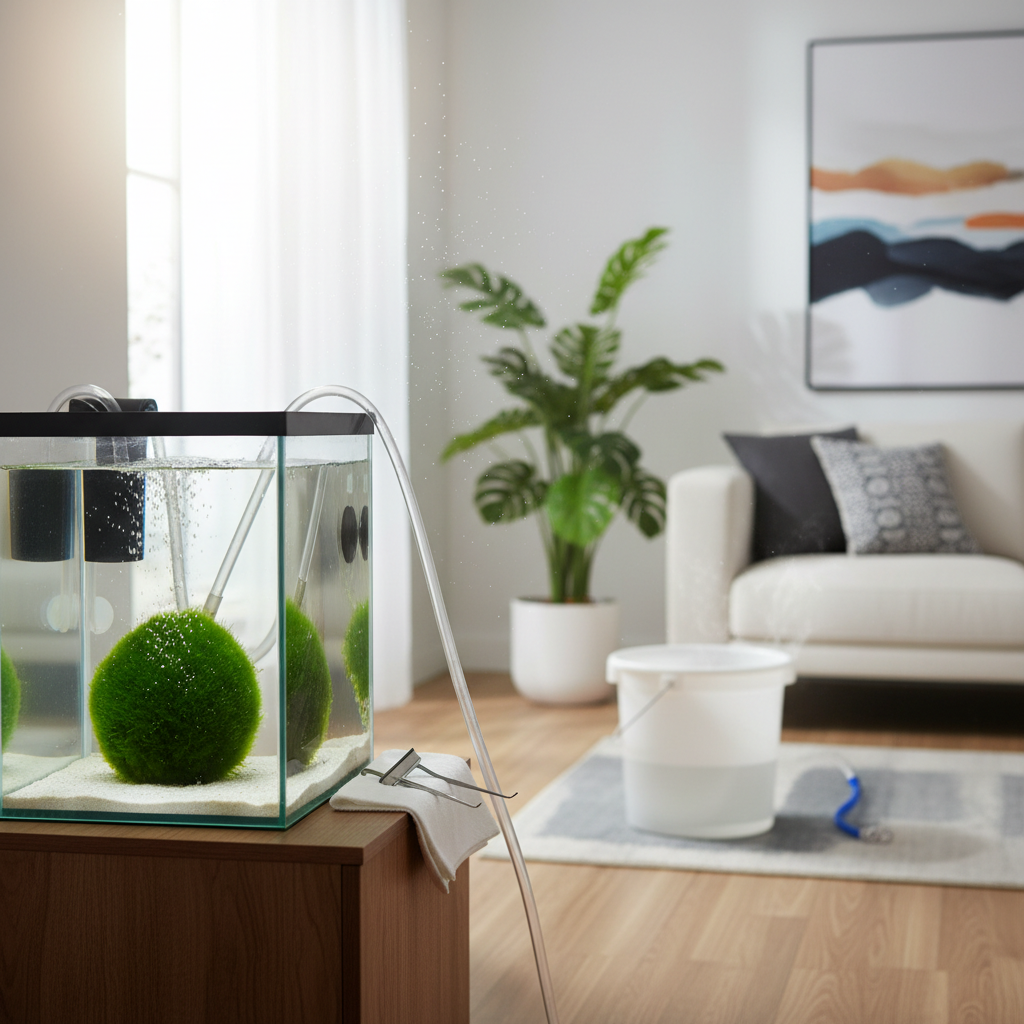
If you’re troubleshooting multiple issues (algae + cloudy water + stressed fish), stabilize the tank first. The moss ball is usually a “symptom reporter,” not the root cause.
Common mistakes people make (even experienced hobbyists)
- Scrubbing too aggressively: It feels productive, but it can tear the outer layer and make it look worse next week.
- Letting it bake under high light: Especially in nano tanks where lights sit close to the water, intensity can be higher than you think.
- Skipping quarantine for new additions: Not just for fish, plants and décor can bring hitchhikers. According to CDC guidance on aquarium and pet hygiene, basic cleaning and handwashing help reduce risk from germs associated with aquatic environments.
- Assuming it’s “set and forget”: A moss ball is low maintenance, not zero maintenance.
When to get extra help (or stop and reassess)
Most moss ball issues are cosmetic, but a few situations justify more caution.
- Unusual pests or suspected invasive species: If you see tiny shell-like organisms or anything suspicious, isolate the item and seek local guidance. Rules and recommended disposal steps can vary by state.
- Fish health problems at the same time: If fish show signs of distress, prioritize water testing and husbandry, and consider advice from an experienced aquarist or aquatic veterinarian if symptoms persist.
- Tank instability: Persistent ammonia or nitrite readings are a bigger deal than the moss ball itself, address cycling and filtration before décor tweaks.
Key takeaways and a practical next step
If your goal is a moss ball that stays photo-worthy, focus on rotation, gentle cleaning, and sensible light, those three habits solve a surprising amount. Most tanks don’t need special products, they need consistency.
Tonight’s easy action: during your next water change, roll the ball, swish it in conditioned water, and reposition it into mild flow. Then watch it for two weeks before changing anything else, that’s usually where clarity shows up.
FAQ
How long does a live moss ball last in an aquarium?
In many freshwater tanks, a moss ball can last years, but longevity depends on temperature, light, and how often it gets rotated and cleaned. If it’s kept too warm or constantly covered in debris, it may decline faster.
Can I put a moss ball in a betta tank?
Often yes, especially if the tank is filtered and stable. The main watch-out is temperature since many betta tanks run warmer; if the moss ball browns consistently, you may need to relocate it to a cooler setup.
Why does my moss ball keep floating after I push it down?
Trapped air is common. Gently squeeze it underwater to release bubbles. If it still floats and feels soft or smells off, quarantine it because internal decay can also create buoyancy.
Do moss balls help with nitrates or water quality?
They can consume some nutrients, but they’re not a substitute for filtration and water changes. Think of them as a small, steady “green helper,” not a water-quality fix.
Should I quarantine a live moss ball before adding it?
It’s a cautious habit, especially if you keep shrimp or sensitive fish. Quarantine helps you spot hitchhikers and also lets the ball recover from shipping before it lands in your display tank.
Can I clean a moss ball with tap water?
In many U.S. areas, tap water contains chlorine or chloramine, which may stress aquatic organisms. Using dechlorinated water is the safer default; if you’re unsure, check your local water report or ask a local shop.
My moss ball has brown spots, should I throw it away?
Not automatically. Brown on one side often improves with rotation and better placement. If the ball becomes mushy, falls apart, or smells rotten, that’s when replacement becomes more reasonable.
If you’re setting up a new aquascape and want the “green accent” look without constant fiddling, it may help to plan your hardscape and flow first, then choose a moss ball size and placement that fits your light and maintenance style, that small bit of planning usually saves the most frustration.