
Kitten toys for playtime work best when they match how kittens actually hunt, stalk, and pounce, not just what looks cute in the aisle. If your kitten gets “zoomies” at midnight, nips hands, or climbs curtains, it usually means they need a better outlet for energy and curiosity.
This matters more than people expect, because play is how kittens practice coordination and confidence, and it can also be your easiest way to reduce stress behaviors. The tricky part is that not every toy is safe, not every toy stays interesting, and some play styles accidentally teach bad habits.
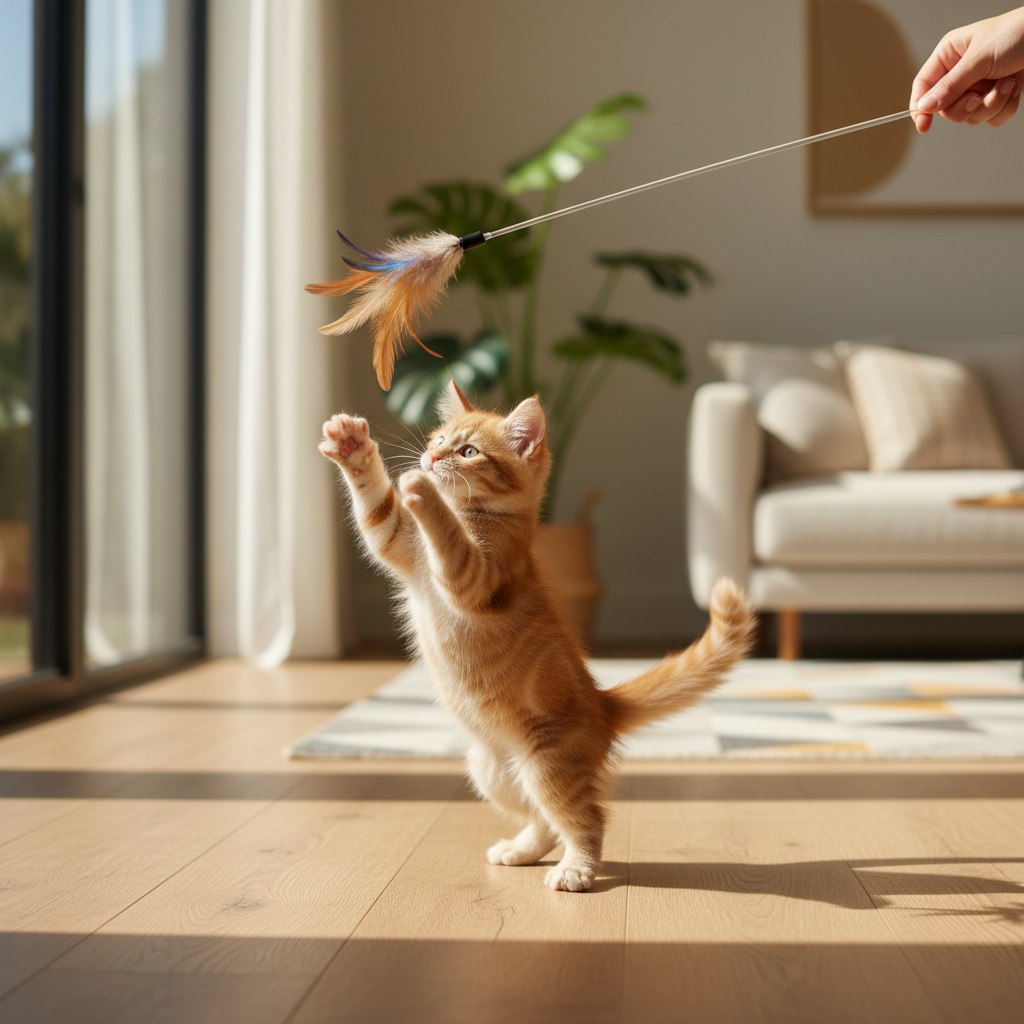
In this guide, you’ll get a practical way to choose toys, set a short daily routine, and spot the red flags that mean “switch the toy” or “ask your vet.” No guilt if you’re busy, the goal is consistent, not complicated.
Why kittens get “wired” (and how toys help)
Kittens aren’t being naughty when they bounce off furniture, they’re running an internal program: hunt practice, social learning, and energy release. When that program has no target, you become the target.
- Predatory sequence: stalk → chase → pounce → “kill bite.” Toys let you aim that sequence at something appropriate.
- Teething and mouthiness: many kittens chew and nip more during teething windows, so they need safe chew options.
- Under-stimulation: indoor kittens often need extra variety, especially in small apartments.
- Over-stimulation: rough play with hands can ramp them up fast, then they bite because they don’t know how to “land the plane.”
According to the American Association of Feline Practitioners (AAFP), environmental enrichment, including interactive play, supports feline welfare and can reduce behavior issues. In real homes, that translates to fewer “ambushes” and a kitten that settles more easily after play.
Quick self-check: what kind of play does your kitten need?
If you’re buying toys at random, you’ll usually end up with a basket of ignored stuff and one string they love too much. Try this quick sorting first, it saves money.
Behavior clues
- Chasing ankles or hands: you need better chase outlets and a “hands are not prey” rule.
- Climbing curtains, scaling shelves: add vertical play and a safe climbing option.
- Won’t play alone: they may prefer interactive wand play, then transition to solo toys.
- Plays for 30 seconds, quits: use shorter bursts, rotate toys, and mimic prey movement.
- Hisses or gets frantic: dial down intensity, use calmer toys, and consider a professional opinion if it persists.
Home setup clues
- Small space: focus on vertical options, short sprint lanes, and toy rotation.
- Hard floors: lightweight balls and kickers slide well; add rugs to reduce slips.
- Busy schedule: prioritize one interactive session daily plus safe solo toys.
Types of kitten toys for playtime (and what each is good for)
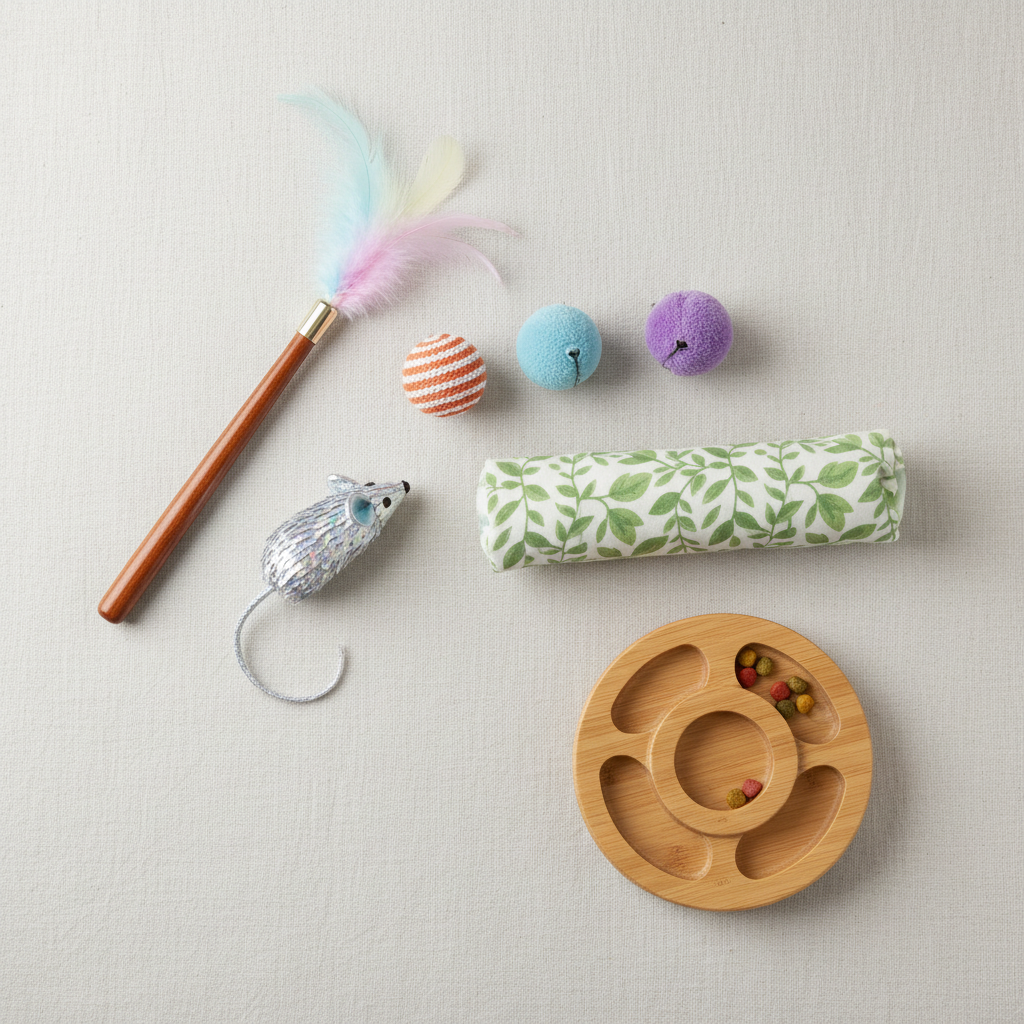
Think in categories, not brands. Kittens usually need a mix: something to chase, something to “kill,” and something that keeps their brain busy when you’re not available.
| Toy type | Best for | What to watch |
|---|---|---|
| Wand / teaser toys | Bonding, controlled chase, high-energy bursts | Avoid leaving unattended; watch strings and feathers |
| Balls & track toys | Solo play, batting, quick wins | Choose sizes they can’t swallow; inspect for cracks |
| Kick toys (kickers) | “Bunny-kicking,” wrestling, redirecting bite energy | Seams should be tough; remove loose parts |
| Soft mice / crinkle toys | Carry, pounce, gentle hunting | Skip tiny glued eyes; check stuffing integrity |
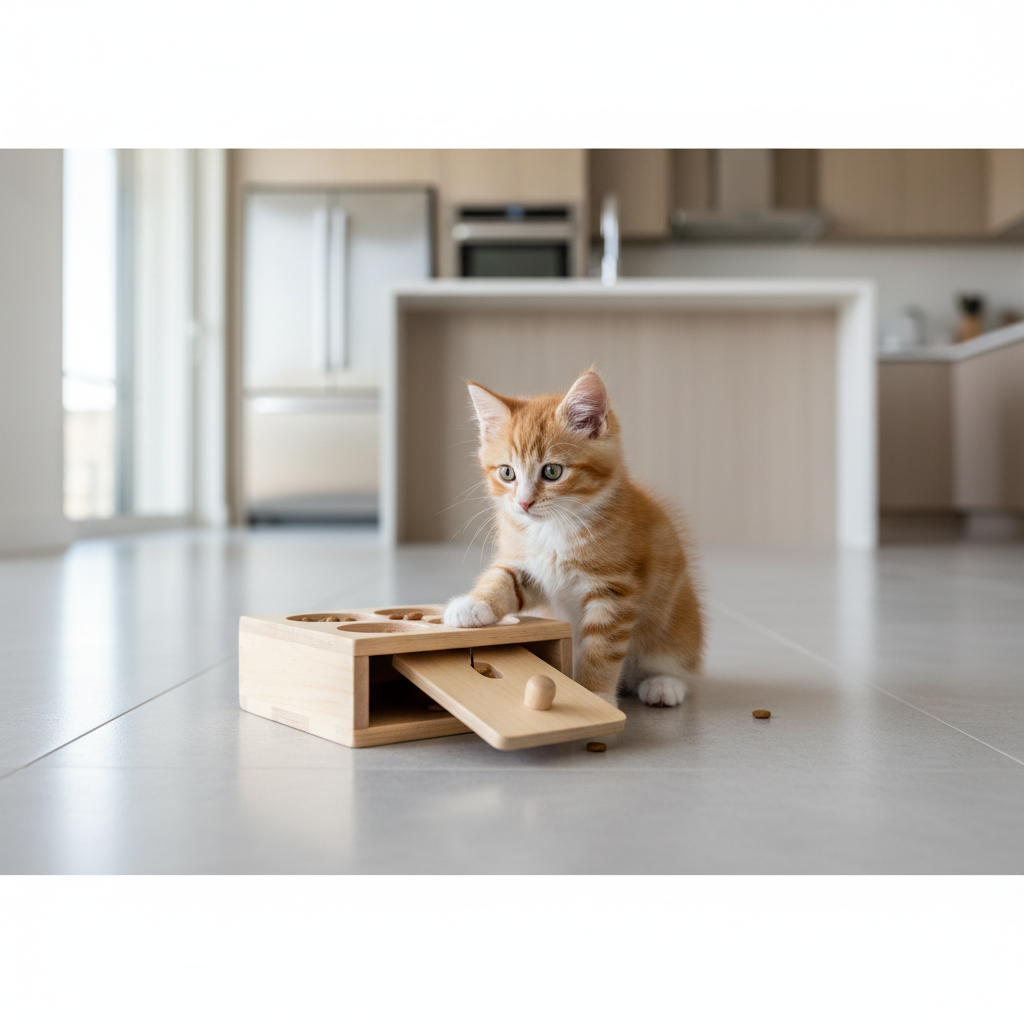
| Puzzle feeders / treat toys | Mental work, slower eating, boredom relief | Keep difficulty low at first; treat calories add up |
| Catnip toys | Older kittens that respond to catnip | Many young kittens don’t react; store sealed |
Safety first: what to avoid (or supervise closely)
Most “toy accidents” come from small parts, long strings, or worn toys kept in rotation too long. If you’re unsure, treat it like a toddler rule: if it can be swallowed or wrapped around the neck, supervise.
- Strings, yarn, ribbon, tinsel: can be a risk if swallowed, so use only during supervised play, then put away.
- Small detachable bits: bells, glued eyes, cheap feathers, or brittle plastic that snaps.
- Laser pointers without a “catch”: they can be fun, but frustration can build; end with a physical toy they can bite and grab.
- Overly hard chew items: if you can’t dent it with a fingernail, it may be too hard for tiny teeth.
According to the ASPCA, foreign body ingestion can be a serious emergency for pets. If you suspect your kitten swallowed string or a toy piece, it’s safer to call a veterinarian promptly rather than “wait and see.”
A simple daily routine that actually burns energy
Most kittens don’t need marathon sessions, they need the right pattern. Two short play blocks often work better than one long one, especially for busy households.
The 10–15 minute “hunt cycle”
- Warm-up (2–3 min): slow wand movement along the floor, behind furniture edges, like prey hiding.
- Chase (5–8 min): quick sprints, direction changes, occasional “escape” so they stay motivated.
- Catch (1–2 min): let them grab and kick a kicker toy, this is where biting belongs.
- Cool-down (1–2 min): slower movements, then a small meal or a few treats to help them settle.
If you’re using kitten toys for playtime to fix nighttime chaos, schedule one hunt cycle about 60–90 minutes before bed, then feed a small portion. It often helps, though every kitten’s rhythm varies.
How to keep toys “new” without buying more
The secret is rotation and novelty, not quantity. Many kittens ignore a toy that sits out 24/7, then go wild for it after a few days away.
- Rotation bin: keep 6–10 toys out, store the rest, swap every 3–4 days.
- Change the context: put the same ball in a paper bag or a box with a cutout, suddenly it’s interesting.
- Scent refresh: if your kitten likes catnip later on, store catnip toys sealed to keep scent stronger.
- Make “prey” act real: drag toys around corners, pause, then dart, constant movement is less convincing.
And yes, the simplest enrichment sometimes wins: a sturdy cardboard box, tissue paper, and a safe toy to “ambush.” Just avoid thin plastic bags due to suffocation risk.
Practical buying checklist (so you don’t waste money)
Before you click “add to cart,” do a 30-second check. It keeps you from ending up with unsafe, flimsy, or boring toys.
- Right size: too small risks swallowing, too big won’t trigger hunting.
- Durable seams: tug gently, if threads loosen now, they won’t last.
- Washable or wipeable: especially for kicker toys and plush.
- Noise level: bells and crinkle can be great, but some kittens get startled, start soft.
- One interactive tool: at least one wand-style toy for guided play.
- One solo option: track toy, ball, or sturdy kicker for independent time.
Key takeaway: a small “balanced kit” beats a huge pile. For most homes, 1 wand toy, 2–3 solo toys, 1 kicker, and 1 simple puzzle feeder is a solid start.
When play changes: signs you should ask a pro
Play can look intense and still be normal, especially with confident kittens. But a few patterns deserve caution.
- Sudden drop in play drive: could be stress, pain, or illness, a vet can help you rule things out.
- Frequent limping or reluctance to jump: stop high-impact play and get guidance.
- Breathing hard, open-mouth breathing: pause the session, let them rest, and consult a veterinarian if it repeats.
- Aggression that escalates: if your kitten regularly breaks skin or can’t calm down after play, a vet or certified behavior professional can tailor a plan.
According to the American Veterinary Medical Association (AVMA), veterinarians can advise on behavior and health factors that influence a pet’s routine. If something feels “off,” it’s okay to ask early, it’s often easier than undoing a learned habit later.
Conclusion: build the habit, not the perfect toy shelf
Kitten toys for playtime don’t need to be fancy, they need to be safe, varied, and used in a way that lets your kitten complete the hunt cycle. If you only change two things this week, make it one short interactive session per day and a simple rotation system, you’ll usually see a calmer kitten and fewer ambush attacks.
Pick two toy categories you don’t have yet, run the 10–15 minute routine for seven days, and adjust based on what your kitten actually enjoys. That feedback loop matters more than any “top toy” list.
FAQ
How many minutes of play does a kitten need each day?
Many kittens do well with 20–30 minutes total, split into 2–3 short sessions. High-energy kittens may want more, but the pattern matters more than the raw minutes.
Are wand toys safe for kittens?
They’re usually great for supervised play, but the string and attachments can be risky if chewed off. Use them with you present, then store them out of reach.
Why does my kitten bite me during playtime?
Often it’s because hands became part of the “prey” game. Switch to a wand toy for chasing and offer a kicker toy for biting, and stop play for a moment if teeth touch skin.
Do kittens need puzzle toys, or is that just for adult cats?
Many kittens enjoy easy puzzles, especially food-motivated ones. Keep it simple at first so it doesn’t become frustrating, and account for treats in daily calories.
Is a laser pointer okay for kitten exercise?
It can add movement, but some kittens get frustrated without a catch. If you use one, finish with a toy they can grab and bite, so the “hunt” feels complete.
What toys should I avoid leaving out when I’m not home?
Anything with long strings, ribbons, or parts that detach easily is better as supervised-only. For solo time, sturdier balls, tracks, and larger kickers are typically safer choices.
My kitten ignores toys after one day. Is something wrong?
Usually not, kittens often want novelty or more realistic movement. Rotate toys, change where you use them, and try shorter bursts with more pauses and “hiding.”
One last practical note
If you’re trying to build a reliable routine but don’t want to overthink it, choose a small set of kitten toys for playtime that covers chase, kick, and brain work, then rotate weekly. If you’d like, tell me your kitten’s age, living space, and their most annoying habit, and I can suggest a tighter toy mix and a play schedule that fits your day.