
Turtle tank cover mesh screen problems usually show up the same way: a corner pops up, a turtle wedges under the rim, or the “secure” lid slides when you open it to feed. The good news is you can usually fix this without rebuilding your whole setup, you just need the right screen style, the right fit, and a couple of escape-proof details.
This matters more than people expect because turtles don’t just “climb” out, they leverage weight, grip, and patience. A lid that feels solid to you can be “movable” to a determined adult slider or cooter, especially if there’s a basking ramp or decor near the edge.
Below is a practical way to choose a mesh cover that still breathes well, stays aligned with your lighting and basking needs, and stops the most common escape routes. If you only change one thing, make it the fit and the locking method, not the mesh material.
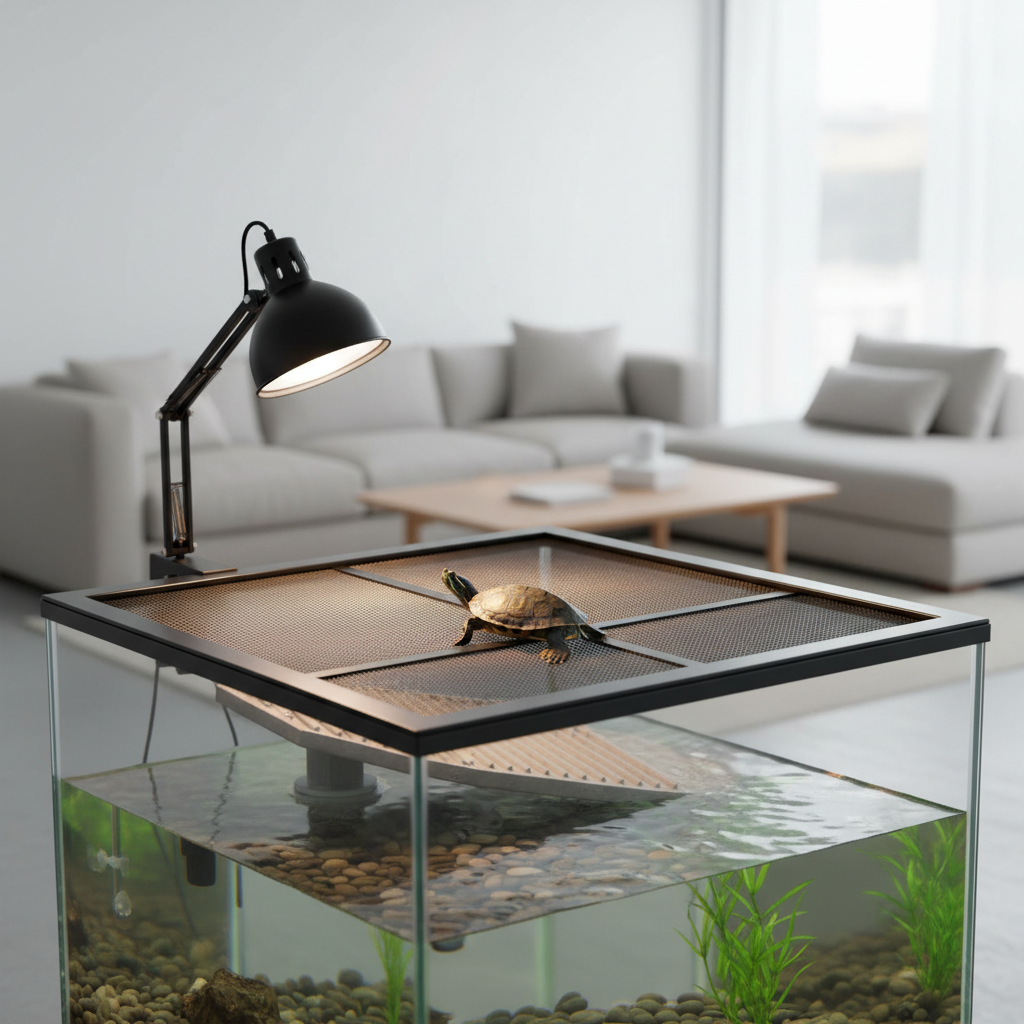
Why turtles escape even with a mesh screen lid
A mesh lid fails most often for boring reasons, not because turtles are “stronger than the lid.” The setup has a small gap, the frame flexes, or the cover shifts a few millimeters each day until it’s finally out of position.
- Imperfect fit on the rim: Many screens are made for standard aquarium rims, but your tank might have a different plastic frame thickness, center braces, or a slightly warped rim.
- Hinge and feeding door drift: Hinged sections can lift if the lid isn’t weighted or clipped, then the turtle learns the “lift point.”
- Interior “launch points”: Basking docks, stacked rocks, driftwood, and filter housings near the top edge act like steps.
- Screen flex: Lightweight aluminum frames can bow upward if a turtle pushes from below or if a lamp rests on the mesh.
- Cutouts done too loosely: DIY notches for filters, cords, or tubing often create the exact gap a turtle needs.
According to the American Veterinary Medical Association (AVMA), safe housing is a core part of responsible pet care, and escape prevention is part of that “environmental safety” conversation. If your turtle is already testing the lid, treat it as a safety issue, not just a convenience issue.
Quick self-check: is your current cover truly escape-proof?
If you’re deciding whether to replace the lid or just modify it, this checklist usually makes the answer obvious within two minutes.
- Can you slide the lid side-to-side with one hand more than 1/8 inch?
- Any gap larger than the width of your turtle’s head near corners, hinges, or cutouts?
- Is there a basking ramp, dock, or decor within 2–3 inches of the top rim?
- Does the mesh or frame bounce when you press lightly in the center?
- Do you ever rest a dome lamp directly on the mesh?
- When you open the feeding door, does the rest of the lid shift?
If you answered “yes” to two or more, you don’t necessarily need a new product, but you do need a better fit and a locking approach that matches your tank and turtle size.
Choosing the right turtle tank mesh screen: what actually matters
When people shop for a turtle tank cover mesh screen, they often focus on “stainless vs aluminum” first. Material matters, but fit and rigidity matter more. You’re trying to solve two competing needs: ventilation and containment.
Frame rigidity and center support
Look for a frame that doesn’t twist easily in your hands. If your tank is 40 gallons and up, a center brace or extra crossbar helps prevent bowing, especially if you use heavier dome fixtures.
Mesh opening size
For most common pet turtles, standard screen openings work fine, but if you have a small juvenile, avoid oversized mesh where toes can snag. If you’re unsure, go tighter rather than wider, and keep nails trimmed with guidance from a reptile vet if needed.
How you’ll handle lighting
Many keepers use UVB plus a heat lamp. A screen reduces output a bit, so placement matters. According to Zoo Med Laboratories (a major reptile lighting manufacturer), mesh between UVB and the animal can reduce UVB reaching the basking zone, so you may need to adjust distance or fixture type and follow the bulb maker’s guidance.
Cutouts that don’t become escape hatches
If your setup requires a canister filter return, hang-on-back filter, or tubing, choose a lid style with built-in channels or plan for a tight notch and a “gap cover” piece.
Mesh screen lid options compared (buy vs DIY)
There isn’t one “best” option, but you can match the lid type to your tank and how often you access it. Here’s a practical comparison that reflects what usually happens in real homes.
| Option | Pros | Typical pitfalls | Who it fits |
|---|---|---|---|
| Standard aquarium screen kit (metal frame + mesh) | Easy to source, light, good airflow | Flexing on long spans, cutouts can be sloppy | Small/medium tanks, basic layouts |
| Heavy-duty mesh lid with crossbars | More rigid, better for larger turtles | Costs more, sometimes heavier to lift | 40–125 gallon tanks, strong climbers |
| DIY framed lid (window screen style frame) | Custom fit, easier to design cutouts | Easy to mis-measure, corners may loosen | Odd-size tanks, custom equipment routing |
| Rigid top with vent panels (hybrid) | Very secure, less shifting | Can trap heat/humidity if under-vented | Homes with cats/dogs, high escape risk |
Make your mesh screen escape-proof: practical steps that work
This is the part most people want: what to do tonight, with tools you already own, without making the tank a hassle to maintain.
1) Remove “steps” near the rim
If the turtle can get its front claws to the lid, it will test it. Pull docks, rocks, and wood away from the edge, lower basking platforms if possible, and keep filter outflows from creating a “ledge.”
2) Lock the lid to the tank, not just “rest it on top”
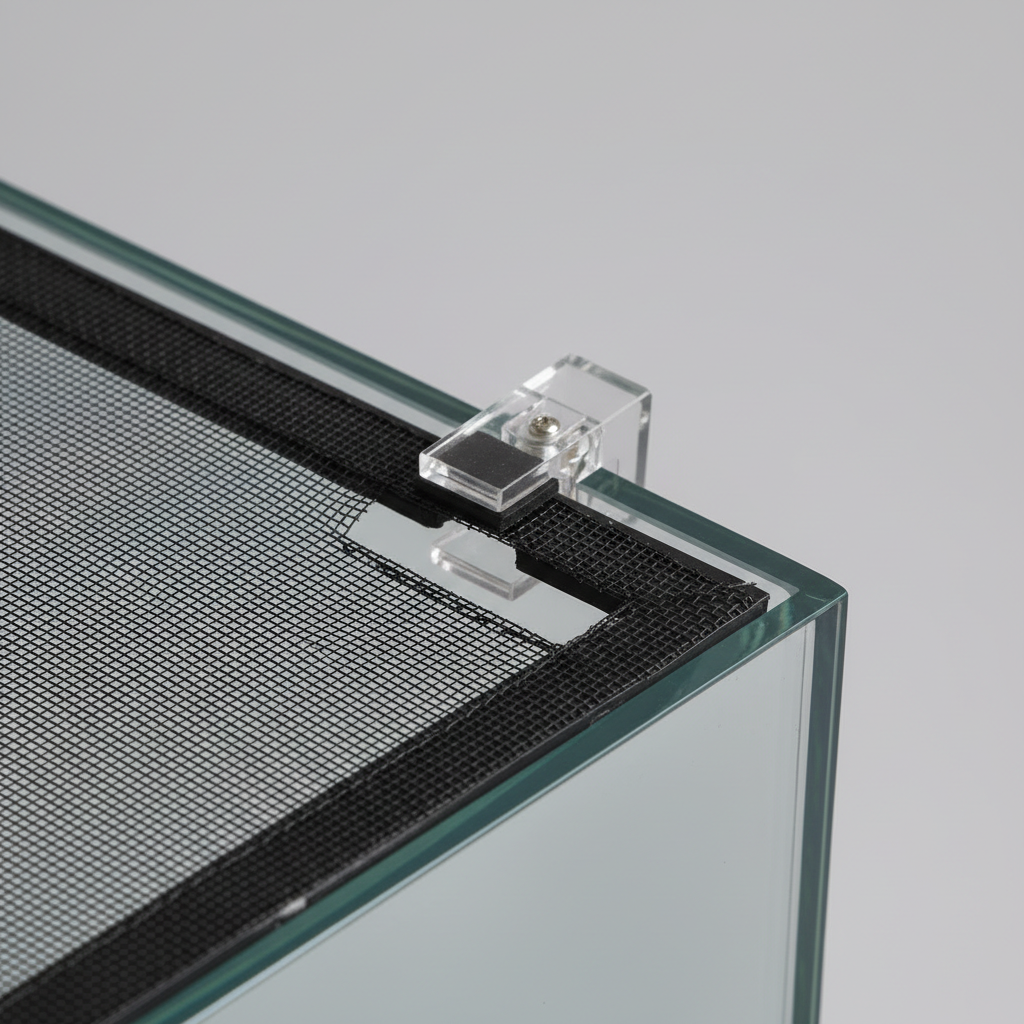
- Use screen clips or aquarium lid clamps sized for your rim.
- If you have a center brace, clamp both halves so one side can’t ride up.
- For sliding issues, add non-slip pads at contact points so small bumps don’t translate into movement.
3) Reinforce flex points
If the screen bows, add a crossbar (some kits include one) or use a lightweight rigid support underneath. The goal is simple: when your turtle pushes up, the lid shouldn’t “give” and reward the behavior.
4) Make cutouts tight, then cap the leftover gap
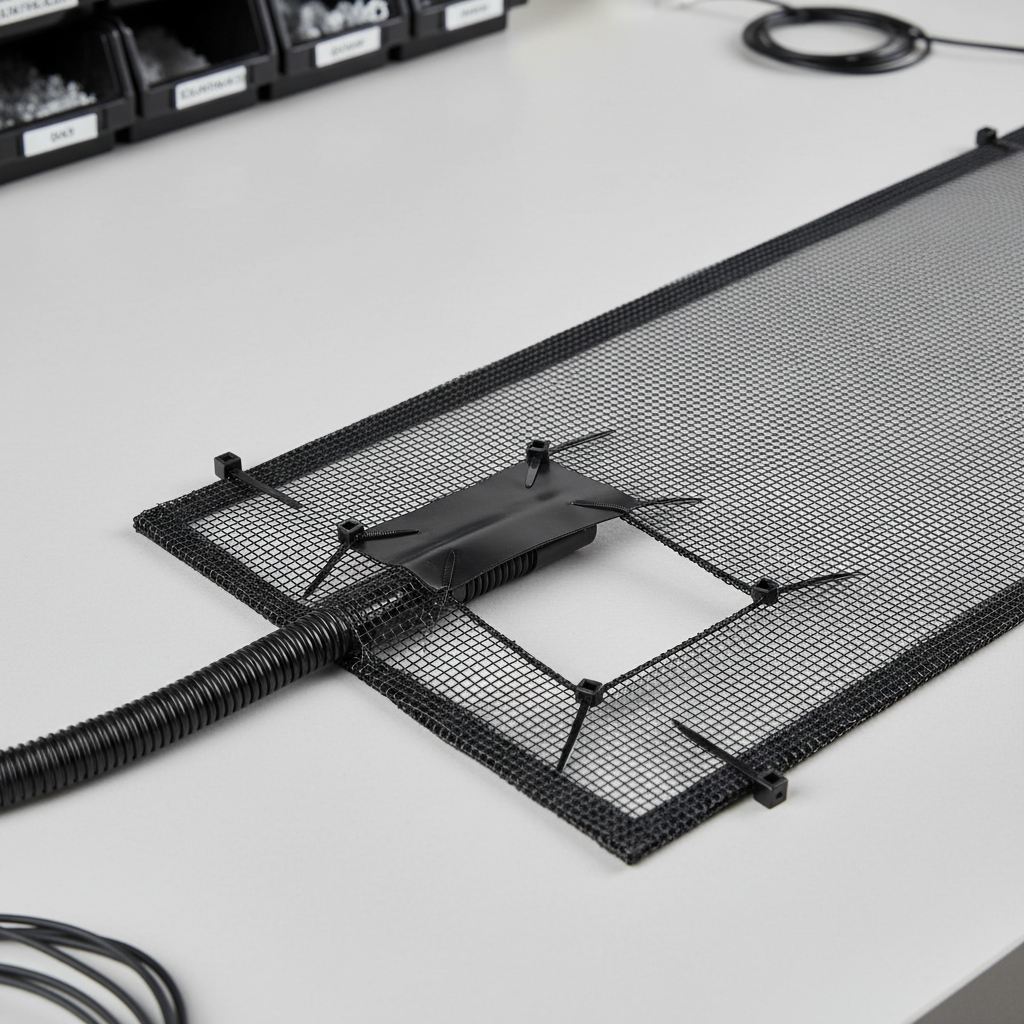
Do your cutout as small as you can, then use a small rigid “patch” piece to close the remaining opening around tubing. People often leave a U-shaped notch that looks harmless, but it becomes a perfect head-sized exit route.
5) Don’t rest heavy lamps directly on the mesh
Beyond heat and fire risk concerns, weight can deform the mesh over time, creating the kind of “lift edge” turtles exploit. If you need overhead lighting, a lamp stand or mounted fixture usually keeps the cover flatter and makes feeding easier.
Common mistakes (and why they waste your time)
A lot of escape issues persist because the fix targets the wrong problem. These are the patterns I see most often in turtle setups.
- Adding weight instead of adding attachment: A book on top works until it shifts, falls, or you forget it during cleaning.
- Over-cutting for equipment: You can always remove more material, you can’t easily “un-cut” a giant notch.
- Ignoring the basking layout: People upgrade a lid and keep the same ramp placement, then feel confused when the turtle still reaches the top.
- Assuming “fine mesh” equals safe: A tighter mesh helps, but a loose frame still lifts.
Key point: escape-proof usually means “no lift, no slide, no gap,” not “strong mesh.”
When to get professional help (or rethink the setup)
If your turtle has already escaped once, treat the next attempt as likely, especially if it’s a larger species or an adult that has learned the route. Consider extra help in these situations:
- Repeated escapes despite clips and layout changes, you may need a rigid custom top.
- Injury risk from climbing, falling, or heat exposure, a reptile veterinarian can advise on safer housing and basking design.
- Complex lighting/UVB questions, ask the bulb manufacturer or an experienced exotics vet; UVB setup is one of those areas where small mistakes matter.
According to the Association of Reptile and Amphibian Veterinarians (ARAV), husbandry plays a major role in reptile health, so if you’re troubleshooting escapes alongside appetite, lethargy, or shell concerns, it’s reasonable to consult a qualified reptile vet.
Conclusion: a secure lid should feel boring
A good turtle tank cover mesh screen doesn’t draw attention after you install it, it sits flat, it doesn’t shift when you feed, and it doesn’t create new gaps around gear. If you want a clean next step, start by removing rim-level “steps,” then add proper clips, then tighten any cutouts. That sequence fixes most escape stories without turning your tank into a project that never ends.
If you’re making changes today, pick one action that reduces risk fast: clip the lid down on all sides or close the biggest gap. You’ll feel the difference immediately, and your turtle will too.
FAQ
What size mesh screen is best for a turtle tank cover?
Most standard aquarium screen mesh works, but tighter openings reduce snagging and discourage “hooking” claws. The bigger factor is frame rigidity and how well it seats on the rim.
Can my turtle push up a screen lid?
Many turtles can lift a loose corner, especially if they can brace on a dock or rock. If the lid is clipped to the rim and doesn’t flex, pushing usually stops being effective.
How do I secure a mesh lid if my tank has a center brace?
Use clips on both halves and check that neither side can ride up near the brace. If one side shifts, it often creates a gap right where the turtle spends time basking.
Do screen lids block UVB for basking turtles?
They can reduce UVB reaching the basking zone. According to Zoo Med Laboratories, mesh can filter UVB, so follow the bulb brand’s distance guidance and consider fixture adjustments rather than guessing.
Is it safe to put a heat lamp directly on a mesh screen?
It might be unsafe depending on lamp type, wattage, airflow, and how hot the screen gets, so it’s better to use a lamp stand or mount when possible. If you’re unsure, check the fixture instructions and consider asking a reptile professional.
How do I make filter cutouts without creating an escape gap?
Cut the smallest notch that fits the tube, then cap the leftover space with a rigid patch piece and secure it with clips or ties. Loose U-shaped cutouts are a common escape route.
My turtle climbs the mesh and hangs there, what should I change?
That usually means it can reach the lid from inside. Lower or move the basking dock, remove “step” decor near the rim, and make sure the lid doesn’t flex where it’s grabbing.
Should I replace my mesh screen or just add clamps?
If the lid fits well and is rigid enough, clamps and layout changes often solve it. If the frame twists easily, bows in the middle, or never sits square, replacing with a sturdier design saves time.
If you’re dealing with a repeat escape artist and want a more predictable result, it can help to choose a heavy-duty screen lid that matches your exact tank footprint, then plan your lighting and filter routing around that lid instead of carving the lid around every accessory.